Africa
How Egbetokun Is Fostering Positive Relationships Between The Nigeria Police And The Youth, by Adewole Kehinde

“We cannot always build the future for our youth, but we can build our youth for the future.” – Franklin D. Roosevelt
The United Nations has designated August 12 as International Youth Day, an awareness day.
The day aims to draw attention to a given set of cultural and legal issues surrounding youth. The first International Youth Day was observed on 12 August 2000.
Serious police-youth relationships date back to 2020 when the #EndSARS protest came up across the country.
End SARS was a decentralised social movement and series of mass protests against police brutality in Nigeria that mainly occurred in 2020.
The movement’s slogan called for the disbandment of the Special Anti-Robbery Squad (SARS), a unit of the Nigerian Police known for its long record of abuse against Nigerian citizens.
The protests originated from a Twitter campaign in 2017, using the hashtag #EndSARS to demand the unit’s disbandment by the Nigerian government.
On Thursday, October 8, 2020, nationwide protests on ENDSARS started after weeks of outrage and anger with videos and pictures showing police brutality, harassment, and extortion in Nigeria. The protests were led predominantly by young Nigerians in different cities alongside many activists and celebrities.
The hashtag #EndSARS accumulated over 28 million tweets on Twitter alone.
Solidarity protests and demonstrations by Nigerians in the diaspora and sympathizers occurred in many major cities around the world. Notably, the movement was predominantly led by young Nigerians and expanded to include demands for good governance and accountability, amidst unprecedented hardship in the country.
Within a few days of protests, on 11 October 2020, the Nigerian Police Force announced the dissolution of the unit with immediate effect. The move was widely perceived as a triumph for the demonstrators.
SARS officers were alleged to profile young Nigerians, mostly males, based on fashion choices, tattoos, and hairstyles. They were also known to set up illegal roadblocks, conduct unwarranted checks and searches, make arrests and detain without warrant or trial, rape women, and extort young male Nigerians for driving exotic vehicles and using laptops and iPhones.
Nigerians shared stories and video evidence of how SARS officers engaged in kidnapping, murder, theft, rape, torture, unlawful arrests, humiliation, unlawful detention, extrajudicial killings, and extortion of Nigerian citizens. A large number of the victims of the abuses of SARS were young male Nigerians.
In response to the public outcry on police brutality, the Inspector-General of the Nigeria Police banned the FSARS, Special Tactical Squad (STS), Intelligence Response Team (IRT), Anti-Cultism Squad, and other tactical units from mounting roadblocks, checkpoints, stop-and-search, and other routine and patrols.
On October 19, 2020, President Muhammadu Buhari reacted to the continuation of the movement by warning young Nigerians of anarchists who were allegedly attempting to hijack the protests and stated that the federal government “would not tolerate anarchy in the country.
On the first week of August, the most youth-friendly Inspector-General of Police, IGP Kayode Egbetokun, reaffirmed its commitment to recognizing the pivotal role of the youths in national security and the general development of the country.
Egbetokun made this known while confirming the readiness of the police to organize the Police Youth Summit 2024 to commemorate the UN International Youth Day on August 12, 2024.
According to a statement issued on Sunday, August 11, by the Force Public Relations Officer, ACP Olumuyiwa Adejobi: “Preparations for the Nigeria Police Youth Summit are in full swing, and we eagerly anticipate engaging with young and brilliant minds from across the country.
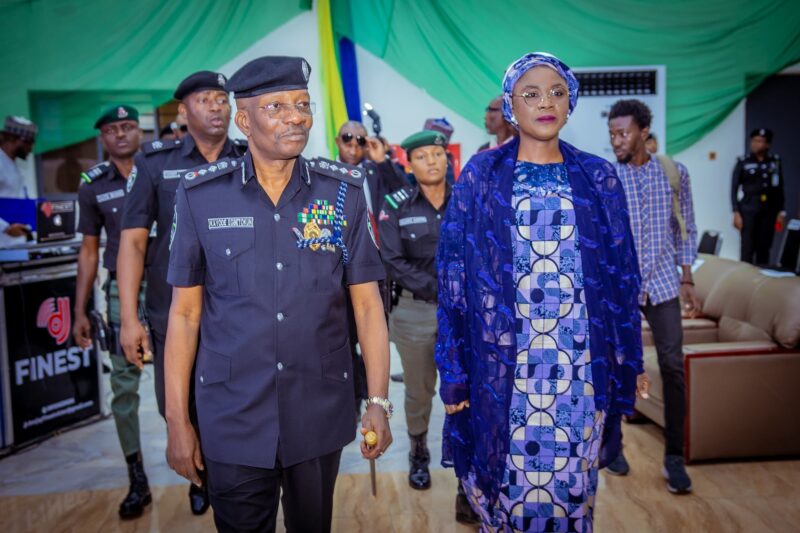
On 12th August 2024, the Nigeria Police Youth Summit became a reality at the Police Resource Centre, Jabi, Abuja.
The event commemorated the United Nations International Youth Day and signified the commitment of the Inspector-General of Police, IGP Kayode Egbetokun, to the enhancement of national security through youth inclusivity and engagement.
The summit highlighted an address by the keynote speaker, Prof. Lanre Fagbohun, which focused on the importance of youth inclusivity in key areas of national security, reward systems for youth development, and sponsorship programs to encourage youths and promote national growth.
It also featured a panel discussion, which gave an avenue for several youth leaders and representatives in attendance to seek clarifications and understanding of vital issues and solutions to several challenges facing the country.
President Tinubu, who was represented by the Minister of Youth Development, Dr Jamila Bio Ibrahim, recognized the vital role of the youths in shaping the nation’s future and reaffirmed his commitment to engaging young minds and empowering them to reach their full potential, promising to build a generation of leaders, thinkers, and changemakers who will shape the future of the nation and the world.
The Inspector-General of Police, IGP Kayode Egbetokun, in his address, reinstated his belief in the Nigerian youth and their vital role in achieving national security and sustainable development. The insights and ideas generated in this summit will contribute to enhancing national security intelligence and promoting youth development, and the Federal Government and the Nigeria Police Force remain committed to supporting and empowering the youth to reach their full potential.
The event, themed “Enhancing the Nigerian Youth’s Value for National Security Intelligence,” aimed to engage youth in national security efforts, promote their contributions, and address challenges facing the nation.
I saw the summit as a means of building trust and strengthening collaboration between young Nigerians and the police force.
This is in line with the administration of President Bola Tinubu’s steadfastness in its commitment to ensuring the safety, security, and prosperity of every Nigerian citizen.
The summit will surely elevate the role of Nigerian youth in the security architecture of the nation, empowering them to be watchguards and active participants in ensuring community safety.
There is no doubt that IGP Egbetokun’s activities since the assumption of office have been built around restoring trust, strengthening collaboration, and renewing hope between young Nigerians and the police force.
His goal is to see the emergence of a world-class police force that is inclusive, intelligence-led, technology-driven, and community-based and that is alive to its constitutional responsibilities.
Fostering a positive relationship between the Nigeria Police and the youth requires a multi-faceted approach that focuses on building trust, understanding, and collaboration.
Some of the initiatives the Inspector General of Police has put in place include community policing, which is aimed at encouraging the implementation of community policing programs where police officers work closely with community members, including youth, to address local safety concerns and build relationships based on mutual trust and respect.
Education and Awareness through the Police Campaign Against Cultism and Other Vices. They are involved in the organization of workshops and training sessions for both police officers and youth on topics such as conflict resolution, communication skills, human rights, and the role of law enforcement in society. This has helped in bridging the gap in understanding between the two groups.
The IGP has been promoting transparency within the police force by holding officers accountable for their actions and ensuring that complaints of misconduct are thoroughly investigated.
This has helped build trust among the youth and demonstrated that the police are committed to upholding justice and fairness.
The IGP, through the Force Public Relations Department, has been utilizing social media platforms and technology to engage with the youth and provide them with a platform to share their feedback, concerns, and suggestions for improving police-youth interactions. This has helped to create a more open and inclusive dialogue between the two groups.
With continuous implementation of these strategies and the fostering of a culture of respect, understanding, and collaboration, has made it possible to enhance the relationship between the Nigeria Police and the youth, ultimately contributing to the development and well-being of both groups and the society at large.
Adewole Kehinde is the Board Chairman, of Integrity Youth Alliance, and can be reached at 08166240846 or kennyadewole@gmail.com