Africa
Huge Expectations And Challenges Before SEDC -By IfeanyiChukwu Afuba
Among developing countries the tendency to regard modernity as development seems widespread. Saudi Arabia boasts modern infrastructure but cannot be considered developed in the true sense of the word. Chinweizu defines development as the capacity of a people to harness their resources for the advancement of their society. This insightful interpretation calls attention to the organic nature of development. It’s an internally – driven transformation. Development journey is only sustainable with requisite human capital.

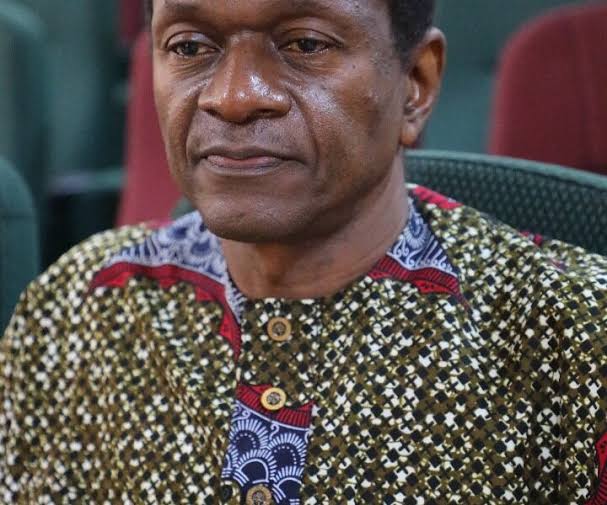
In the first week of February 2026, the Southeast Development Commission took a step on the route to execution of it’s mandate. She held a three day Vision 2050 stakeholders forum at Enugu, attended by all but one of the zone’s Governors, private sector executives, development agency partners, diplomats, community leaders and others. Deliberations at the general and technical sessions were intended to guide the Commission draw a sustainable plan of action. Participants were as keen as the Commission’s leadership on charting the roadmap for regional development. It should be obvious however, that the proposed journey is much more than a question of enthusiasm. A
number of key issues are involved in the prosecution of this initiative.
At a pre press briefing, Managing Director of the SEDC, Mark Okoye, had stated that the body would strive not to depend on government funding only. The revelation of the media chat was that the Commission had yet to receive funding for projects. It will be recalled that the Commission was inaugurated February 10, 2025 by the President, Bola Tinubu. It should be worrisome that a year after, such a special federal government agency has not been granted operational funds. The organisation is also yet to establish it’s headquarters in Enugu. This tentativeness contrasts sharply with the concept of an interventionist body. The agenda of zonal development commissions had been in the works for some years, dating back to the first tenure of Buhari presidency. Government was therefore not taken by surprise on it’s creation. In any case, why inaugurate a body you were not ready for it to function? If there were unforseen circumstances hindering their take – off, this should have been explained to the public. Not a word, just the usual taking Nigerians for granted.
While consultations and planning are necessary stages of execution, they do not have to become absolutes. Their efficacy do not lie in how long a time is spent on them. Some areas of development needs in the southeast do not require a reinvention of the wheel. Their characteristics have been internalised over time, such that these areas could be embarked on almost immediately – with availability of capital. The ravages of soil erosion, for instance, is self – evident. Likewise, the economic disability caused by Nigeria’s energy crisis. These are defined emergencies in the region that cannot be tackled too soon. But the undue delay in activating the Commission with financial lifeline continues to postpone the real work. And this raises the issue of how the development commissions will operate. Will they run as government parastatals typically slowed down by bureaucratic orientation? Does the technocrat culture actually exist in Nigeria? Can the technocrat model prevail in a situation of financial dependence on Nigeria’s political system? Time will tell what path, influenced to some extent by leadership drive, the SEDC will walk.
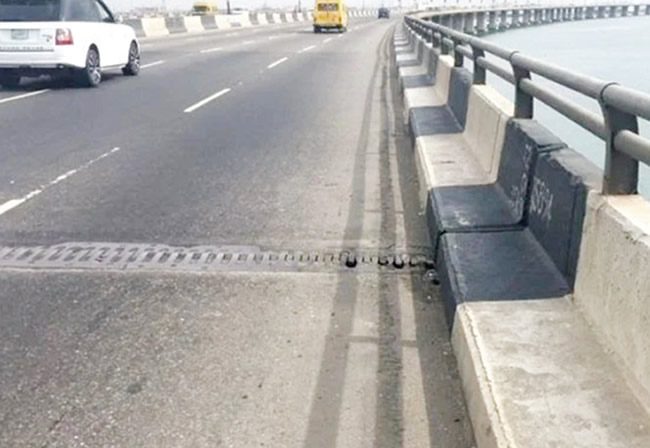
There can be no doubt however, that necessity of bodies such as SEDC arises from the woeful performance of our conventional institutions. Our ministries, departments and agencies (MDAs) have proven problematic at service delivery. Between traditional organs of government and a historical poverty of leadership, public service has stagnated at the minimum level. Marxist studies would blame the character of colonialism and neocolonialism for the failure of these institutions. The terrible state of roads across the country leaves you wondering if the Ministry/Department of Works exist at federal, state and local governments. Or how do you explain the absurdity of public health centres without ambulances? About 1995, during the dictatorship of general Sani Abacha, I met a staff of the Federal Capital Development Authority who spoke glowingly about the First Lady’s Family Support Programme. I told the lady that these pet projects were frivolous duplications; that the much advertised empowerment was within the mandate of Ministry of Social Welfare. Her response left me some food for thought. The lady stressed that typically, you would not get anything from government store, be it pin, bag, whatever. The standard response would always be out of stock. But that under the First Lady’s wings, all the outreach materials become available.
It’s in the context of this rating of traditional government structures that much expectation is placed on the SEDC. One thing can be said of similar organisations, for instance, the Niger Delta Development Commission. The limitation of their assignment means they are not spread thin over a wide range. By the specific nature of their brief, there is less distraction from the work. And so, we got a sense of the public anticipation at the stakeholder outing at Enugu.
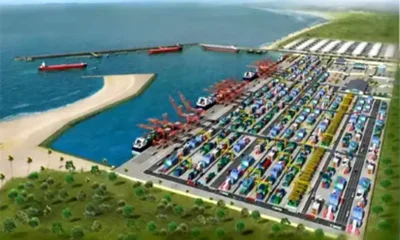
Submissions by the various state governments at the event bespoke great expectations. Abia State Governor, Alex Otti, invited the Commission to take on the mega task of stable power supply for the region, adverting to the State’s recent stride in power generation. Otti was not the only one positioning his State to host a major undertaking. Standing on his State’s agricultural reputation, Governor Francis Nwifuru recommended Ebonyi State for agro – chain industrial complex. However, Anambra’s Charles Soludo advised the Commission to keep the development plan simple for impact. He identified a few priorities including security, rail transportation, gas pipeline and seaport.
An important question bearing on the subject relates to the Commission’s notion of development. It’s definition of the term will have implications for programme choices. Among developing countries the tendency to regard modernity as development seems widespread. Saudi Arabia boasts modern infrastructure but cannot be considered developed in the true sense of the word. Chinweizu defines development as the capacity of a people to harness their resources for the advancement of their society. This insightful interpretation calls attention to the organic nature of development. It’s an internally – driven transformation. Development journey is only sustainable with requisite human capital. We therefore invite SEDC to make education one of it’s priorities. Fair access to quality education in these difficult times demands a liberal scheme of scholarships for both brilliant and indigent students. This is a critical path to creating the needed manpower for a productive economy. Some of us know the story of Ezekiel Izuogu’s near – breakthrough with car manufacturing. What stopped his exploit was funding. His sad experience is encountered again and again in videos of flying machines made by youths in our villages. SEDC will do well to create a programme for harnessing of special talents.
It’s hoped that in the shortest possible time, the regional development bodies will get to work in the field. This optimism is encouraged by the Tinubu administration’s quest for historical records. The delay over State Police gives cause for concern though. If nothing else, empowering the commissions now will be an item for the 2027 presidential election campaign. When the SEDC begins to run, southeast state governments must guard against transferred responsibility syndrome. We already noted the unresponsive state of MDAs to public service needs. This complacency may deepen in the face of a performing, omnibus entity. Today, some higher institutions of learning no longer initiate capital projects of their own. They wait for their share of the Tertiary Education Trust Fund (Tetfund). It was a similar case of over – reliance on the Buhari – led Petroleum Trust Fund (PTF), 1995 – 1998. Then, federal and state governments backpedalled on road construction because PTF was building roads. The solution, for all sides, may be found in Governor Charles Soludo’s advisory. ‘Avoid the mistakes of going into all manner of micro interventions – boreholes, schools, one kilometre roads.’