Africa
Ibas, Power Is A Loan, Not A Birthright, Don’t Get Drunk On It While Standing In For Governor Fubara -By Isaac Asabor
Without a doubt, the fear of seeing Ibas becoming power drunk might had inspired the Speaker of the House of Representatives, Tajudeen Abbas to remind the Sole Administrator that by the provision of the 1999 Constitution (As amended), he must report to the National Assembly in running the affairs of the oil-rich state.

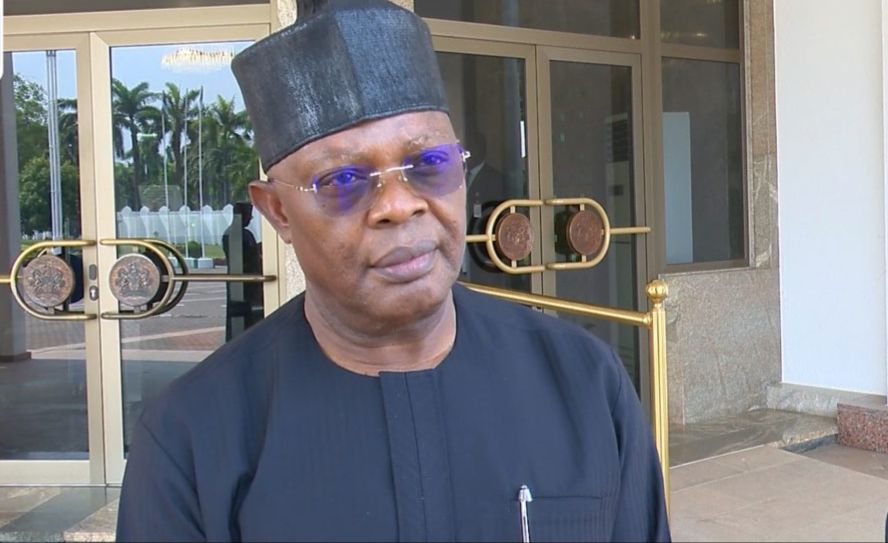
In every democratic dispensation, power is held in trust by those elected or appointed, not possessed as a divine right. It is this sacred understanding of representative leadership that makes the idea of being “power drunk” so distasteful and dangerous. When one considers the trajectory of leadership in Nigeria, particularly in moments when power is temporarily transferred or delegated, the metaphor of intoxication becomes apt as those entrusted with temporary authority often lose grip of reality and begin to behave as though they are the anointed sovereigns. That is why the situation currently playing out in Rivers State, where the newly appointed Sole Administrator, Vice Admiral Ibok-Ete Ibas (retd.), who is temporarily acting on behalf of Governor Siminalayi Fubara, raises deep concerns.
This article is not intended to impugn the administrator’s actions and statements made in the last few days nor an attempt to undermine the leadership of Ibas, but rather, it is a cautionary commentary borne out of Nigeria’s political experience where those given the chance to “hold brief” for democratically elected political leaders often end up believing the briefcase belongs to them. It is a reminder that being an acting leader is not the same as being the elected one, and that wielding delegated power must be approached with humility, loyalty, and an unshakable understanding of its transient nature.
The phrase “power drunk” is not mere hyperbole. It is a vivid metaphor drawn from the human tendency to become intoxicated, literally or figuratively, when given more than they can handle. The word “drunk” has its roots in the Old English druncen, descending from Proto-Germanic drunkanaz, and signifying a state of losing control due to alcohol. When paired with “power,” it describes a mental and emotional derailment triggered not by substance but by a surge of influence and authority. It is this heady influence that leads temporary officeholders to act rashly, arrogantly, or autocratically, often forgetting the mandate, loyalty, and structure that brought them to power in the first place.
Unfortunately, Nigeria has seen this play out countless times, be it in caretaker governors, acting chairpersons, or interim ministers who mistake their temporary elevation for a coronation. Rivers State should not be another case study of this familiar Nigerian tragedy.
Let’s be clear: Fubara’s Mandate Belongs to the People. Siminalayi Fubara was elected by the people of Rivers State. The votes cast during the gubernatorial election were in his name, under his manifesto, and rooted in the people’s belief in his leadership. If, for any reason, the machinery of governance demands that he steps aside temporarily or delegates’ responsibility, it does not confer full political authority to any acting figure. It only signals continuity, nothing more, nothing less.
Therefore, Ibas must not fall into the tempting trap of seeing himself as more than a steward of Fubara’s administration during his absence. His role is to uphold and implement the agenda already set by Fubara, not to begin rewriting the playbook or initiating actions that might imply a divergence from the elected vision.
We have seen how friction between governors and their deputies can destabilize the peace and development of a state. Even in recent history, many deputy governors have capitalized on moments of temporary leadership to pursue their own interests, align with political enemies of their principals, or openly challenge the authority of the governors they were elected to serve alongside. This isn’t just disloyal, it’s a betrayal of democratic ethics.
Rivers State, as strategic as it is in Nigeria’s political and economic space, has endured more than its fair share of political drama. From the days of Rotimi Amaechi to the thunderous tenure of Nyesom Wike, the state’s political terrain has never been short of fireworks. It has now entered a more delicate phase under Fubara, who, despite resistance from political godfathers, is navigating the terrain with restraint and a sense of focus.
Injecting any more instability into the system, particularly through the actions or inactions of an overambitious acting deputy, would only inflame tensions. Rivers State doesn’t need a show of ego. It needs service, maturity, and alignment.
Being in charge temporarily is like standing in the spotlight on stage, it might feel warm, it might be bright, and it might draw attention. But it is not the sun. The spotlight can be turned off at any moment. And when it does, all that matters is how gracefully the actor played their part. Ibas should understand that her current status is a chapter, not the whole book. And when this chapter closes, she will be judged not by how loudly she roared, but how well she served the interests of the people and remained loyal to the governor.
The wise ones who have held power, even temporarily, often describe it as a burden rather than a trophy. They know it is not a license to lord over others but an obligation to serve. Power in its best form is silent, effective, and humble. The moment it becomes noisy, arrogant, and self-serving, it loses legitimacy, no matter how constitutionally backed it may seem.
We must not forget the political implosions that were caused by acting leaders who allowed temporary power to get to their heads. From the days of regional politics to the current Fourth Republic, many political careers were shortened or permanently stained because individuals failed to draw the line between opportunity and overreach.
The late Chief Obafemi Awolowo once noted, “The worst form of leadership is to lead people without their consent.” Acting leaders must remember this, because when the people did not vote for you, your role is service, not control.
At a time when citizens are increasingly distrustful of politicians and impatient with misgovernance, any sign of deviation from democratic order is not just frowned upon, it is resisted, both online and on the streets. Ibas must tread with caution. His every action, body language, and directive are under scrutiny. The people are watching. Civil society is watching. And history is watching.
Even a whiff of disloyalty to Governor Fubara will not only harm his political credibility but could open him to public criticism that may not be easily erased. Political ambition must never override public duty. And no temporary title is worth the reputation it could destroy.
To Ibas, this is your moment to prove that leadership can still be dignified. Show Nigerians, especially Rivers people, that not every acting leader loses the plot. Let humility guide you, let loyalty ground you, and let wisdom lead you.
Act with the awareness that you are standing in for a man with a democratic mandate, not replacing him. Understand that power is a loan, not a crown. And when the curtain falls, may you be remembered as a loyal steward, not a power-drunk usurper.
Without a doubt, the fear of seeing Ibas becoming power drunk might had inspired the Speaker of the House of Representatives, Tajudeen Abbas to remind the Sole Administrator that by the provision of the 1999 Constitution (As amended), he must report to the National Assembly in running the affairs of the oil-rich state.
The Speaker gave the charge in Abuja on Tuesday, April 14, 2025, while inaugurating the House of Representatives Ad-Hoc Committee on Rivers State.
The time to act with maturity is now.