Africa
If Buhari, Igwe Were Prosecuted, Nnaji’s Case Should Not Be Swept Under The Carpet -By Isaac Asabor
If Buhari and Igwe could be prosecuted, Nnaji’s case must not be swept under the carpet. The law must not be a tool to protect the powerful, it must be a sword to bring them to account. If we fail here, we further degrade not just our institutions, but the very notion that public service demands integrity.

When Ibrahim Salisu Buhari was forced to resign and prosecuted for perjury and forgery in 1999, it was a stern reminder: lying about qualifications is not a technicality; it is a betrayal of public trust. In a similar vein, when Chima Igwe, then a DG at FIIRO, Oshodi, was prosecuted for academic misrepresentation and misuse of office, it reinforced the standard: false credentials and abuse of public power must not be tolerated.
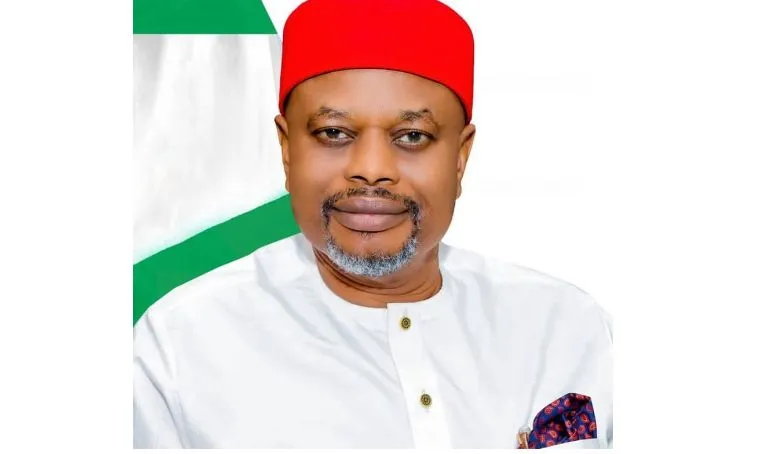
Now we have Uche Geoffrey Nnaji, who until recently served as Minister of Innovation, Science and Technology. The revelations surrounding his academic credentials and the conduct of his appointment do not just demand scrutiny, they demand accountability.
Over the past weeks, a series of investigative reports have laid bare serious and consistent inconsistencies in Nnaji’s claims. These are not stray rumors; they come with institutional backing and documentation. Key findings include: Degree and NYSC certificates alleged to be forged. Premium Times’ investigation claims that Nnaji’s Bachelor of Science degree and his NYSC discharge certificate, submitted during his ministerial confirmation, were forged. That same investigation reports that Nnaji has admitted publicly (though under pressure) that the University of Nigeria, Nsukka (UNN) never issued him a degree certificate.
In multiple letters responding to Freedom of Information requests, UNN’s registrar and vice-chancellor have asserted that Nnaji was admitted in 1981, but that there is no record of his graduation or issuance of a degree certificate.
The registrar’s office in a letter dated 6 October 2025 specifically wrote that “there is no indication” that the purported certificate was ever issued.
At the time Nnaji claimed to have graduated in 1985, internal university correspondence shows he was seeking permission to re-sit a failed terminal course (a virology course, MCB 431 AB). The institution’s own records show that in the 1985 session’s graduation roll, Nnaji’s name could not be found.
UNN has, in fact, retracted prior statements by the registrar that had once claimed Nnaji graduated in 1985.
Facing mounting pressure, Nnaji reportedly sought a court injunction to prevent UNN, the Senate, and other bodies from releasing his academic records. That effort failed to secure a full restraining order. His team has pushed back, calling the media reports “damaging” and maintaining that the entire controversy is politically motivated.
On 7 October 2025, Nnaji resigned from his ministerial post. The presidential office confirmed acceptance of his resignation.
In his resignation statement, he claimed the decision was “not an admission of guilt,” but a move to respect due process and remove distractions from government work.
All this paints a picture that goes beyond mere controversy: it is a credible allegation of forgery, institutional repudiation, and public deception.
Given that the stakes that are inherent in the allegation are not just personal but national, it is not out of place to opine that Nnaji’s case cannot be treated as a private embarrassment to be swept under the carpet. Without a doubt, the implications are systemic as public trust is at stake. This is as a minister in charge of innovation and science must be beyond suspicion in his academic credentials. If such a person is found to have engaged in forgery, it breeds cynicism about the meritocracy of public service.
Against the backdrop of the weight and implication of his offense, it is not out of place to opine that selective accountability erodes rule of law. Again, the fact that Buhari and Igwe were prosecuted should not be forgotten. So, If Nnaji walks away with a resignation, we reinforce the impression that some elites are shielded by politics. This is as precedent matters. Once you allow a serious case of credential deception to be brushed aside, you lower the bar for future aspirants to public office.
In fact, institutional integrity must be defended. The roles of UNN, the Senate, the investigative press, and legal institutions are now under pressure. If they cave, it signals that no institution is immune to political manipulation.
At this juncture, what must be done to ensure that justice is truly served should be treated as a matter of utmost priority. First, a formal and transparent investigation must be launched. Whether it is the EFCC, ICPC, or the judiciary acting through a court-supervised process, the case of Nnaji’s alleged forgeries demands a proper, uncompromised probe, no fumbling, no “quiet settlement.” Second, there must be speedy verification and release of all relevant records. Institutions such as the University of Nigeria, Nsukka (UNN), the National Youth Service Corps (NYSC), and the Senate must cooperate fully. Any attempt to withhold or obstruct records should itself trigger a separate investigation.
If the facts confirm that forgery and misrepresentation occurred, then prosecution must follow, with charges of perjury, forgery, and false declaration, just as was done in the case of Ibrahim Salisu Buhari. Justice must not be selective. Furthermore, any accomplices or enablers, whether officials within UNN, registries, or government offices, who may have colluded or looked the other way, must also face appropriate sanctions.
Finally, this case should serve as a wake-up call for institutional reform of the vetting process. Nigeria must establish a system in which the credentials of all public office aspirants are independently and rigorously verified before appointment or confirmation. Only through such measures can integrity be restored to public service and the rule of law upheld.
We often speak of “cleaning up governance” in vague terms. This moment gives us a concrete test: we either hold Nnaji to the same standard as Buhari and Igwe, or we admit that the fight against corruption is selective and hollow.
If Buhari and Igwe could be prosecuted, Nnaji’s case must not be swept under the carpet. The law must not be a tool to protect the powerful, it must be a sword to bring them to account. If we fail here, we further degrade not just our institutions, but the very notion that public service demands integrity.
Let this not be another story of scandal forgotten. Let it be a turning point.