Africa
Igbanke: Between Bini Ancestral And Igbo Identity Claims: Who’s Troubling Her Independence? -By Isaac Asabor
If Nigeria is truly a federation built on diversity, then communities like Igbanke should be allowed to flourish in their hybridity without being forced to choose a side in the war of ancestral egos.

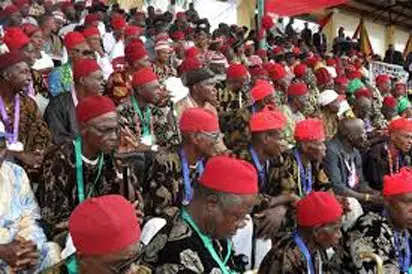
In the heart of Edo State lies a culturally rich and historically complex community known as Igbanke. Once proudly self-defining and autonomous in its cultural, political, and historical identity, Igbanke today stands at a confusing crossroads, its independence being jostled and pulled at by two dominant ethnic forces, the Binis and the Igbos. This struggle, some say, is not just about cultural pride or ancestral roots; it is a reflection of deeper political, economic, and ethnic identity conflicts that have been bubbling beneath the surface for decades, if not centuries.
This article is a call to truth. A call to interrogate why the independency of Igbanke is being troubled by the Binis and the Igbos, and more importantly, what it means for the future of the people who live there. Igbanke cannot continue to be a pawn in the identity politics of Nigeria’s deeply tribalized structure. It is time to ask tough questions and, perhaps, offer uncomfortable truths.
You may have asked, “Who are the Igbanke people?” The answer to your question is not farfetched as the Igbanke people are located in Orhionmwon Local Government Area of Edo State. Igbanke is made up of several communities including Omolua, Idumodin, Ake, Oligie, Ottah, and Igbontor. Igbanke is often described as a border town, and therein lies part of the identity conflict. It geographically sits on the fringe of Edo and Delta States, and by extension, the traditional boundaries of Bini and Igbo influence.
The Igbanke people speak a unique dialect that shares similarities with the Igbo language, particularly with the Ika and Anioma dialects found in nearby Delta communities. At the same time, their traditional institutions, including certain titles, chieftaincy rites, and festivals, also show influence from Benin. This duality, instead of fostering harmony, has become a source of contestation.
To the Benin Kingdom, Igbanke is seen as part of the territory once under the political and spiritual influence of the Oba of Benin. Oral history often records that many communities, including Igbanke, were under the military and administrative control of the Benin Empire during its expansive era. Indeed, some Igbanke villages trace their origin to military outposts or settlers from Benin.
The Binis argue that the Oba of Benin’s traditional authority should still apply to the community, not in terms of governance in the modern political sense, but in cultural reverence, spiritual allegiance, and chieftaincy endorsement. This has led to situations
where the Oba of Benin is reported to send traditional representatives or make pronouncements regarding Igbanke, further entrenching the claim of cultural dominion.
To many in Igbanke, this is a troubling assertion of overlordship. They argue that while there may be historic interactions with the Benin Kingdom, it does not equate to a forfeiture of their own cultural sovereignty. Some see the move by Benin royalty to influence or supervise traditional leadership in Igbanke as an act of cultural annexation, not preservation.
On the other side of the coin are the Igbos, particularly from nearby Delta Igbo communities, who view Igbanke as part of the broader Igbo ethnic family. Their argument leans more on linguistic, cultural, and familial similarities than political dominion. Igbanke people share linguistic features with Delta Igbo dialects, including Aniocha and Ika, and even ukwuani to some extent. Names, marriage rites, and certain market customs also appear Igbo in origin.
Over time, this linguistic and cultural closeness has seen attempts by some Igbo scholars and traditionalists to ‘adopt’ Igbanke into Igbo history, often without nuance or consideration for its internal complexity. This is especially evident during cultural festivals, regional meetings, or political gatherings, where Igbanke is presented as an “Igbo-speaking” community of Edo State, often with little consultation from Igbanke voices themselves.
To many in Igbanke, this is ethnic appropriation, not brotherhood. They argue that language alone cannot be the only metric of identity, and that Igbanke’s cultural evolution is indigenous and independent, not an offshoot of any larger ethnic empire, be it Bini or Igbo.
At this juncture, not a few readers of this piece may have asked, “So why is Igbanke’s independence being troubled?”
First and foremost, its strategic geo-political location cannot be ignored in this context as Igbanke’s location at the edge of two major ethnic territories makes it a target for influence. Both the Binis and Igbos understand that controlling Igbanke means controlling a symbolic and possibly strategic border town, especially in terms of cultural prestige and political alignment.
Secondly, given the backdrop of its cultural complexity, which is no doubt seen as a threat, to both the Binis and Igbos, Igbanke’s refusal to completely align with one side is seen as an anomaly. Nigeria’s ethnic structure encourages binary identity: you are either Bini or Igbo, Yoruba or Ijaw, Hausa or Fulani. Igbanke’s insistence on ethnic self-definition unsettles this binary narrative, and neither dominant side wants to accept a middle ground.
Looking at the raging issue at the moment, from the perspective of chieftaincy and traditional Control, it is germane to opine that chieftaincy matters are a key battlefield.
For instance, when traditional leaders in the Igbanke communities of Edo State recently dropped the royal Bini appellation “Enogie” and instead chose to adopt the Igbo title “Eze,” the move sparked swift and stern opposition from the Bini royal leadership, which viewed the change as a cultural affront and an attempt to distort historical and ancestral ties to the Benin Kingdom. The Oba of Benin’s palace, known for jealously guarding its traditions and authority, reportedly expressed strong disapproval, insisting that such deviation undermines the kingdom’s heritage and the established traditional structure within its jurisdiction.
Also, looking at the issue from the perspective of political capital and representation, it is obvious that ethnic loyalty often determines electoral influence and development priorities in Nigeria. Both Bini and Igbo political elites know that an Igbanke aligned with their bloc can tip local elections or attract state and federal resources. This gives them an incentive to influence Igbanke’s political direction.
In a similar vein, particularly when seen from the standpoint of cultural festivals and identity assertion it can be said that from the New Yam Festival to Igue celebrations, cultural festivals have become identity markers. Each group wants to see Igbanke participate in their festivals as a sign of alignment. This turns what should be a joyful celebration into a political declaration of loyalty.
However, instead of scrambling for Igbanke from both the Igbo side and from the Bini side, to the detriment of Igbanke people, including this writer, there is need for the way forward so that Igbanke people can have a sense of identity and independence like other ethnic groups in Nigeria. To this writer, the way forward is, let Igbanke be.
Igbanke deserves the dignity of self-definition. It is not a political asset to be claimed, nor a cultural project to be completed by outsiders. The community’s history is rich, its language distinct, and its identity uniquely its own. It is entirely possible for Igbanke to share historical ties with Benin, linguistic ties with Igbo, and still remain culturally independent.
If Nigeria is truly a federation built on diversity, then communities like Igbanke should be allowed to flourish in their hybridity without being forced to choose a side in the war of ancestral egos.
At this juncture, permit me to give a final word to both the Binis and Igbos. This is not a fight for land, or even heritage. This is a fight for narrative control, and both parties must understand that in their bid to “own” Igbanke, they risk erasing the voice of the people themselves. That is not heritage. That is hegemony.
Let Igbanke speak. Let Igbanke choose. Let Igbanke be.
Isaac Asabor, a seasoned journalist with a keen eye for politics, and social commentary is an indigene of Omolua, Igbanke.