Forgotten Dairies
In Defence Of Daniel Bwala -By Festus Adedayo
The day I made up my mind that I was done with being a night soil man to people in government was when I listened to the counsel of the new Olubadan of Ibadan, ex-Governor Rashidi Ladoja. He was one of the politicians who, in the course of my job, I had to engage as an adversary, even when I never met him. He was a distinguished invitee to the Babatunde Oduyoye’s birthday colloquium that held in Ibadan some years ago. I was a discussant at the event. As it wound to a close, the man who would be Olubadan beckoned on me and said, “I was one of those who carried placard against you being P. A. (his words) to the Senate President. Those people should be your P. A. Your brain is more than theirs.”

Published
2 hours agoon

The governor’s aide-de-camp, the ADC, who relayed the message of immediate convergence in the Lodge, was with Oga in Abuja. How could he and His Excellency mock geography this shamelessly? I reckoned that, because a flight from Abuja to the state capital was less than an hour, they thought they could perfunctorily proclaim their lordship over time and space! The ADC’s message was however prim, sharp and carried the weight of lacerating whips: “Oga said you should proceed to the Lodge.” No blood. No feeling. No smile, I guess.
In barely two hours, His Excellency was with us. His eyes were dilating like pebbles of ice soaked inside a cup of Campari liquour. In attendance were three of us. Two of us held the media pillar of government while the third was in control of the legality or illegality of government actions. “Gentlemen, you must have heard what happened early this morning?” His Excellency asked rhetorically. He of course did not expect any reply from us, mere ravens of power. Yes, we had heard. The news had permeated everywhere in the state and even, Abuja, the federal seat of power. I am sure even the president of the republic had been briefed about it. Press newsrooms were beeping red over the news. It was one of the regular consuming tempests that often threatened to push government under. His Excellency had willingly ordered a deed that plummeted his public opinion rating and sent tongues wagging.
“You may say I am evil, bad, heartless or lacking human feeling. But the deed has been done. I employed you to clean me up. Clean me up!”, he hectored like the man in power that he was. And that was the end of the meeting. The three of us, the night soil men hired to dispose the shit of power barons, walked away as languidly as we came in. The job of cleaning the mess, the pee and excreta of His Excellency, including holding a tissue paper to his yansh for a proper whitewash, had just begun.
It was the first awareness I had of my real KPI as media advisor. Immediately I got back to my office, I began a soul-searching introspection. So, I was a night soil man to His Excellency? The realization that I was a night soil man gripped me. Son of Baba Adedayo, an ordinary policeman from Ilu-Abo village in Akure, who augmented his sparse monthly earnings with subsistence farming in the village, so as to send me to school, ended up as a cleaner, cleaning the bum-bum of people in power?
That word, “Clean me up!” seared my heart like a whiplash. It reminded me of similar sudden awareness of myself I had, some decades back, specifically in 1985, as staff of the International Breweries Ltd, Ilesa, now Osun State. A Receptionist had reminded me that I was a messenger to the Managing Director, Chief Akinwande Akinola and my life literally got shattered. A messenger?
All of a sudden, I became Oscar Wilde, Irish author, poet and one of the greatest playwrights of the Victorian era. Jailed and convicted for homosexual acts with male partners and for gross indecency, Wilde was convicted and sentenced to a maximum penalty of two years’ hard labour, from 1895 to 1897. He wrote an account of his travails as De Profundis, which was published posthumously in abridged form in 1905, and in full in 1962 with the title, Letter to Sir Alfred Douglas. While lamenting his descent from the height of fame to the nadir of infamy, Wilde wrote “the two turning points of my life were when my father sent me to Oxford and when society sent me to prison.” While my father sent me to acquire costly university degrees, like Wilde, I sent myself to Government Houses to do cheap jobs of night soil man to people in power.
The above is an excerpt from my memoir, my odyssey, working with politically exposed persons in government, that I am working on. Former Minister of Youth and Sports, Bolaji Abdullahi, became the catalyst for my penning it. In his riveting, thought-provoking memoir entitled The Loyalist: A memoir of service and sacrifice which I recently reviewed, Abdullahi, ADC Publicity Secretary, partially articulated how media advisors to people in power are pawns in the game of power politics and expendable cartridges in their wars.
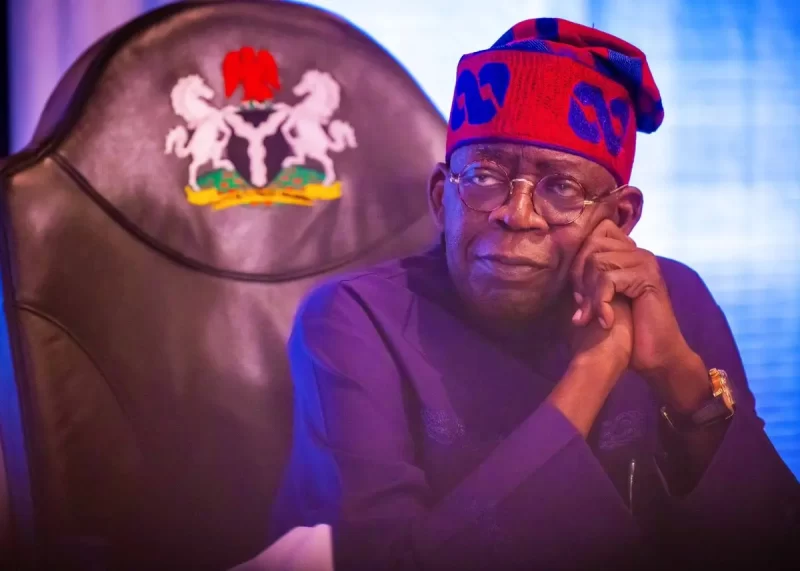
Recently, Daniel Bwala, Special Adviser on Policy Communications to the Nigerian President Bola Tinubu, sat in an explosive media interview with Al Jazeera’s Mehdi Hasan on his famous Head to Head programme. It was meant to center on Nigeria’s unending but escalating violence, mass abductions and kidnappings, as well as the American military intervention. It however became Bwala’s crucifix. The conversation morphed, becoming an inquisition into Bwala’s wonky personality traits, an interrogation of what role media advisors to politically exposed persons should play and a study in the workings of political performance. Bwala’s charm,
Bwala’s abysmal or even cataclysmic performance on Hasan’s Head to Head programme, his recourse to plain untruth and substitution of propaganda for political communication, have faced inquisition since that uninspiring outing. It is even worse that thereafter, he attempted to make a bad situation worse by legitimizing and sacralizing his past lies. Are lies permissible in the job of a media advisor to political principals? While untruth may be pardonable in media messaging, barefaced, outright lies are objectionable. In distinguishing between both, we are told that, while lies are deliberate falsehood spurn with intent to deceive, an untruth is broader in shape and can be any statement that is not true, the truthlessness of which may be as a result of error, ignorance, or lack of information. The primary difference between the two is intent. What role then should media advisors play to their political principals in the process of communicating their day-to-day activities? Are lies avoidable and how best can the advisor navigate the everyday landmines hidden in political situations to ambush the advisor and the principal?
The basic reality is that the job of an advisor, especially to a politically exposed person, is literally an Improvised Explosive Device. It is pregnant with nukes at every juncture. It is not a job designed for everyone or anyone whose only credential is that they possess colourful and impressionable university degrees or that they once manned the newsroom. Or that their names or faces are on the lips of thousands of people. Though essential, suavity or ability to write well is not even a needed criterion. Nor must every media advisor be as talented in mind-structuring as Joseph Goebbels. Though it is war by other means, most of the occupiers of the office approach it with raw force kinetics. The ideal is to prosecute media wars in abidance with the teachings of Sun Tzu’s 5th-century BCE Chinese military treatise. Tzu prioritizes intelligence, non-kinetic strategy, intelligence, and psychology.
The office of the media advisor requires grits, hard heart, commitment and loyalty but not falsehood, manipulations or concoctions. The first requirement for the office is that the appointee must self-swear to be loyal to the appointor. It is a position where you may swim and sink with your principal and as such, should cleverly sidestep nukes aimed at him. Unfortunately, most media advisors see their principals as clients, become peremptory in the handling of their portfolio and approach the office with uncommitted, tepid hands.
Political principals also make the mistake of assuming that, in appointing media advisors, media names and public sphere fame will approximate success. So they appoint media advisors whose names resonate in the minds of the people, rather than persons with proven capability to perform the arduous task. Whatever a media appointee brings into office as personal virtue/vice would ultimately rub off on the principal. In some cases, the principal inherits the advisor’s personal assets and liabilities. This is why today, Special Adviser on Media and Strategy to the president, Mr. Bayo Onanuga’s decades of cognate experience in guerrilla journalism, with its hardcore headiness, uncompromising attitude and hard-hitting words against perceived opponents, define the messaging that comes from his office.
Most times, media advisors bring into office baggage of their self-definition. For instance, the one who comes into the office with a saber-rattling press relations template, or a hostile personal disposition, or even disreputable public perception, force their principals to inherit such baggage. Daniel Bwala was nurtured in a propaganda media relations model which is hallmarked by half-truths, concoctions and suavity as armour against media push-back. Unfortunately, he never reckoned that a day would come when he would be confronted by a media bulldozer armed with diggers that could fatally dismantle his years-old anthills of mendacity.
In her contributions to the London School of Economics (LSE’s) blog, Ruth Otim, an MSc International Development and Humanitarian Emergencies candidate who attended the Bwala interview session, explained the dilemma of above deleterious grounding for the likes of Bwala and the implications for Nigeria. “When Bwala raised his glass, I’m remiss to say I raised nothing, not even an objection. Because when he said it was half full, for whom was it half full? It must be for him, for Tinubu, for those in government who have mastered performance over accountability to the Nigerian people. Now that performance is over. The work of governance, real governance, in Nigeria doesn’t look like it is yet to begin,” she said. Being in the audience watching the event, Otim said she found herself “complicit in a performance (by Bwala) that obscured real suffering” of the Nigerian people.
To avoid the calamity that the Bwala-kind media relations portends, political principals must invest in training appointees green from the newsroom. Shortly after my appointment as his advisor, ex-Governor Abiola Ajimobi sent me to Reuters and the Press Association in London for an on-the-job training. Again, media advisors must de-emphasize propaganda-centric genre of media relations. It eventually catches up on both the spinner and the principal. Wherever Tinubu was listening to Bwala’s painful waffle to Hassan’s ambushing questions on that Al Jazeera show, the pain Bwala himself must have felt would ultimately bounce up on the president, too. Afterall, it is not possible to reference the process of turning the head of a dog into a delectable cuisine without referencing the pot wherein it was cooked.
Tatalo Alamu, the late Ibadan sharp-tongued musician, once sang to approximate this connecting tissue. Any narrative that warrants the mention of the pot (ìsasùn) will ultimately bounce up on the spoon (síbí); so also would any narrative that mentions the stirring rod (orògùn) will eventually reference the ìgbako. The ìgbako is a Yoruba word for a traditional kitchen tool which English culinary calls the wooden ladle, calabash spoon, or scooper. It is primarily used for serving “swallow” foods like Eba or Amala, as well as for stirring soups and stews. While singing about interrelationships of things, Tatalo sang in Yoruba, “òrò t’ó bá kàn’sasùn, yíó kan síbí; òrò t’ó kan orógùn, ó ní láti kan àwon ìgbako.”
As Nigerians, Bwala’s outing on that international media stage grossly maligns us, painting us as a reversible people. The fault of those mendacious reversals were not Bwala’s. He is apparently a wayfarer, an Òpòló, the brownish, bumpy-skinned amphibian, scouting around for a water-logged place to hibernate. The fault was in the man who appointed him. Rather than it being a strength, it is indeed a colossal weakness for a politically-exposed appointor to bring into their baggage all manner of characters – the asínwín (mad); the roving mad (dìgbòlugi), the witch (àjé) and the wizard (osó), their only qualification being that they are repentant political adversaries. When you do this, the boomerang will always be as loud as Bwala’s in the hands of Mehdi Hasan of Al Jazeera. It will also be to our collective shame as we have felt from nationals of other countries who watched the shameful evisceration of the clown in media robe.
The lesson to those who occupy media relations offices today is not to trade in lies. It is a very difficult charge because the broth of lies and the wares of lies are the broth and articles that many governments cook and trade today. Media advisors must also eschew adversarial media relations. When you are conscripted into a government the kind that we have in Nigeria today as a media advisor, you have, as Yoruba elders would say, chosen to buy (yàn) your corn meal (èko) where the basket (agbòn) is placed on a very high rafter. You have to repel inquiries and enquirers with tomes of lies. Again, as Tatalo counsels, no matter how long a lie travels, even as long as twenty years, travelling even with the speed of lightning, one day, truth with sidetrack it. That was what happened to Bwala.
The day I made up my mind that I was done with being a night soil man to people in government was when I listened to the counsel of the new Olubadan of Ibadan, ex-Governor Rashidi Ladoja. He was one of the politicians who, in the course of my job, I had to engage as an adversary, even when I never met him. He was a distinguished invitee to the Babatunde Oduyoye’s birthday colloquium that held in Ibadan some years ago. I was a discussant at the event. As it wound to a close, the man who would be Olubadan beckoned on me and said, “I was one of those who carried placard against you being P. A. (his words) to the Senate President. Those people should be your P. A. Your brain is more than theirs.”
Kabiyesi’s counsel gave me an insight into the world of the night soil man, the equivalent of the job of a media advisor.