Africa
Inadvisability Of Condemning Fubara’s Visit To Wike As The Act Of Forgiveness Is Not Weakness -By Isaac Asabor
Condemning Fubara for seeking reconciliation with Wike is not only inadvisable but counterproductive. It reflects a societal mindset that glorifies conflict and undervalues peace. Fubara’s visit should be seen as a bold and mature move, one rooted in the understanding that forgiveness is not a sign of weakness, but a powerful expression of strength.

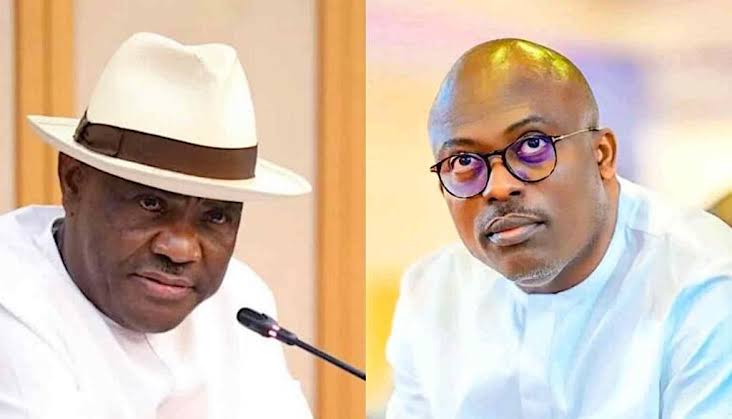
By all accounts, the recent visit of Rivers State Governor Siminalayi Fubara to his predecessor and political adversary, Nyesom Wike, has stirred a chorus of opinions from various quarters. For some observers, the optics of the visit suggested submission or a betrayal of political ideals. To others, it looked like weakness on the part of a sitting governor, who they believe should be asserting his executive independence instead of extending an olive branch to someone seen as a rival. However, such interpretations not only miss the deeper meaning of forgiveness and reconciliation in leadership but also reflect a fundamental misunderstanding of strength, especially in a society increasingly governed by ego and vengeance.
As Mahatma Gandhi rightly said, *“The weak can never forgive. Forgiveness is the attribute of the strong.” This timeless wisdom encapsulates the heart of Fubara’s gesture. In a political climate marked by pettiness, vendettas, and unending cycles of revenge, what Fubara did was not weakness, it was strength. And if more Nigerian leaders adopted this posture of humility and reconciliation, perhaps our politics would not be the toxic, winner-takes-all terrain it has become.
To appreciate the weight of Fubara’s action, one must consider the backdrop of his tumultuous relationship with Wike. Their falling out, which has been widely reported, was not just personal; it had institutional and national implications. The rift led to alignments and realignments within the state legislature, a sharp divide among political loyalists, and a general sense of instability in the governance of Rivers State. It has become a textbook example of the dangers of godfatherism in Nigerian politics, with many waiting to see how the younger Fubara would handle the larger-than-life shadow of Wike.
Yet, instead of doubling down on animosity or playing the popular card of ‘defiance’, Fubara chose the unpopular path, a path less travelled in Nigerian politics: reconciliation. He visited Wike, and from all indications, it was not a media stunt but a genuine effort to heal wounds. This move should be celebrated as statesmanship, not mocked as capitulation.
Forgiveness, contrary to popular perception, is not a sign of weakness. It takes deep emotional strength, maturity, and self-control to offer peace when one has every reason to retaliate. It is easy to lash out, to hold grudges, and to surround oneself with sycophants who feed the fire of resentment. But it is profoundly difficult to extend a hand of peace, especially when the scars are still fresh.
This idea is not just spiritual or philosophical, it is practical. According to mental health experts, forgiveness is emotionally liberating. Holding onto bitterness and hate often leads to psychological stress, sleeplessness, anxiety, and even depression. In leadership, these emotional weights can cloud judgment, breed paranoia, and fuel poor decision-making. On the other hand, a reconciliatory spirit frees the leader’s mind to focus on development, peace, and progress.
Some critics argue that Fubara’s visit gives Wike undue political mileage or reinforces his influence. But this line of thinking is flawed. First, power dynamics are not always defined by optics. In fact, the real power lies with the individual who can afford to stoop without losing his dignity. Fubara, in choosing to seek peace, has shown that he is secure in his position and is not afraid to take bold, unpopular decisions. That, in itself, is power.
Secondly, this visit should be interpreted not as a personal plea but as a strategic act of governance. Political stability is crucial for development, and reconciling with Wike may be the needed ingredient to douse the simmering tensions in Rivers State. After all, the ordinary people of Rivers do not care about ego battles. What they want is peace, governance, and prosperity.
In fact, Nigeria’s political culture is, unfortunately, one where reconciliation is rare, and humility is often mistaken for cowardice. Our leaders are groomed in the school of political brinkmanship, a gladiatorial arena where showing any sign of retreat is interpreted as defeat. But what has this mentality produced over the decades? Endless political feuds, impeachment dramas, legislative-executive face-offs, and stalled developmental projects.
Perhaps it is time we began to redefine strength in leadership. True strength is not in chest-thumping or political grandstanding. It lies in being able to choose peace when one has the power to wage war. It lies in understanding that governance is not about ego, but about service.
Fubara’s act should serve as a moral lesson for other leaders, especially at a time when the political class is deeply fragmented. Imagine how much more progress Nigeria would make if governors reconciled with their predecessors for the sake of continuity. Imagine the peace we could experience if political parties were mature enough to resolve internal disputes through dialogue rather than litigation, expulsion and jumping ship to opposing parties.
Without a doubt, forgiveness breeds stability. It fosters cooperation. It encourages continuity of policies and protects public institutions from being turned into battlegrounds. These are essential components of good governance.
In both African tradition and religious teachings, forgiveness holds a revered place. In Christianity, forgiveness is a divine attribute, even Jesus Christ, at the point of death, asked for forgiveness for his killers. In African culture, elders often urge feuding parties to bury the hatchet for the sake of community peace. It is ironic that in a society that professes deep religiosity and cultural values, acts of forgiveness in leadership are viewed with suspicion.
Condemning Fubara for seeking reconciliation with Wike is not only inadvisable but counterproductive. It reflects a societal mindset that glorifies conflict and undervalues peace. Fubara’s visit should be seen as a bold and mature move, one rooted in the understanding that forgiveness is not a sign of weakness, but a powerful expression of strength.
In a nation as fragile as Nigeria, where political disagreements often snowball into ethnic and religious crises, we need more leaders who can rise above pride and personal vendettas. We need more Fubaras, leaders who are secure enough to forgive, humble enough to reconcile, and strong enough to place the common good above their own ego.
As citizens, our focus should not be on who “knelt” before whom or who made the first move. Instead, we should be asking: “Will this peace bring development to Rivers State?” “Will it create jobs, fix roads, ensure security, and improve governance?” If the answer is yes, then we owe Fubara commendation, not condemnation.
After all, the real test of leadership is not in showing how many battles one can fight, but how many fires one can extinguish without raising a sword. And for that, Governor Fubara deserves applause. Not criticism.