Africa
Inadvisability Of “Escalading ”Amidst Escalating Hardships -By Isaac Asabor
The country is at a critical juncture, and what Nigeria needs now is not another Escalade SUV, not another champagne party, not another foreign trip for ‘medical checks’, but humility, sacrifice, and true service.

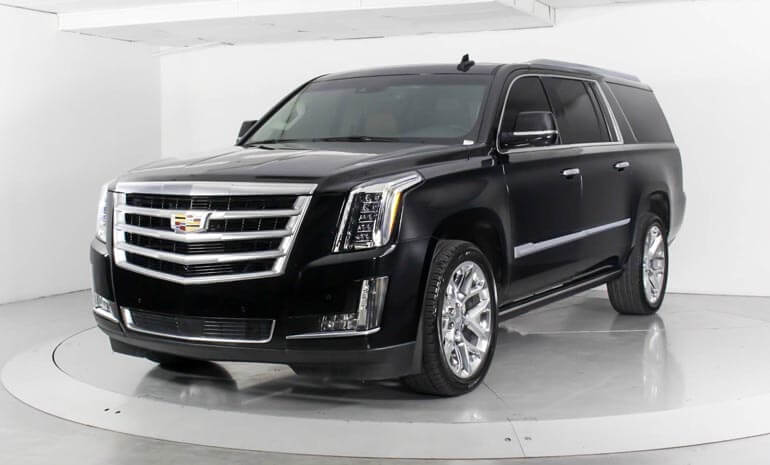
In a nation where survival has become a daily miracle, and where hunger, inflation, unemployment, and insecurity have become the norm rather than the exception, the spectacle of government officials and politically connected elites engaging in open display of wealth, what is stylishly coined “escalading” in this context, is not only insensitive but dangerously provocative. In fact, one must boldly state that in the face of worsening economic hardship, it is absolutely inadvisable for anyone in public office or with public funds to flaunt luxury, splendor, and extravagance. To do so is to spit on the suffering masses.
Let us be clear from the outset: the word “escalading,” as used in the Nigerian socio-political context, is derived from the brand name of the Cadillac Escalade, a luxury SUV often associated with affluence, prestige, and power. In the context of this piece, to “escalade” means to show off in a high-end car, particularly in convoy or during public events, often in the midst of people who cannot afford a square meal a day. It has become a symbol of everything wrong with Nigeria’s political class, a class that continues to wallow in opulence while the majority are neck-deep in misery.
It is no longer news that Nigeria is in the throes of an economic meltdown. The naira has continued to plummet, inflation has pushed basic food items beyond the reach of common citizens, and the cost of living is unbearably high. From Lagos to Sokoto, from Owerri to Maiduguri, stories of hardship, desperation, and despair echo through the markets, motor parks, and street corners.
Recent statistics from the National Bureau of Statistics (NBS) confirm what the average Nigerian already knows by instinct: food inflation is above 40%, general inflation is nearing 30%, and over 133 million Nigerians are multi-dimensionally poor. These are not just numbers, they are real human beings, real households, real stomachs going empty, and real dreams being dashed daily. So, when politicians drive by in convoys of Escalades and exotic cars, with sirens blaring and security personnel in tow, it is not just a display of wealth, it is a slap in the face of the downtrodden.
As gathered, the 2025 Cadillac Escalade is a luxury SUV with a price tag that reflects its premium status, starting at a hefty MSRP of \$90,295 and climbing to an eye-watering \$164,695 for the high-performance V-Series. Even the base model, which some listings show at around \$83,890, positions the Escalade far beyond the reach of the average buyer. While discounts of \$2,553 to \$5,382 may be available depending on trim and equipment, the lowest trims still approach six figures, with upper-tier models like the Premium Luxury Platinum and Sport Platinum priced at approximately \$112,690. In short, the Escalade is not just a car, it is a financial commitment.
There is an old African saying: When the house is burning, the wise man does not chase rats. Yet, in Nigeria, it appears that while the nation is metaphorically burning, our leaders are chasing luxury, image, and extravagance. It is highly inadvisable, indeed reckless, for public servants to be seen flaunting wealth during times of collective national suffering.
Take, for instance, the many political gatherings where convoys of Escalades, Land Cruisers, G-Wagons, and other high-end vehicles stretch for kilometers, while the roads themselves are riddled with potholes and death traps. Consider the birthday celebrations, wedding ceremonies, and private parties of government officials, events that could easily pass for Hollywood red carpet galas, with guests arriving in private jets, adorned in million-naira attires, and dining on imported wine and seafood.
What message does this send to the unemployed youth? What signal does it give to the market woman in Ijebu Ode who has had to halve her food portions to feed her children? Or to the university graduate roaming the streets with a CV that nobody wants to read? The answer is simple: “We do not care about your suffering.”
At this juncture, it is expedient to recall that the French Revolution was not sparked by mere political ideology. It was the visible, shameless disparity between the aristocrats and the starving populace that ignited the powder keg. Marie Antoinette’s infamous quote, “Let them eat cake”, whether apocryphal or not, captured the arrogance and disconnection of the ruling class. Nigeria is not far from such a tipping point if current trends persist.
With every show of affluence in the face of public agony, the political class inches closer to sowing the seeds of a revolt. Social media is already ablaze with resentment. Protests, although often clamped down, are beginning to simmer beneath the surface. The youths are watching. The masses are groaning. The patience of the Nigerian people, long known for its elastic resilience, is wearing dangerously thin.
It is no coincidence that attacks on politicians’ convoys, public jeering of public office holders, and online outrage are increasing. These are signs of a brewing social volcano. And the more our leaders “escalade” in the face of escalating hardship, the more they stoke the fires of public dissent.
Leadership, especially in hard times, is not just about policies and programs; it is about symbols. The masses read meaning into every gesture, every appearance, and every public statement. When leaders choose to fly commercial instead of private jets, citizens take notice. When they reduce their convoys and delay lavish celebrations, people feel seen.
Unfortunately, symbolic leadership is almost alien to Nigeria’s ruling elite. The president, governors, ministers, and lawmakers continue to live as if they govern Switzerland rather than a third-world nation battling debt, poverty, and underdevelopment. Meanwhile, fuel subsidy removal has left millions gasping for breath, with transport costs doubling and businesses shutting down.
A responsible leadership would, at the very least, cut back on excessive spending as a show of solidarity. They would freeze new luxury car purchases, slash estacode allowances, shrink convoys, and prioritize local hospitals over medical tourism. But that would require empathy, a virtue seemingly lacking among those at the helm.
It is time for Nigeria’s political class to have a sober reflection. The continued display of wealth in a country writhing in economic pain is morally bankrupt and politically unwise. The people are not blind. They may be hungry, but they are watching. And while they may appear docile today, hunger has a way of waking the boldest spirits.
The concept of “inadvisability” may not be found in any English dictionary, but its message is clear: It is inadvisable, imprudent, and out rightly stupid to flaunt wealth when your people are starving. It is an insult to intelligence and an affront to decency.
Let every leader, politician, and public official note: you may escalate your convoys today, but tomorrow, it may be the people who escalate their anger.
The country is at a critical juncture, and what Nigeria needs now is not another Escalade SUV, not another champagne party, not another foreign trip for ‘medical checks’, but humility, sacrifice, and true service.
Because in the end, it is not the glitter of your cars that history will remember, it is the footprint of your conscience in the sands of national suffering.