Africa
Inadvisability Of Seeing Part-Time Legislature As A Death Sentence To Democracy -By Isaac Asabor
At this juncture, it is germane to remind Nigerian lawmakers who are opposed to part-time legislature that democracy is not about how many days lawmakers sit in Abuja. It is about how effectively they represent the people, pass laws that solve problems, and check the executive. A part-time legislature, backed by smart systems, digital tools, and efficient scheduling, can deliver all of these.

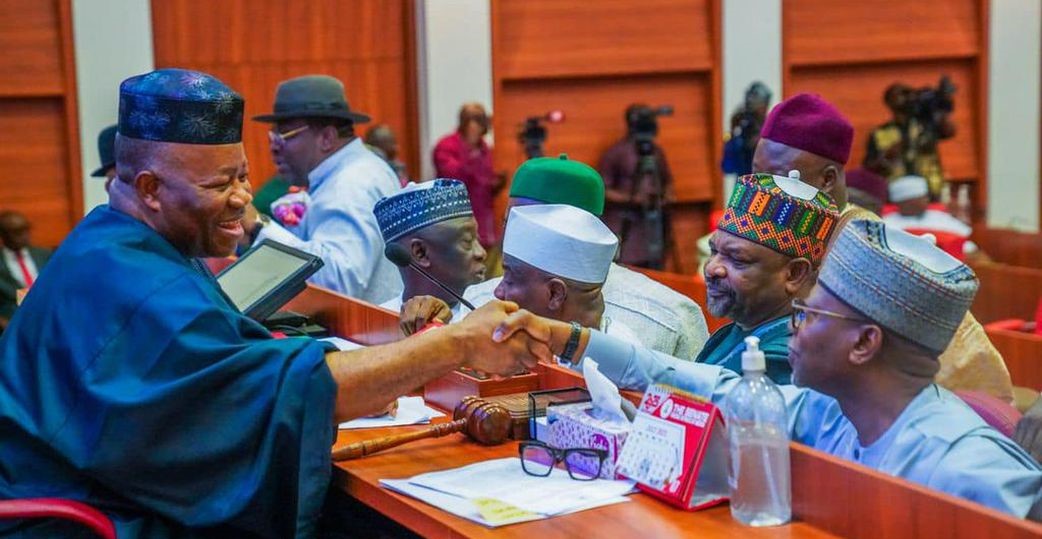
In a move that reeks of entitlement and fear of reform, the Nigerian Senate has responded to a growing call for a shift from full-time to part-time legislature by declaring, rather dramatically, that such a reform would “kill democracy.” This response, particularly from Senator Yemi Adaramodu, the Senate’s spokesperson, is not just melodramatic, it is profoundly misleading and self-serving.
Senator Adaramodu’s assertion that “if the parliament is on part-time, then democracy is on part-time” is nothing more than rhetorical gymnastics. It conflates the “form” of legislative operation with the “essence” of democracy. The fact remains that democracy is not defined by how often lawmakers sit in plush chambers, but by how accountable, transparent, and responsive the system is to its citizens.
Rather than allow fearmongering to derail a national conversation, it is time to face the facts. Part-time legislature, when properly structured and implemented, works, and not just in struggling democracies, but in some of the most stable and efficient political systems around the world.
The reason for sounding so optimistic in this context cannot be farfetched as several countries have successfully adopted part-time legislatures, proving that the model is not only viable but often superior in curbing legislative excesses and promoting citizen-centered governance.
For instance, Switzerland’s Federal Assembly is predominantly part-time. Lawmakers often maintain their regular professions and return home to their constituencies, which keeps them grounded. This setup has not hurt Swiss democracy, in fact, Switzerland consistently ranks among the top in global governance, transparency, and human rights.
In the United States, though at the State level, is another good example. While the U.S. Congress is full-time, many U.S. state legislatures are part-time. Examples include: Texas, where legislators meet just 140 days in every two years, and are paid modestly. Yet Texas boasts one of the largest economies in the world.
In a similar vein, Nevada, Montana, North Dakota, Arkansas, and Idaho also operate part-time legislative sessions without sacrificing governance efficiency.
Away from America, Australian democratic government also runs on the wheel of part-time legislature, albeit at the local government level. This is as many local councilors are part-time and still perform excellently. The efficiency of governance here is not about time spent in chambers but about policy execution, consultation, and delivery.
Also in a similar vein, Singapore’s Parliament, though technically full-time, operates with lean sessions. Lawmakers often have careers outside parliament and still deliver world-class governance. The system emphasizes performance, not just presence.
At the municipal level, Germany’s legislative councils operate part-time. Councillors maintain regular jobs while participating in legislative duties, ensuring they remain connected to societal realities.
Again, as for Norway and Denmark, both countries have flexible, relatively short parliamentary sessions, especially outside of budget or crisis periods. Democracy in these nations has not suffered, instead, they enjoy high citizen trust and political stability.
These nations provide clear proof that a part-time legislative model does not equate to democratic collapse. Instead, it offers a leaner, more focused, and more cost-effective alternative to bloated full-time structures.
At this juncture, it is expedient to opine on why Nigeria needs to consider the shift seriously. Nigeria’s democracy is young, and its economy is under severe stress. The country can no longer justify spending billions on a National Assembly that often performs below expectations.
Despite having one of the highest-paid legislatures globally, public trust in Nigerian lawmakers is abysmally low. The bloated system has become a drain on national resources. Transitioning to a part-time legislature would reduce the cost of governance, enhance citizen engagement, encourage professionals to serve without abandoning their careers and entrench a focus on results rather than routines.
Though there may be challenges which Nigeria might face with this reform, but let us be honest: reforming the legislature in Nigeria will not be a walk in the park. There are some legitimate challenges that must be addressed, and first is the resistance from lawmakers. Understandably, the biggest hurdle is the lawmakers themselves. They have too much to lose, fat salaries, allowances, travel perks, and opaque constituency project funds.
Secondly is that of constitutional Amendments. This is as part-time legislature would require constitutional amendments, a tall order in a system where self-interest often trumps national interest.
Thirdly is the lack of Institutional Infrastructure. Many legislative committees and support systems are underdeveloped. Transitioning to part-time work will require strengthening these institutions to avoid governance gaps.
The fourth factor is inadequate compensation framework. To avoid corruption and ensure commitment, a clear compensation and performance tracking system must be put in place for part-time lawmakers.
Another conjectured militating factor would no doubt be public misconceptions. This is as many Nigerians assume lawmakers must be present full-time to be effective. Therefore, civic education and media engagement would be needed to change this mindset.
Despite the foreseeable challenges, it is not out of place to assert that none of these challenges are insurmountable. What is needed is political will and public pressure to drive reform from below. At this juncture, it is germane to opinionate on how technology can support a Nigerian Part-Time Legislature.
In an increasingly digital world, Nigeria can harness technology to support part-time lawmakers. This can be achieved through virtual plenaries and committee Sessions. Platforms like Zoom, Microsoft Teams, and dedicated parliamentary software can allow lawmakers to participate in sessions remotely, reducing travel and accommodation costs.
In a similar vein, e-voting systems can be adopted by the lawmakers. In fact, secure electronic voting can allow lawmakers to cast votes on bills without needing to be physically present in Abuja.
Also, e-documentation can also be adopted. For instance, bills, motions, committee reports, and plenary summaries can be digitally accessed and reviewed from anywhere, making legislative work asynchronous and flexible.
Also in a similar vein is constituency digital platforms. Lawmakers can use dedicated mobile apps or portals to Interact with constituents, track needs and petitions, and share updates. This makes outreach more efficient and continuous.
Again, performance dashboards powered by data analytics can track legislative performance, bills sponsored, motions moved, attendance, and voting records, making legislators accountable to the public in real-time.
What is truly fatal to democracy is not the move to part-time legislature—it is the stubborn refusal to reform an outdated, exploitative, and unsustainable system. Nigeria must wake up to the fact that **public office is not an entitlement, it is a duty.
At this juncture, it is germane to remind Nigerian lawmakers who are opposed to part-time legislature that democracy is not about how many days lawmakers sit in Abuja. It is about how effectively they represent the people, pass laws that solve problems, and check the executive. A part-time legislature, backed by smart systems, digital tools, and efficient scheduling, can deliver all of these.
Therefore, the arguments by the Nigerian Senate to resist this reform are both predictable and tired. They do not hold water when placed side-by-side with global best practices. Other countries have walked this path and emerged stronger, leaner, and more democratic.
Let Nigeria not continue to make excuses. Let us innovate. Let us reform. Let us prove that democracy does not have to be expensive to be effective.
If lawmakers are unwilling to embrace this inevitable reform, then perhaps, like obsolete software, they should be uninstalled by the people at the next ballot.