National Issues
Kidnapping As The New Oil, by Prince Charles Dickson

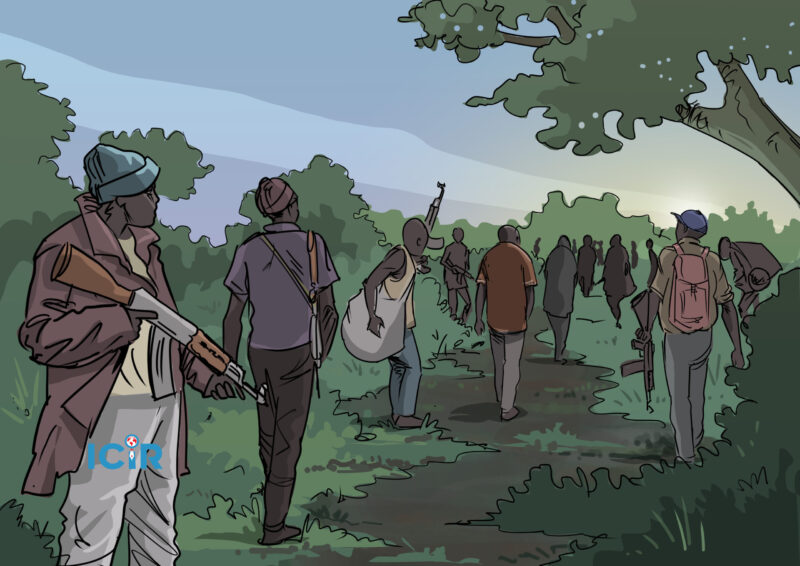
The economy of organised crime thrives because kidnap for ransom has become the oil well of bandits. From all indications, the more ransom government pays, the more criminals are emboldened to unleash mayhem on hungry, neglected and vulnerable populations across the country—Chris Kwaja
No truth can cure the sorrow we feel from losing a loved one. No truth, no sincerity, no strength, no kindness can cure that sorrow. All we can do is see it through to the end and learn something from it, but what we learn will be no help in facing the next sorrow that comes to us without warning—Haruki Murakami, Norwegian Wood
A lawyer named “Strange” was shopping for a tombstone. After he had made his selection, the stonecutter asked him what inscription he would like on it.
“Here lies an honest man and a lawyer,” responded the lawyer.
“Sorry, but I can’t do that,” replied the stonecutter. “In this state, it’s against the law to bury two people in the same grave. However, I could put ‘Here lies an honest lawyer.’”
“But that won’t let people know who it is,” protested the lawyer.
“It most certainly will,” retorted the stonecutter. “People will read it and exclaim, ‘That’s Strange!’ “
In a world where honesty is a rare commodity, a lawyer’s witty remark on his tombstone inscription sets the tone for our exploration of the kidnapping scourge. Lawyer Strange’s attempt to highlight his integrity is met with a humorous yet poignant response from the stonecutter. This anecdote foreshadows the themes of deception and truth that permeate the kidnapping industry, where honesty is often the first casualty. As we delve into the world of kidnapping as the new oil, we find that the lines between truth and deception are constantly blurred.
Ten years ago, I wrote about the scourge of kidnapping in Nigeria, warning that the country was on the verge of becoming the kidnap capital of the world. Unfortunately, my prophecy has come to pass. Today, kidnapping for ransom has become the new oil well for bandits, with the economy of organized crime thriving on the suffering of innocent Nigerians.
According to recent statistics, in the last year alone, over N10 billion has been paid to kidnappers as ransom. This figure is staggering, and it’s a clear indication that the kidnapping business is booming. The more ransom the government pays, the more criminals are emboldened to unleash mayhem on vulnerable populations across the country.
The statistics are alarming. And depending on whose statistics you are believing, last year a total of 3,420 people were kidnapped, with the highest number of cases recorded in the North West region. The Nigerian Police Force reported that it rescued 2,317 victims, but many more remain in captivity. The kidnappers’ demands are becoming increasingly brazen, with some asking for as much as N100 million in ransom for a single victim and going as far as killing even after ransom has been paid, another notch higher is asking for ransom to release the corpse of their victims.
The government’s response to the crisis has been inadequate. The “sidon-look” attitude of the administration has emboldened the kidnappers, who now operate with impunity. The “no-sabi” approach to tackling the problem has led to a situation where Nigerians are no longer shocked by the news of kidnappings. It’s become a norm, a way of life.
But it’s not just the government that’s failing. We, as a society, have also failed. We’ve lost our sense of feelings, our ability to display deep distress. We’re not truly sad, we can’t feel sad, be miserable, or be despondent. We can’t despair, or see the suffering, and ache because we’re too comfortable in our own lives.
The Yobe tragedy, the Yobe state massacre, the Yobe killings – all these have become serial. Over 120 students have been killed in approximately 10 years. The Government Secondary School, Mamudo, Potiskum local government area, the College of Agriculture in Gujba local government area – all these schools have been targeted. And what have we done? We’ve prayed, we’ve protested, but we haven’t taken action.
It’s time for us to take responsibility. We can’t just leave it to the government to solve the problem. We need to come together, as a society, to find solutions. We need to support the victims, to comfort them, to give them hope. We need to work together to create a safer Nigeria, a Nigeria where our children can go to school without fear of being kidnapped.
The kidnapping scourge is a symptom of a larger problem – a problem of inequality, of injustice, of corruption. We need to address these underlying issues if we want to tackle the kidnapping problem. We need to create jobs, to provide opportunities, to give our young people a sense of purpose.
Only then can we say that we’re truly sad, truly miserable, truly despondent. Only then can we say that we’re doing something to solve the problem. Only then can we say that we’re not just spectators, but actors, in the movie called Nigeria.
I can’t say that my suggestion would be taken, or they are exactly new but I will still outline them here:
Acknowledge the root causes: Kidnapping is a symptom of inequality, injustice, and corruption, and porous borders. Addressing these underlying issues is crucial.
2. Take responsibility: We can’t leave it to the government alone. We need to come together to find solutions, support victims, and give them hope.
3. Invest in security: Provide security agencies with resources to tackle kidnappers. Invest in technology, intelligence gathering, and community policing.
4. Create jobs and opportunities: Address the root causes of kidnapping by providing alternatives for our young people.
5. Improve education: Invest in education, particularly in vulnerable regions, to reduce the allure of criminal activity.
6. Strengthen community bonds: Foster stronger community relationships to prevent kidnappers from infiltrating and exploiting vulnerable areas.
7. Enhance legislation: Strengthen laws and penalties for kidnapping, and ensure swift justice for perpetrators.
As I drop my pen, I return to Lawyer Strange’s tombstone. The stonecutter’s clever remark, “People will read it and exclaim, ‘That’s Strange!’” resonates deeply. In Nigeria where kidnapping has become a lucrative industry, honesty and integrity are indeed strange and precious commodities. Just as Lawyer Strange’s inscription stands out as a beacon of truth, we must strive to uphold these values in our fight against kidnapping. By doing so, we can create a future where honesty is no longer a rare commodity, but a fundamental principle that guides our actions.
Kidnapping is a scourge that won’t quit until we take action. We need to come together, as a society, to find solutions. We need to support the victims, to comfort them, to give them hope. We need to invest in security, and address the root causes of kidnapping. Only then can we say that we’re truly sad, truly miserable, truly despondent. Only then can we say that we’re doing something to solve the problem—May Nigeria win
—
Prince Charles Dickson PhD
Team Lead
The Tattaaunawa Roundtable Initiative (TRICentre)
Development & Media Practitioner|
Researcher|Policy Analyst|Public Intellect|Teacher
234 803 331 1301, 234 805 715 2301
Alternate Mail: pcdbooks@yahoo.com
Skype ID: princecharlesdickson