Africa
Makinde Is Running, Wike Is Ranting: A Psychologist Sees a Nation-Minded Candidate—and a Man Chasing the Echo of His Own Importance -By John Egbeazien Oshodi
Let it be clear—Seyi Makinde will run. At 57 years old, he represents a generational shift that Nigeria urgently needs: not too young to lack experience, not too old to recycle outdated instincts. He is seasoned but still agile. Strategic but not cynical. He does not seek permission to lead. He does not apologize for having ambition. And he will not bow to loud men who have run out of moral direction but still scream for relevance.

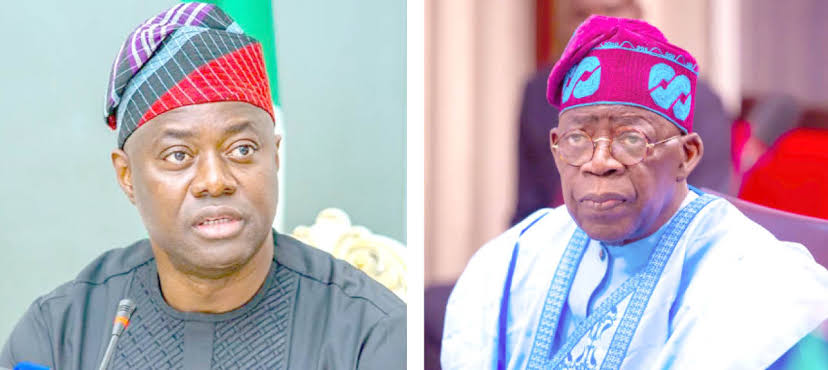
Seyi Makinde, Governor of Oyo State, has made his move—he will run for president in 2027 under the Peoples Democratic Party (PDP). This is no longer speculation or insider gossip; it is political certainty. With that decision, the PDP is entering a new and defining phase, not just politically, but psychologically. What we are witnessing is not merely a routine presidential bid—it is a transformation of power consciousness in a system addicted to tribal appeasement, noise over nuance, and cult-like gatekeeping.
This is not a Yoruba feud. It is not a betrayal of kin or culture. It is not an insult to President Bola Tinubu. It is democracy. It is ambition. It is Makinde’s right—and his strategic play.
Makinde’s Rise: Not a Betrayal, But a Breakthrough
Makinde’s emergence is not a rebellion—it is a reset. His candidacy is not driven by bitterness or ethnic rivalry, but by principle and performance. In a nation where political loyalty often masquerades as leadership, Makinde is choosing a different road. He is not following the script that says, “Wait your turn.” He is not kneeling before elders for permission to dream. He is running not because he is angry, but because he is ready.
For decades, Nigeria has nurtured the myth that ethnic kinship must translate into political obedience. This psychological trap has strangled potential across party lines. Makinde is not dishonoring Yoruba tradition by running—he is embodying it. Yoruba political culture, at its core, honors courage, vision, and dissent. The legacies of Awolowo, Bola Ige, and Ajasin were not built on silence, but on audacity. Makinde steps into that legacy, not outside it.
Wike’s Trap: A Lion Caged by His Own Contradictions
While Makinde ascends, Nyesom Wike deteriorates—not because he lacks talent, but because he has trapped himself in contradiction. Once the face of southern resistance within the PDP, Wike now serves as a Minister under Tinubu’s APC government. In his own words, he “will not contest against his current boss.” That single declaration disqualifies him from any credible PDP presidential bid. But more than that, it immobilizes him—stripped of clarity, stranded in dual allegiances, and increasingly incapable of honest political engagement.
Wike cannot challenge Tinubu, for doing so would violate his own oath of loyalty. He cannot return to PDP as a presidential aspirant without appearing treacherous. He cannot build an independent platform in time for 2027. What he can do—what he is now doing—is sabotage. Disrupt the PDP convention. Block emerging leadership. Support expired loyalties like Samuel Anyanwu. Wike is not trying to build anything—he is trying to prevent others from building without him.
The Unspoken Fight: From Friendship to Psychological Rejection
Makinde and Wike were once allies, co-strategists in the G-5 rebellion. But that partnership has collapsed—and in its place, a silent but sharp psychological war has begun. Wike is not merely reacting to Makinde’s ambition—he is reacting to his own political irrelevance. What wounds him is not betrayal, but outgrowing. The man who once followed now walks alone. The ally who once deferred now decides. And for Wike, that transformation is unforgivable.
Makinde has refused to be controlled. He has refused to play the junior role. He has refused to be the echo of Wike’s anger. And now, he is being punished—not by formal sanctions, but by Wike’s increasingly unhinged political behavior. Every press conference, every disruption, every strategic interference is not just politics—it is the emotional dislocation of a man losing the room.
Caught in His Own Logic: Wike’s Southern Hypocrisy
Wike recently held court with his remaining loyalists, demanding that the PDP must produce a southern presidential candidate in 2027. His message was wrapped in equity—but saturated with bitterness toward Atiku Abubakar, his northern nemesis. Wike’s premise was clear: the North has dominated long enough, it is time for the South.
But here lies the irony: Makinde is a southerner. He fits the criteria Wike himself outlined. He is eligible, prepared, and nationally viable. Yet Wike resists him. Why? Because Makinde is not his candidate. Makinde is not controllable. Makinde is not Wike’s puppet. And so, Wike’s demand for a southern candidate was never about principle—it was about possession. He wants a figurehead, not a frontrunner. And now that he cannot install one, he is attacking the one southern candidate rising on his own terms.
Makinde has turned Wike’s strategy into a trap. He is the southern solution Wike can neither support nor stop. And that is the deepest political wound of all.
Makinde’s Quiet Revolution: Stability Without Surrender
In contrast, Makinde has mastered the art of movement without noise. He has not stormed out of meetings. He has not declared war on party elders. He has not issued ultimatums to the media. Instead, he has built alliances with key figures like Bala Mohammed and Peter Mbah. He has remained loyal to the PDP while expanding his appeal beyond his region. He is not just running a campaign—he is modeling what leadership might look like in a post-noise Nigeria.
Makinde has become the most psychologically stable figure in the PDP’s frontline. In a party long traumatized by strongmen, betrayal, and factionalism, Makinde represents what the PDP has never had at the top: a clear head, a calm tone, and an uncompromised spine. That, more than any ideology, is what has earned him rising support.
The PDP Crossroads: Unity or Emotional Blackmail
What’s happening inside the PDP is no longer a simple leadership contest—it is a psychological housecleaning. The party is being forced to confront its dependence on emotional blackmailers and political emperors. It must decide whether to remain hostage to men who scream louder than they build, or to move forward with those who lead without wrecking the room.
Makinde is forcing that choice—without theatrics. And Wike is resisting it—without coherence. The PDP must now choose: protect a loud legacy, or embrace a quiet future?
2027: Nigeria’s Psychological Test
The larger question now shifts to the Nigerian electorate. What kind of leadership do Nigerians really want? A known face? A familiar voice? A tribal “brother”? Or someone who brings strategic clarity, youth, and fresh discipline?
Tinubu will contest, no doubt. But Makinde will challenge. And it will not be a tribal war—it will be a battle for Nigeria’s political soul. One man represents the comfortable past. The other, a disrupted but necessary future.
In Makinde’s candidacy lies a question Nigerians must now answer: Are we still afraid to think differently? Or are we finally ready to vote beyond fear, tribe, and theatrics?
Final Reflection: Makinde Will Run. Wike Will Rage. Nigeria Must Choose.
Let it be clear—Seyi Makinde will run. At 57 years old, he represents a generational shift that Nigeria urgently needs: not too young to lack experience, not too old to recycle outdated instincts. He is seasoned but still agile. Strategic but not cynical. He does not seek permission to lead. He does not apologize for having ambition. And he will not bow to loud men who have run out of moral direction but still scream for relevance.
Nyesom Wike, once a towering force within the PDP, is now a tactician without a mission—a man trapped in a web of contradictions, lashing out at a friend who simply grew tired of being a follower. Wike is fighting a ghost—his former dominance—and it is slipping away.
Then there is Bola Tinubu: 71 years old, the sitting president, a veteran of the political trenches whose hands have shaped the current system. But Nigeria is not just in need of continuity—it is in need of renewal. And Makinde’s entry into the presidential race is more than a challenge to incumbency; it is a generational call to conscience.
Makinde is not just a candidate. He is a referendum on the kind of politics Nigeria must finally leave behind—the politics of godfatherism, personality cults, ethnic reflexes, and governance by nostalgia. He stands for a shift not only in who leads, but how leadership is imagined and delivered.
Let Tinubu prepare. Let Wike implode. Let the PDP decide with courage, not calculation. Let Nigerians vote not out of fear, but out of hope for something saner, younger, and more stable.
Because this time, the loudest voice is not the one to watch.
It is the calmest one.
And that voice belongs to Seyi Makinde.
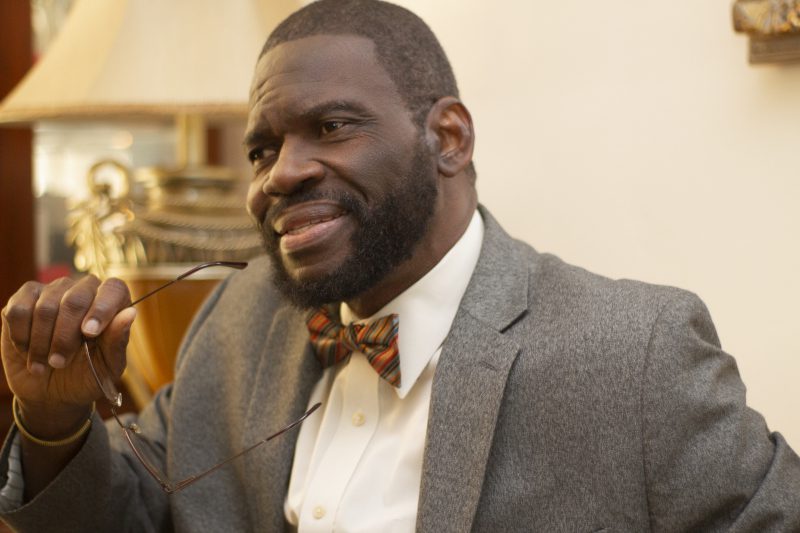
Psychologist John Egbeazien Oshodi
Professor John Egbeazien Oshodi is an American psychologist, educator, and author specializing in forensic, legal, and clinical psychology, cross-cultural psychology, police and prison sciences, and community justice. Born in Uromi, Edo State, Nigeria, he is the son of a 37-year veteran of the Nigeria Police Force—an experience that shaped his enduring commitment to justice, security, and psychological reform.
A pioneer in the field, he introduced state-of-the-art forensic psychology to Nigeria in 2011 through the National Universities Commission and Nasarawa State University, where he served as Associate Professor in the Department of Psychology. His contributions extend beyond academia through the Oshodi Foundation and the Center for Psychological and Forensic Services, advancing mental health, behavioral reform, and institutional transformation.
Professor Oshodi has held faculty positions at Florida Memorial University, Florida International University, Broward College, where he also served as Assistant Professor and Interim Associate Dean, Nova Southeastern University, and Lynn University. He is currently a contributing faculty member at Walden University and a virtual professor with Weldios University and ISCOM University.
In the United States, he serves as a government consultant in forensic-clinical psychology, offering expertise in mental health, behavioral analysis, and institutional evaluation. He is also the founder of Psychoafricalysis, a theoretical framework that integrates African sociocultural dynamics into modern psychology.
A proud Black Republican, Professor Oshodi advocates for individual empowerment, ethical leadership, and institutional integrity. His work focuses on promoting functional governance and sustainable development across Africa.