Global Issues
Measures at Ensuring Africa’s Food Sovereignty -By Kestér Kenn Klomegâh
Maximizing the impact of resource mobilisation requires collaboration governments with key external partners, investment promotion agencies, financial institutions, and the private sector. Partnerships must aligned with national development priorities that can promote value addition, support industrialization, and deepen regional and continental integration.

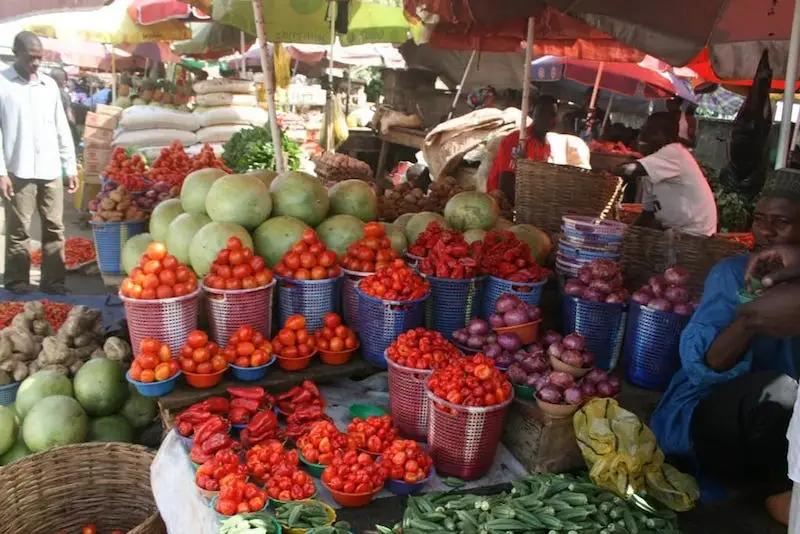
China’s investments in Africa have primarily been in agricultural sector, re-enforcing its support for the continent to attain food security for the growing population estimated currently at 1.5 billion people. With huge expanse of land and untapped resources, China’s investment in agriculture, focused on increasing local production, which have been described as high-appreciable.
Brazil has adopted similar strategy in its policy with African countries, its investments have concentrated in a number of countries, especially those rich in natural resources. It has significantly contributed to Africa’s economic growth by improving access to affordable machinery, industrial inputs, and engaged in adding value to consumer goods. Thus, Africa has to reduce product imports which can be produce locally.
The China and Brazil in African Agriculture Project has just published online a series of studies concerning Chinese and Brazilian support for African agriculture. They appeared in an upcoming issue of World Development. The six articles focusing on China are available below:
–A New Politics of Development Cooperation? Chinese and Brazilian Engagements in African Agriculture by Ian Scoones, Kojo Amanor, Arilson Favareto and Qi Gubo.
–South-South Cooperation, Agribusiness and African Agricultural Development: Brazil and China in Ghana and Mozambique by Kojo Amanor and Sergio Chichava.
–Chinese State Capitalism? Rethinking the Role of the State and Business in Chinese Development Cooperation in Africa by Jing Gu, Zhang Chuanhong, Alcides Vaz and Langton Mukwereza.
–Chinese Migrants in Africa: Facts and Fictions from the Agri-food Sector in Ethiopia and Ghana by Seth Cook, Jixia Lu, Henry Tugendhat and Dawit Alemu.
–Chinese Agricultural Training Courses for African Officials: Between Power and Partnerships by Henry Tugendhat and Dawit Alemu.
–Science, Technology and the Politics of Knowledge: The Case of China’s Agricultural Technology Demonstration Centres in Africa by Xiuli Xu, Xiaoyun Li, Gubo Qi, Lixia Tang and Langton Mukwereza.
Strategic partnerships and the way forward: African leaders have to adopting import substitution policies, re-allocate financial resources toward attaining domestic production, sustain self-sufficiency.
Maximizing the impact of resource mobilisation requires collaboration governments with key external partners, investment promotion agencies, financial institutions, and the private sector. Partnerships must aligned with national development priorities that can promote value addition, support industrialization, and deepen regional and continental integration.