Africa
Naming a Legacy Still in Progress, Tinubu’s Self-Honouring Spree Raises Questions -By John Oyebanji
To be fair, it’s unlikely that all these naming decisions are driven directly by the President himself. However, a discerning leader must be wary of such public displays of allegiance, especially when they appear tone-deaf to the nation’s current socio-economic mood. In a time of economic hardship, with widespread inflation and youth disenchantment, ceremonies that focus on vanity projects rather than solutions feel like a misreading of national priorities.

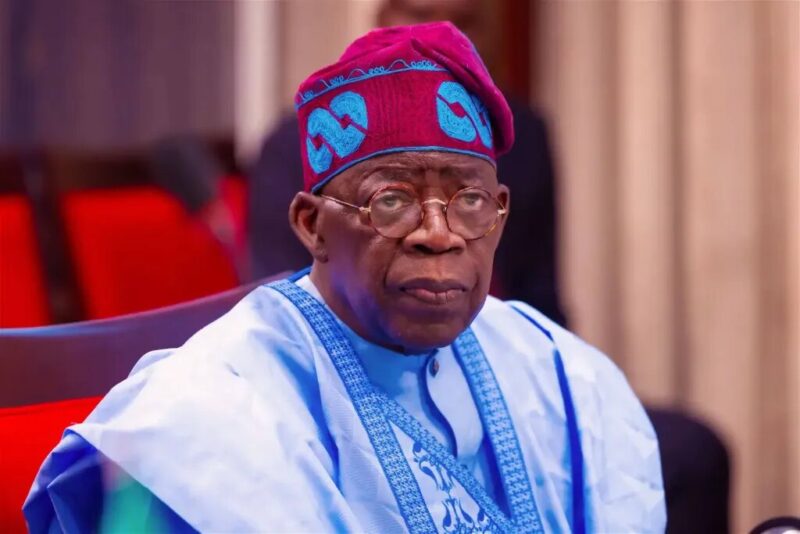
Just two years into President Bola Ahmed Tinubu’s administration, an unmistakable pattern has emerged, an accelerating spree of naming national landmarks, public institutions, and key infrastructure after himself.
Across Abuja, Lagos, and beyond, a long list now bears the President’s full name. These include the Bola Ahmed Tinubu Barracks, Bola Ahmed Tinubu Technology Innovation Complex (BATTIC), Bola Tinubu Polytechnic, Bola Ahmed Tinubu Way, and most recently, the rechristened Bola Tinubu International Conference Centre, formerly known simply as the International Conference Centre (ICC). A building at the National Assembly complex has also been renamed Senator Bola Ahmed Tinubu Building.
In Lagos, the ever-busy Lekki-Epe Expressway, from around Abraham Adesanya, now includes a Bola Ahmed Tinubu Way. Market facilities at Mile 12 and Sabo Yaba have also reportedly adopted the President’s name.
While leaders in power occasionally receive such symbolic honours, the sheer speed and volume of these gestures barely halfway into a first term, have prompted discomfort in many quarters. Not least because, by all accounts, none of these projects were conceived, initiated, or executed under Tinubu’s leadership. They are legacy structures inherited from previous administrations.
Many Nigerians are beginning to ask, why the hurry to immortalize a legacy that is still in motion? And more importantly, what legacy is being celebrated?
A strong argument can be made that this flurry of renaming is less a reflection of national gratitude and more a result of political sycophancy. Appointees and loyalists, eager to curry favour, seem intent on bestowing symbolic honour as a shortcut to influence. It is a practice that often places optics over substance, creating monuments to power rather than to impact.
Renaming institutions during an administration’s tenure runs the risk of undermining both history and accountability. For example, naming the International Conference Centre after Tinubu arguably disregards the role of General Ibrahim Babangida, under whose administration Abuja’s development, including such landmark facilities, became a national reality. A more thoughtful and less self-referential honour might have acknowledged that contribution.
To be fair, it’s unlikely that all these naming decisions are driven directly by the President himself. However, a discerning leader must be wary of such public displays of allegiance, especially when they appear tone-deaf to the nation’s current socio-economic mood. In a time of economic hardship, with widespread inflation and youth disenchantment, ceremonies that focus on vanity projects rather than solutions feel like a misreading of national priorities.
Ultimately, legacies are not built through signage, but through service. Great leaders are remembered not because buildings bore their names, but because policies bore fruit in people’s lives. Impact, not iconography, is the true measure of leadership.
If the Tinubu administration succeeds in transforming lives, empowering the next generation, and addressing the nation’s most urgent challenges, history will reward him, without the need for prematurely scripted praise. But if the next two or six years continue to fall short of expectations, no number of buildings or roads named in his honour will salvage a legacy the people themselves cannot feel.
And as many have noted, all it takes is one successor, one stroke of a pen, to erase all these honours from public memory, unless they are first engraved in public hearts.
In the end, what truly endures is not the name on the building, but the lives transformed within and beyond it.
John Oyebanji is a Public Affairs Analyst, Media/PR Specialist, Educational Administrator, and Clergy, among many other things he represents. He writes from Modakeke, Osun State, and can be reached via thejohnoyebanji@gmail.com

Continue Reading