Connect with us

Africa

Nation-Building Beyond Empty Rhetoric: A Call at 65 -By Turaki Abdulhamid Yahya

The destiny of Nigeria does not rest on leaders alone. It depends on the collective will of its people to reject complacency, confront injustice, and embrace the hard but necessary work of building a nation worthy of its promise. At 65, let this be our renewed independence: not just freedom from colonial rule, but freedom from the chains of bad governance and wasted potential.

Published

on

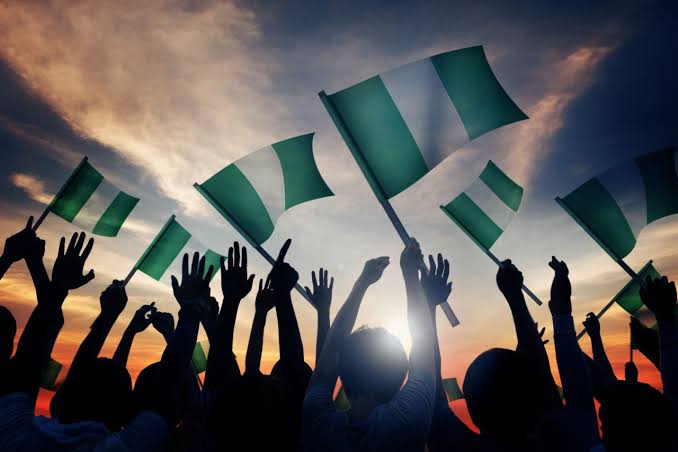
Nigeria flag

As Nigeria marks 65 years of independence, we are once again confronted with a sobering truth: no country can manipulate its elections, compromise its military, weaken its judiciary, control its legislature, and neglect its police force while still expecting to command global respect. Nation-building goes beyond anniversary speeches, ceremonial parades, and empty promises; it requires visionary leadership, strong institutions, and genuine commitment to reform.

Political scientist Francis Fukuyama (2004) reminds us that “state-building is fundamentally about creating and strengthening institutions that deliver public goods to citizens.” Yet, six and a half decades after independence, our institutions are still weakened by personal, sectional, and partisan interests. Robert Rotberg (2003) further warns that when leaders fail to govern effectively, states risk decline marked by corruption, insecurity, and deep divisions. Sadly, these remain Nigeria’s recurring struggles.

Across the globe, nations that command respect are those where leaders match words with action; implementing policies that strengthen unity, promote justice, and drive sustainable development. Nigeria, by contrast, continues to wrestle with tribalism, religious manipulation, and selfish ambitions that enrich a few while impoverishing the majority.

At 65, the question before us is simple: will Nigeria remain a giant shackled by rhetoric, or will it rise through genuine reform and collective responsibility? True nation-building demands more than celebrating independence, it requires Nigerians, both leaders and citizens, to demand accountability, participate actively in governance, and insist on reforms that put the people first.

The destiny of Nigeria does not rest on leaders alone. It depends on the collective will of its people to reject complacency, confront injustice, and embrace the hard but necessary work of building a nation worthy of its promise. At 65, let this be our renewed independence: not just freedom from colonial rule, but freedom from the chains of bad governance and wasted potential.

Advertisement

Turaki Abdulhamid Yahya,
Writes from Federal University of Kashere,Gombe State.

Continue Reading
Advertisement
Click to comment

Leave a Reply

Your email address will not be published. Required fields are marked *

Trending Contents

Topical Issues

Governor Siminalayi Fubara Governor Siminalayi Fubara
Africa9 hours ago

Emerging Facts On The Impeachment Move Against Fubara: Nigerians Were Right All Along -By Isaac Asabor

Governor Fubara’s insistence on fiscal discipline may disrupt entrenched arrangements, but disruption is sometimes the price of reform. Independence is...

FUBARA AND WIKE - AMAEWHULE FUBARA AND WIKE - AMAEWHULE
Politics12 hours ago

It Is High Time Wike And His Acolytes Allowed Fubara To Drink Water And Drop The Cup -By Isaac Asabor

The choice before Rivers political actors is clear. They can respect the mandate freely given by the people; allow the...

quality-nigerian-flag-for-sale-in-lagos quality-nigerian-flag-for-sale-in-lagos
Africa13 hours ago

Nigeria’s Year of Dabush Kabash -By Prince Charles Dickson Ph.D.

While politicians posture, Nigerians are trying to understand a new tax regime, rising costs, shrinking incomes, and policy explanations that...

Africa23 hours ago

Singapore’s Leaders Built An Economy; Nigeria’s Keep Building Excuses -By Isaac Asabor

Until Nigerian leaders stop building excuses and start building institutions, the gap between both countries will remain. Singapore’s rise is...

Tinubu and Wike Tinubu and Wike
Africa24 hours ago

Nyesom Wike and falling rafters of Rivers -By Festus Adedayo

Nigerian politics has produced a number of queer politicians and their absurd politics. One was Chief S. L. Akintola, the...

Wike Wike
Africa1 day ago

Campaigns Without Elections: How Nigeria’s Politicians Are Breaking The Law In Plain Sight -By Isaac Asabor

Nigeria cannot afford a perpetual campaign cycle. The country is grappling with economic hardship, insecurity, and institutional fatigue. This is...

Abba Dukawa Abba Dukawa
Africa1 day ago

Reciprocity in Conflict: How Covert Attacks Provoke Resistance -By Abba Dukawa

Governor Abba Kabir belongs to every Kanawa and to no one – he's the people's governor, above political affiliation. One...

JAMB and UTME JAMB and UTME
Forgotten Dairies1 day ago

The Role of Technology in Nigeria’s Education System -By Alheri Una

To fully maximize technology in education, government investment is crucial. Public-private partnerships can help provide internet access, digital devices, and...

Egbetokun Egbetokun
Africa1 day ago

Setting The Record Straight On The So-Called “IGP’s Boys” Narrative -By Danjuma Lamido

Nigeria deserves a Police Force that is firm, fair, and accountable, and a media ecosystem that reports responsibly. We must...

Russian-Indian Business Dialogue, December 2025 Russian-Indian Business Dialogue, December 2025
Forgotten Dairies1 day ago

Russia–India Dialogue Provides Platform for Strengthening Bilateral Entrepreneurship -By Kestér Kenn Klomegâh

Participants noted the development of Russia–India cooperation and implementation of joint business projects will continue at major international platforms, including...