National Issues
Nigeria At 64: Celebrating Our Gains, by Zayd Ibn Isah

During a Corporate Law lecture at the Nigerian Law School, Abuja Campus, Bwari, the lecturer, Dr. Emmanuel Olowononi, made a profound statement that struck many of us. He said Nigeria is making progress. His words were greeted with murmurs. I could imagine some of the students asking themselves, “What is the erudite law lecturer insinuating? Nigeria is making progress? How?”
For many in the hall that day, the statement seemed out of sync with the reality we are accustomed to. We have lived through challenges—economic downturns, political instability, rising insecurity—so hearing someone say that Nigeria is making progress felt like a hard pill to swallow. Yet, upon deeper reflection, there’s truth to Dr. Olowononi’s words. Progress, though not always apparent, is often gradual and complex. And Nigeria’s journey, though fraught with obstacles, has seen significant strides that cannot be ignored.
Dr. Olowononi was reminiscing about the difficulties associated with registering companies in the past. He shared his experiences as a young lawyer, queuing in long lines, struggling with paperwork, and enduring endless delays to register a company. Now, however, everything is possible from the comfort of one’s home, thanks to technology and some of the innovations embedded in the new Companies and Allied Matters Act (CAMA). This transformation, he emphasized, is a microcosm of the broader progress Nigeria has made across several sectors.
And yet, even as I began to see the truth in Dr. Olowoniʼs assertion, I could also understand why a majority of Nigerians would either scoff at those words or fail to acknowledge the truthfulness within them. As Nigeria marks its 64th year since it began the journey to nationhood, as an independent country, many Nigerians would find it hard to celebrate this milestone or celebrate it with others. “There is absolutely nothing to celebrate,” they might say. And even though they would be justified in saying that, they would not be entirely truthful.
Sometime in 2011, the former U.S. ambassador to Nigeria, John Campbell, predicted that Nigeria would not exist beyond 2015. At the time, this generated ripples of apprehension and paranoia amongst the populace, especially with the state of the nation at the time. For some people, this dark and troubling prophecy would come to pass simply because a few other African countries had met a similar fate. To them, the disintegration of Nigeria was an inevitability.
It has been thirteen years since Campellʼs damning prediction and Nigeria is still very much a country—going through a difficult period, yes, but quite whole and unbroken. The journey down to this present age has been anything but easy, especially when you consider the fact that Lord Lugard did not foresee the numerous challenges associated with trying to create a modern nation out of over 300 ethnicities within 923,700 square kilometers of land. And yet, against all odds, this British vision has steadily morphed into an indubitable African reality, surviving a civil war, decades of military rule and internal threats to its integrity as a country.
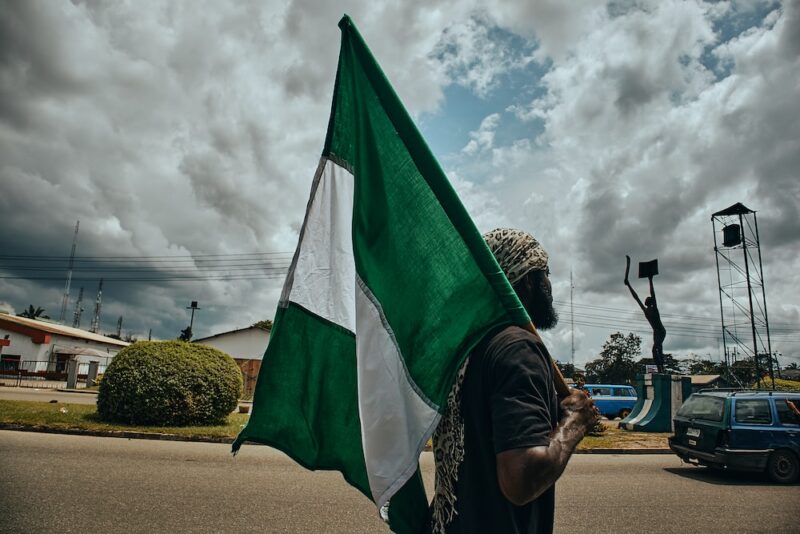
Nigeria is a miracle. Yes, it is a miracle with economic trials and security concerns and centrifugal elements, but a miracle nonetheless. And perhaps, this is why it is important for us to not buy into the doomsday prophecies of Western powers concerning the state and future of our nation. In commemorating Nigeria’s independence, it is important for us to celebrate the achievements that have brought us this far. Every milestone we have crossed as a country is an indication of the collective will, strength and grit that defines us as Nigerians: The Naija Spirit.
It is also important to note that even the Western and European countries we admire nowadays were not always strongholds of democracy and development. The United States of America has emerged through a revolution, civil war, the ugliness of slavery and racial segregation, The Great Depression, several conflicts abroad and many failed policies at home, and even now, as the greatest nation on earth, it is divided politically and ideologically. But should the United States ever be threatened by external forces, you can be rest assured that Democrats and Republicans alike will unite to ensure their country fights and does not fall.
The true test of a nation lies within certain pivotal moments in its history, and as Nigerians, we need to recognize the opportunities present in our current realities. If Japan could emerge from the devastation of its losses in World War II and embark on a path of development to become a miraculous case study of a nation, Nigerians should not write off the future of their fatherland just yet. This is because our nation is in the process of renewing hopes, and there are strategies being put in place to revitalize our economy, foster steady growth, and secure a future for coming generations.
Recently, the African Development Bank Group published a report which projected that economic growth in Nigeria is expected to increase to 3.2% in 2024 and 3.4% in 2025, due to “improved security, higher oil production, and stronger consumer demand.” The potential for Nigeria to overcome its socio-political and economic hurdles goes beyond optimistic statistics alone. Our renewed hopes for a positive turnaround in our national affairs should stem from a litany of blessings and achievements, especially the ones that have been overshadowed by negativities and taken for granted.
For one, we are still very much a united country, and our enormous population teems with youthful exuberance and enterprise. In the last decade alone, there has been an upsurge of interest in education and self-development by many Nigerians. This has contributed to an explosion of creativity, drive and ambition amongst the youths, with many of them excelling at home and abroad in areas such as sports, music, entertainment (online content creation), literature, arts, technology and of course, academics. There are more schools, good roads, hospitals, innovation hubs and internet-based businesses sprouting up regularly.
In every sector globally, there are Nigerians at the forefront of industry-driven progress, and with the japa mentality in full steam, Nigerians are more open to seeking opportunities abroad, so that whenever they attain success on foreign shores, they aim to re-invest in their homeland. In this age of technological development and melting borders, we should consider the fact that Nigeriaʼs hope for positive changes will be tied to the exploits of its sons and daughters abroad. Already, we have a generation of youths who are not only vocal and active about social change, but are responsible for vibrant cultural expressions that seek to positively burnish Nigeriaʼs image through food, visual entertainment, sports, music, tech and literature.
Even if we can agree that there is little to celebrate on October 1st, we should be candid enough to recognize the courageous and illogical persistence of Nigerians to take everything in stride and forge a path regardless. The average Nigerian believes that no matter how bad things might be, tomorrow still holds enough promise and potential for total transformation. The average Nigerian knows, “My story fit change anytime soon,” and it is this spirit of positivity that we need to project in order to gain an upswell of restorative hope for our nation. If anything, it could be the very thing keeping us from fulfilling prophecies of disintegration and chaos that pessimists are quick to peddle on social media.
Ultimately, there is much to be done by the present administration, seeing as it occupies a key position of leadership in what might be a decisive period for this country. The Nigerian government needs to prioritize transparency and inclusivity in its handling of our affairs, even as it addresses the economic struggles and security concerns of its citizens. Failure to do so may lead to a breakdown in democratic values, driving Nigerians toward violence, as can be seen in the growing instability across Africa and the world at large. Now more than ever, there is an urgent need for effective governance, economic empowerment, and robust security measures to safeguard Nigeria’s democratic foundations.
In 2024, the onus lies upon the government of this present administration to explore ways in which it can show that current leadership is not disconnected from the realities of ordinary people who remain vital to the sustenance of the Nigerian Dream. Nigerians are a diverse spread of resilient people inhabiting a land of vast opportunities. Nigerians are hard workers and problem-solvers and dreamers, and perhaps this is the greatest gain of our journey to nationhood: that we are bound as a remarkable set of people, and given the right push and leadership, we can do great things and overcome terrifying odds together.
As Richard Bourne notes in his book, Nigeria: A New History of a Turbulent Century (2015), “More politicians have to join with journalists and civil society in pushing for greater probity in public life, and progress is bound to be slow. But given its manifold riches, in human and physical resources, Nigeriaʼs second century could surprise the world, and Nigerians themselves, with a success story.”
Happy Independence Day, Nigeria.
May our collective dreams as a nation come true.
Long live the Federal Republic of Nigeria!
Zayd Ibn Isah can be reached at lawcadet1@gmail.com