Africa
Nigeria vs USA vs US; The Genocide -By Prince Charles Dickson Ph.D
So yes: scrutinize America’s motives. Demand clarity from Abuja. Mock the performative saviors—foreign and local—who love microphones more than metrics. But in the space between their declarations, let us become a country that no longer needs rescuing. Let our US—you and I—refuse to be spectators in our own story. Because the loudest war we will fight is against the inner grammar that says nothing can change here. Change isn’t a missile. It is a budget honestly spent, a law honestly enforced, a neighbor honestly seen.

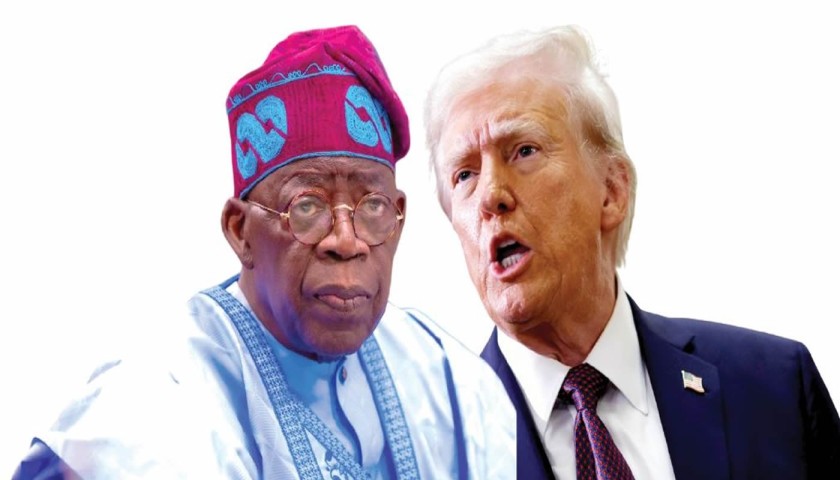
Picture the breaking news chyron: “Trump’s America threatens strike on terror groups in Nigeria after new outcry on Christian genocide; Nigeria designated ‘country of particular interest.’” The fonts are loud, the pundits louder, and the algorithms are doing push-ups. On the streets of Jos, Lagos, Minna, Yenagoa, Aba, Gombe—everywhere—people are asking each other two questions that are really one question: “Na who wan fight who?” and “Who sent these people?”
Because in a nation as vast, layered, and emotionally combustible as Nigeria, war is never a tidy binary. It is not Country vs Country. It is Country vs Countries contained inside itself, an over-ripe mango of identities: ethnic, regional, religious, class, partisan, cultic, and the deadly micro-tribes of online factions. If war breaks out here, it would be a choir of contradictions singing off-key.
In the first week of the hypothetical crisis, Abuja holds a press conference: elegant backdrop, stern faces, and the sudden migration of grammar from passive to active voice. “We will defend our sovereignty,” they say, and they mean it, mostly. But sovereignty, like fuel scarcity, is never simply logistical; it is spiritual. It needs legitimacy to run. It needs trust to flow. And for a people whose grief has piled up like uncollected refuse—villages burned, commuters hijacked, livelihoods ransacked, trust is that scarce commodity the government has not refined in years.
Meanwhile, Washington is having its own theatre. There’s a reality-TV energy to it: a former (or returning?) sheriff swaggering down Main Street insisting he’ll save the church from the bandits and the world from chaos, while the choir behind him alternates between hymns about “values” and ballads about interests. Is it genocide, or is it geopolitics? Is it compassion, or is it cable news? Is it a sincere cry for persecuted people, or a GPS pin dropped on oil routes, arms contracts, minerals, and spheres of influence? The answer is Yes—to all of the above. Modern interventions are terrible at being singular.
Let’s be honest: if the United States comes, it will not arrive as “America,” singular and solemn. It will arrive as Americas: the Pentagon’s cold calculus; the State Department’s elegant sentences; the church lobby’s candles and choruses; the defense industry’s spreadsheets with smiling zeros; the campaign strategist’s heat map of swing states; the think tank’s white papers cloaked in footnotes like liturgical incense; the humanitarian NGOs with their earnest acronyms and battered pickup trucks. It will arrive as a quarrel within itself about who it is. That’s the first “US” in this title.
And if Nigeria fights, Nigeria will not fight as “Nigeria.” It will fight as Nigerias: the regimented Nigeria of barracks and parade grounds; the improvisational Nigeria of hunters’ guilds and vigilantes; the transactional Nigeria where loyalty is a contract renewed on Fridays; the pastoral Nigeria of herders and field paths; the militant Nigeria of hashtags and hot takes; the clerical Nigeria with pulpits that double as watchtowers; the bureaucratic Nigeria that will still insist on “processing” an approval while shells whistle outside. That’s the second “US”—not the United States, but us: the quarrel we keep having with ourselves.
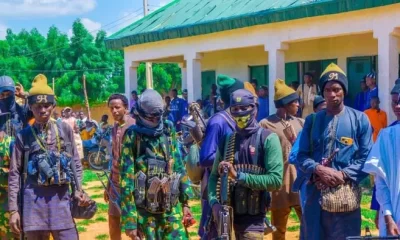
Who fights who? Good question. In the North West and North Central, militias that were yesterday “bandits,” today become “proxies,” and by tomorrow they are “non-state actors” with suddenly excellent media teams. In the North East, old wars are renamed new operations, and acronyms multiply like rabbits. In parts of the South East, separatist radio broadcasts shake hands with criminal opportunists who discovered that ideology is a fantastic mask for extortion. In the South South, pipeline vigilantes compose communiqués in oil-slicked poetry, reminding all sides that the creek remembers. In Lagos, the war will be fought on generators; whoever controls diesel controls the conversation. In Abuja, the war will be fought in meetings; whoever controls the agenda controls the reality. In social media Nigeria, truth will be whatever got the most shares by midnight.
Would the United States bomb “terrorists”? The question assumes Nigeria is legible. It isn’t. Our conflicts are palimpsests—layers upon layers of grievances written over each other: land use, state failure, climate pressures, historical wounds, revenge loops, police brutality, poverty, impunity, border porosity, weapons proliferation, and the kind of political entrepreneurship that harvests people’s fear into votes, thugs, or both. Drop a smart bomb on a symptom and you get a smarter symptom. Target “the terrorists,” and you will learn quickly that some of the “terrorists” are yesterday’s informants, today’s negotiators, tomorrow’s elected officials. Who will be collateral? The poor, as usual. Who will get contracts? Those with the right phone numbers.
Is Trump right? It depends what you mean by “right.” If right means that Nigerian Christians (and Muslims, and those in between) have been slaughtered, displaced, traumatized—then yes, you do not need a foreign passport to see that graveyards have swallowed many who should still be laughing in courtyards. If right means that our government has the first, second, and third duty to protect those citizens and has often failed—then yes, that indictment is not imported; it is born and raised here. But if right means that a foreign cavalry can ride in with moral megaphones and drones, and somehow tidy up a century of governance failure with airstrikes and a press release—then no, that is not right; that’s cinema.
America as world police? The badge was self-issued and globally contested. Sometimes they show up after the house is already ash; sometimes they water the flower while stepping on the roots; sometimes they genuinely help; sometimes they create the emergency they later vow to resolve. The paradox of power is this: it can be both balm and blade. And the paradox of Nigeria is that we ask for help with one breath and cry “sovereignty!” with the next, because both cries are honest. The mother wants the bleeding to stop now; the patriot wants the dignity to endure forever.
The tragic humor of a Nigeria-US confrontation is that both sides are sonorously certain and fatally fragmented. America is a democracy where the same nation that might intervene in the name of human rights is also litigating its own soul about race, religion, and the memory of empire. Nigeria is a republic where the same state that promises security is often outsourcing it to volunteers with bikes and dane guns. Both societies are noisy arguments in search of a shared sentence.
And the question we cannot dodge: Has our government failed to protect citizens? Ask the mass graves that have no speeches. Ask the IDP camps where childhood is postponed. Ask the tired officers without insurance. Ask the widows who learned the geography of morgues by heart. If protection is measured not by policy statements but by predictable safety, then yes, failure is not an accusation; it is a count. Governance here often behaves like a generous uncle who attends weddings with envelopes but never pays school fees on time. Security cannot be episodic; it must be boring—so reliable it becomes invisible.
In the end, the real battle is nested in the title: Nigeria vs USA vs US. Three rings, one circus. The conflict between nations. The conflict within nations. And the conflict within ourselves; the US that is me and you: our appetite for simple villains and simple saviors; our laziness with facts; our fondness for drama over duty; our preference for catharsis over craftsmanship. Because genocide prevention is not a press conference; it is a thousand quiet, competent things done daily: policing that arrives before the funeral, courts that punish before the mob, roads that connect before the ambush, schools that absorb before the gangs recruit, media that verify before it goes viral, neighbors that greet before they suspect.
If Trump is right about anything, let it be this: that Nigerian lives are worth international noise. But noise is not strategy, and posturing is not policy. If Abuja is right about anything, let it be this: that sovereignty is sacred. But sacredness without service is idolatry. Interventions can sometimes freeze a fever; only institutions cure the disease.
Call it naïve if you like. We have tried cynicism for decades; it did not keep anyone alive.
So yes: scrutinize America’s motives. Demand clarity from Abuja. Mock the performative saviors—foreign and local—who love microphones more than metrics. But in the space between their declarations, let us become a country that no longer needs rescuing. Let our US—you and I—refuse to be spectators in our own story. Because the loudest war we will fight is against the inner grammar that says nothing can change here. Change isn’t a missile. It is a budget honestly spent, a law honestly enforced, a neighbor honestly seen.
And if anyone still asks, “Who made him world police?” reply with a Nigerian proverb rewritten for this moment: “When a man declares himself the village chief, the real village is the one that keeps farming.”—May Nigeria win!