Africa
*Nigeria Would Be Like Dubai If We Had Ten Dora Akunyilis”: A Son’s Sentiment -By Isaac Asabor
Obumneme Akunyili’s heartfelt tribute to his mother was not just a son’s sentimental utterance. It was a national indictment. It was a spotlight on what we could have been, and a cry for what we still can be. Dora Akunyili gave us a glimpse of what leadership should look like. Nigeria owes it to her, and to itself, to make that vision a reality.

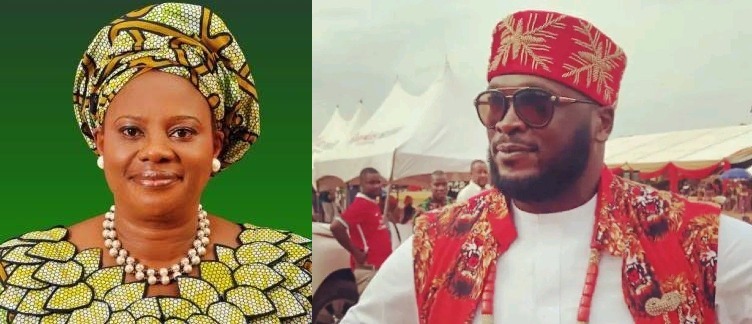
When this writer came across a comment credited to Obumneme Akunyili, son of the late Prof. Dora Akunyili, on the IGBO History & Facts platform on X, there was no reason to disagree, the remark was spot on. He stated, *“If there were ten people like my mum in government, Nigeria would be like Dubai by now.”* This was not merely a son speaking from filial pride; it was a powerful truth about Nigeria’s persistent failure to harness the competence, patriotism, and incorruptible spirit of rare leaders like his mother. His words struck a chord with millions of Nigerians who vividly remember Dora Akunyili’s unwavering dedication, especially during her time as Director-General of the National Agency for Food and Drug Administration and Control (NAFDAC), and later as Minister of Information and Communications.
Obumneme’s statement was far from an exaggeration; it should be seen as a wake-up call, a sobering reflection on the deep leadership deficit that has plagued Nigeria for decades. Had there been just ten Dora Akunyilis in government, ten individuals defined by integrity, vision, courage, and selflessness, Nigeria’s trajectory would no doubt be markedly different today.
In fact, it should be taken as a wake-up call, a sobering reflection on the kind of leadership deficit that has crippled Nigeria for decades. If there had been ten Dora Akunyilis in government, ten people with integrity, vision, courage, and selflessness, Nigeria’s story would undoubtedly be different today.
Prof. Dora Akunyili was not just a public servant; she was a patriot in every sense of the word. Born in Makurdi in 1954 and raised in southeastern Nigeria, her upbringing in post-colonial Nigeria was one steeped in discipline and hard work. Yet it was her personal loss, the death of her sister due to fake insulin that lit the fire of public service in her belly. She did not merely mourn her sister; she went after the systemic rot that caused her death. It was this passion that defined her years at NAFDAC.
Her appointment as Director-General of NAFDAC in 2001 by President Olusegun Obasanjo marked the beginning of a revolutionary era in Nigeria’s regulatory space. Fake drugs were then a national crisis, killing thousands and eroding faith in the health system. Akunyili entered the battlefield with uncommon courage. She took on powerful interests in the pharmaceutical industry, raided illegal factories, destroyed millions of naira worth of fake drugs, and fearlessly named and shamed perpetrators. Despite several assassination attempts, she stood her ground, unflinching and unwavering.
Under Akunyili’s leadership, NAFDAC’s reputation soared. Hospitals regained confidence in the authenticity of their medications. Nigerians began to witness the possibility of having public institutions that actually worked. The international community lauded her efforts, with TIME Magazine, CNN, and several global organizations giving her recognition. But more than the accolades, it was her moral spine that stood out.
In a country where corruption is often considered the norm, Dora Akunyili proved that honesty and public service can go hand in hand. She proved that reform is possible if only the right people are in the right positions with the right motivation. And most importantly, she proved that leadership is about people, not power.
When Dora Akunyili was appointed Minister of Information and Communications in 2008, she continued to show her commitment to national rebranding, not through propaganda, but by fostering a sense of unity and hope. Her “Rebrand Nigeria”campaign, though heavily criticized by cynics, was a step toward changing the perception of Nigeria both within and outside the country. Unlike others before and after her who used the ministry to launder the image of failing administrations, Akunyili used hers to remind Nigerians of what could be, of a better Nigeria that we could all collectively build.
She famously spoke the truth at the height of the constitutional crisis that followed President Yar’Adua’s prolonged illness in 2010. In a cabinet full of sycophants and cowards, it was Akunyili who boldly demanded that power be transferred to then Vice President Goodluck Jonathan in accordance with the constitution. That singular act of patriotism prevented what could have snowballed into a full-blown national crisis.
When Obumneme said Nigeria would be like Dubai if we had ten of his mother in government, he was not only talking about infrastructure or skyscrapers. Dubai is a metaphor for visionary governance, a place where leadership planned decades ahead, invested in its people, and transformed deserts into global business hubs.
If Nigeria had ten Dora Akunyilis: We would have functional institutions free of corruption and nepotism, regulatory bodies would protect citizens, not exploit them, public health would not be at the mercy of expired drugs and unqualified doctors, and merit, not mediocrity, would define our civil service. In a similar vein, national rebranding would not be an empty slogan but a policy backed by action and ethics, even as transparency in governance would be a norm, not an exception. And also, our democracy would be strengthened by courageous voices that speak truth to power.
Her son’s lamentation also reveals how rare such patriotism is in Nigerian politics. It is a tragedy that people like Dora Akunyili are often seen as exceptions rather than the standard. In saner climes, she would have been the prototype for leadership training in civil service institutes. Her kind should have been the inspiration for political recruitment processes in parties. But here, excellence is punished and mediocrity is celebrated.
One of the most tragic ironies in Nigeria is how we eulogize our heroes after they have gone, while vilifying or frustrating them while alive. Dora Akunyili was nearly killed for doing her job. She was maligned, insulted, and called all sorts of names by powerful interests. Yet, today, everyone wants to identify with her legacy. Nigeria has a habit of not protecting or promoting its best minds while they are still active.
The few people like her who still serve in the system are often sidelined, frustrated, or bought over by the corrupt status quo. This is why the son’s statement should not just be a tribute, but a challenge: “Are we ready to raise and support the next ten Dora Akunyilis?”
The country must take deliberate steps to identify, mentor, and elevate people of proven integrity into public office. Leadership must no longer be left to the corrupt and incompetent. We must demand more from our leaders, reward good governance, and create an environment that allows merit to thrive.
Civil society must document and preserve the legacies of patriots like Dora Akunyili. Platforms like IGBO History & Facts must be commended for reminding us of our past heroes. In a country where history is often distorted or erased, such platforms are crucial in keeping the truth alive.
More importantly, families like the Akunyilis should know that their sacrifices were not in vain. For every Nigerian child that can now take genuine medication and live; for every journalist who dares to speak truth to power because Dora once did; for every public servant who still believes integrity is possible in Nigeria, her legacy lives on.
Obumneme Akunyili’s heartfelt tribute to his mother was not just a son’s sentimental utterance. It was a national indictment. It was a spotlight on what we could have been, and a cry for what we still can be. Dora Akunyili gave us a glimpse of what leadership should look like. Nigeria owes it to her, and to itself, to make that vision a reality.
If we ever truly want to be like Dubai, then we must stop looking outward and start looking inward. Because the truth is, we had our own version of Sheikh Mohammed bin Rashid Al Maktoum, in a woman called Dora Nkem Akunyili. And we let her go.