Africa
Nigerians And Our Gods -By Prince Charles Dickson, Ph.D
There is faith in numbers, decay in practice as by every measurable standard, Nigerians are religious. In almost every office, government meeting, and school gathering, prayers begin and end official functions. Even criminal gangs pray before embarking on their nefarious missions. We bless meals, recite scriptures, and fill radio waves with sermons. Mosques call the faithful five times daily; churches stretch services across the weekend with vigour.

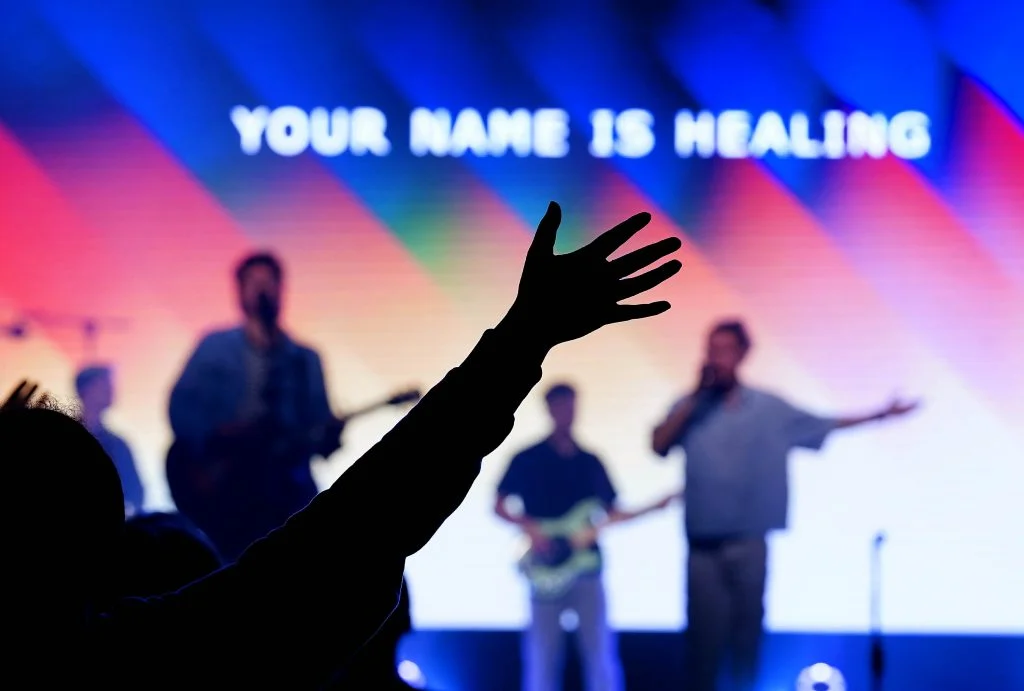
Nigeria, Africa’s most populous nation, holds two remarkable distinctions: it has both the highest number of Muslims on the continent and the largest population of Christians as well. Globally, Nigeria ranks among the top in both religions—boasting the sixth largest Christian population in the world and one of the largest concentrations of Muslims anywhere. By sheer numbers, Nigeria should represent a beacon of faith, morality, and godly example. Yet, the paradox remains: despite our crowded mosques and overflowing churches, our society is still riddled with corruption, injustice, insecurity, and a shocking contradiction between faith professed and life lived.
The Nigerian religious story is one of complexity—of gods old and new, of rituals that never quite disappear, and of a people who wear devotion on their lips but often defy it in their deeds. To speak of Nigerians and their gods is to enter the space where prayer meetings intersect with political thievery, where city streets turn into ghost towns on Fridays and Sundays, but where Monday mornings are marked by the hustle of swindling fellow citizens.
There is faith in numbers, decay in practice as by every measurable standard, Nigerians are religious. In almost every office, government meeting, and school gathering, prayers begin and end official functions. Even criminal gangs pray before embarking on their nefarious missions. We bless meals, recite scriptures, and fill radio waves with sermons. Mosques call the faithful five times daily; churches stretch services across the weekend with vigour.
But what has this avalanche of religiosity produced? Nigeria remains one of the most corrupt nations in the world. Governance is riddled with inflated contracts, missing billions, and leaders who mouth the name of God while looting public treasuries. A road project budgeted for billions of naira is either abandoned or executed so poorly that it collapses within months. Who signs off these contracts? Who pockets the money? Are they not the same men and women who lead prayers, fund cathedrals, build mosques, and occupy front seats at religious ceremonies?
Here lies the great irony: our religiosity has not transformed our morality. In fact, it seems to have become a convenient mask—an outward cloak to conceal the rot within.
Christianity and Islam arrived in Nigeria centuries ago, bringing new texts, prophets, and doctrines. Yet, beneath the polished surfaces of imported faiths, older traditions remain alive. Nigerians still patronize voodoo priests, consult witch doctors, and invoke African magic in private moments of desperation. A politician may attend Sunday Mass in the morning and visit a shrine at midnight. An entrepreneur may recite Quranic verses but tie charms to his business doors.
This dual devotion—professed monotheism mixed with hidden polytheism—reveals a deeper struggle: Nigerians have not fully replaced their gods; they have simply expanded their pantheon. Faith in Allah or Christ often coexists with faith in ancestral spirits, diviners, and traditional sacrifices. In times of crisis, many revert to the old ways, seeking power or protection where modern religion and government have failed them.
Thus, religion in Nigeria becomes less a matter of deep conviction and more a utilitarian pursuit of survival, influence, or fortune. The gods, old or new, are reduced to instruments of power rather than anchors of virtue.
We suffer fanaticism and the burden of Extremes as despite the abundance of churches and mosques, freedom of religious belief remains fragile in Nigeria. From sectarian violence in the North to discriminatory practices in the South, religious tolerance is often preached but rarely practiced. Extremist groups, most notoriously Boko Haram, cloak their campaigns of terror in religious rhetoric, killing those who refuse to subscribe to their ideology.
Even within families and communities, interfaith marriages are frowned upon, and adherents of minority faiths face ostracism or persecution. Nigeria’s religious energy, rather than being harnessed for unity, often becomes combustible material for conflict.
We are left with a dangerous contradiction: a nation deeply religious, yet perpetually at war with itself in the name of religion.
Consider the everyday rituals of hypocrisy of Nigerian officialdom. A meeting begins with an opening prayer—sincere, perhaps, in tone—where God is invited to bless the deliberations. Discussions then follow, where decisions are taken to divert funds, inflate budgets, or marginalize certain groups. At the end, another prayer is offered, thanking God for “a successful meeting.”
In this ritual, God is both invoked and mocked. The prayer serves as a ceremonial cloak for systemic theft. Nigerian religiosity has perfected this cycle: sin boldly, pray loudly, repeat endlessly.
Our cities testify to this contradiction. On Fridays, streets empty as men and women flood mosques. On Sundays, roads are blocked by worshippers attending multiple services. Yet, by Monday morning, many of these same worshippers cannot wait to cheat their neighbour, manipulate figures, or exploit the system.
We profess to love God, but our love rarely extends to obeying His commands.
Here, the parable of the madman becomes instructive.
A wealthy man parks his expensive car, only to return and find that one of his tires is missing four bolts. Frustrated, he despairs until a madman suggests a simple solution: remove one bolt from each of the other three tires and use them to secure the fourth. Surprised by the brilliance of the idea, the man asks how someone “mad” could think so clearly. The madman replies: “I am mad, not stupid.”
This story is Nigeria’s mirror. We are a nation of wealthy resources, brilliant minds, and boundless faith. Yet, we often act foolishly, parading our religiosity without applying its wisdom. Like the rich man, we look helplessly at problems—corruption, bad roads, poverty, insecurity—while the solutions lie in plain sight. The madman’s lesson is that wisdom is not about appearance but application.
Nigeria’s religiosity is vast, but what we lack is the wisdom to apply the moral essence of our faiths. We build grand cathedrals and imposing mosques but fail to build integrity, justice, and love of neighbour. We perform rituals but neglect righteousness. We pray for prosperity but cheat our systems. We revere gods, but our gods—old and new—have not saved us because we have not lived their principles.
Yet, to be fair, not all Nigerians bow to this hypocrisy. Scattered across the nation are men and women who live by the tenets of their faith with integrity. The honest civil servant who resists bribes. The teacher who shows up every day in underfunded schools. The nurse who treats patients with dignity despite low pay. The entrepreneur who refuses to cheat his customers. The religious leader who preaches justice rather than prosperity.
These Nigerians—though often drowned in the noise of corruption and fanaticism—embody the hope of the nation. They prove that faith can indeed inspire virtue, that religion can transform society when applied with sincerity. They remind us that change will not come from prayers alone but from actions aligned with those prayers.
The problem, therefore, is not religion itself but the way Nigerians practice it. Our gods—whether Christ, Allah, or the spirits of our ancestors—are not to blame. The blame lies with us: we invoke their names without embodying their values. We exalt them in worship but abandon them in conduct.
If Nigeria is to rise from its contradictions, it must learn from the wisdom of the so-called madman: apply the principles already within reach. We must strip religion of its hypocrisy and return it to its essence—justice, mercy, love, and accountability.
A nation that prays at dawn but steals by noon cannot prosper. A people who fill mosques and churches but empty their institutions of integrity cannot progress. Nigerians must decide whether their gods are mere ornaments for ritual or guiding lights for life.
Until then, our religiosity will remain loud but hollow, plentiful but powerless. And like the man stranded by his car, we will continue to stare at problems, waiting for a madman to remind us that the solution has been in our hands all along—May Nigeria win!
—
Prince Charles Dickson PhD
Team Lead
The Tattaaunawa Roundtable Initiative (TRICentre)
https://tattaaunawa.org/
Development & Media Practitioner|
Researcher|Policy Analyst|Public Intellect|Teacher
234 803 331 1301, 234 805 715 2301
Alternate Mail: pcdbooks@yahoo.com
Skype ID: princecharlesdickson