Africa
Nigeria’s Choice: Democracy That Works, or the Barracks? -By Jeff Okoroafor
This starts with President Tinubu. The time for vague promises is over. His administration must take immediate and verifiable action to root out corruption. This means prosecuting high-profile cases of graft, regardless of the accused’s political connections, and instituting unprecedented transparency in all government dealings.

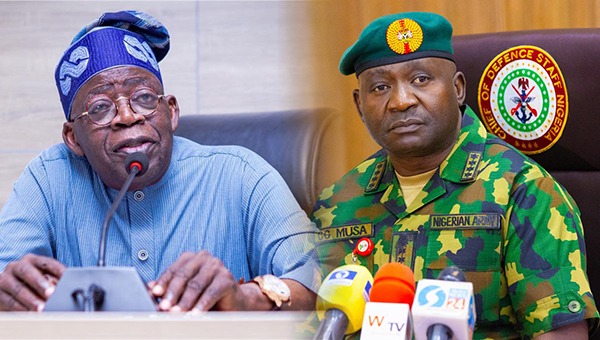
The recent statement from the Defence Headquarters, dismissing rumours of a coup plot, should have been a minor news item. Instead, it has ignited a national conversation, revealing a profound and dangerous truth: the failure of Nigeria’s democracy has become so acute that the spectre of military rule is now being entertained in public discourse. This is a wake-up call we cannot afford to ignore.
We must state this unequivocally: a return to military rule is not a solution; it is a surrender. It would be a catastrophic leap from the frying pan into the fire, a voluntary return to the dark days of dictatorship, state-sponsored terror, and economic paralysis that stunted a generation. The experiences of our past and the chaos in neighbouring junta-led states serve as stark warnings. The military’s duty is to protect our borders and remain subordinate to civil authority, full stop.
However, to dismiss these coup rumours without confronting the rot that breeds them is an act of intellectual dishonesty. The bitter reality is that for millions of Nigerians, our 25-year-old democracy has been a bait-and-switch. It has delivered not good governance, but a kleptocratic elite that operates with impunity. The social contract is not merely frayed; it has been shredded.
Under the current administration, this failure has accelerated. President Bola Tinubu’s “Renewed Hope” agenda is rapidly becoming a byword for audacious policy failure and brazen corruption. The removal of the fuel subsidy, executed with brutal suddenness and zero transparency, has plunged millions into deeper poverty without a credible social safety net. The freefall of the Naira and spiraling inflation are not mere economic trends; they are existential crises for ordinary families.
Worse is the pervasive stench of corruption. From the opaque handling of public funds to the appointment of loyalists to key positions meant to be impartial, this administration is cultivating a reputation for cronyism that threatens to eclipse its predecessors. A government that cannot demonstrate transparency forfeits the trust of its people, and without trust, a government rules by fear, not consent.
The consequences are visible in the mass exodus of our best and brightest and the simmering anger on our streets. This is not a sustainable path. Globally, we are witnessing a template for change. In Nepal, sustained, youth-led protests forced a corrupt political class to enact reforms. In Madagascar, young people are mobilizing against failing governance. The #EndSARS movement was our own warning shot—a demonstration of the potent, organized power of a generation that has run out of patience.
Therefore, we stand at a critical juncture that demands a dual commitment.
First, we must collectively and unconditionally reject any nostalgia for military rule. It is a dangerous illusion.
Second, and with equal force, we must demand that our democracy be radically reformed to serve the people, not the politicians.
This starts with President Tinubu. The time for vague promises is over. His administration must take immediate and verifiable action to root out corruption. This means prosecuting high-profile cases of graft, regardless of the accused’s political connections, and instituting unprecedented transparency in all government dealings.
Furthermore, the integrity of our democracy hinges on the credibility of our elections. The recent appointment of a new INEC Chairman has rightly raised alarms about the executive’s intention to influence future polls. The 2027 general election must be free, fair, and credible. Any attempt to subvert the will of the people through a compromised electoral process will not only be illegitimate but could very well be the catalyst for the national rupture we all fear.
The coup rumours are a symptom of a deeper sickness. The cure is not a military takeover, but a democratic reckoning. Our leaders must choose: they can either deliver the genuine governance, security, and justice they were elected to provide, or they will inevitably face the righteous fury of a people pushed beyond their limit. The choice is theirs, but the future is ours.

Jeff Okoroafor
Jeff Okoroafor is a social accountability advocate and a political commentator focused on governance, accountability, and social justice in West Africa.