Connect with us

Africa

Nigeria’s Insecurity Crisis: A Threat to Economic Growth and National Stability -By Ibrahim Arafat Abiodun

Nigeria’s insecurity is more than a threat to lives and property—it is a barrier to economic growth and national development. Strengthening security infrastructure, creating jobs, and fostering community-police collaboration are essential steps toward restoring stability and investor confidence.

Published

on

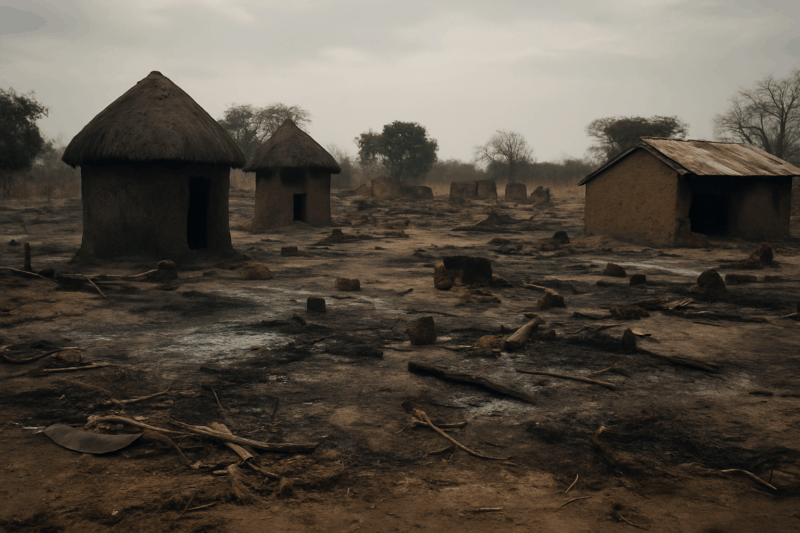
Desolate Yelewata - Benue - Fulani herdsmen and crisis
Nigeria has been long regarded as one of Africa’s economic powerhouses, faces mounting security challenges that continue to undermine its stability and development. From terrorism and banditry to abductions for ransom, insecurity has deeply affected the nation’s economy and the daily lives of its citizens.
However, northern region remains the epicenter of violence, with Boko Haram and bandit groups disrupting communities and forcing businesses to shut down operations. Fear and instability have driven investors and companies away, leaving many areas economically paralyzed. Banditry has also created a pervasive climate of fear, halting commercial activities and worsening poverty in affected regions.
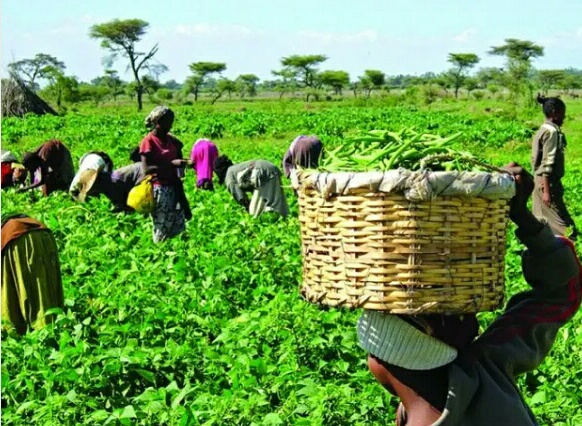
Agriculture

Agriculture

In recent years, kidnapping for ransom has surged nationwide. In 2025 alone, police recorded over a thousand abduction cases. Victims cut across all social classes and tribes, deepening a sense of vulnerability among Nigerians. Mrs. Adetomiwa, who narrowly escaped captivity along the Lagos-Ibadan expressway, recounted being abducted, starved, and threatened until her captors demanded ₦10 million for her release.
The rise in insecurity has forced businesses to close, reduced interstate travel, hindered the movement of goods, and scared off foreign investors. Funds that should support infrastructure and development are instead diverted toward fighting insecurity, limiting Nigeria’s economic progress.
To address the crisis, experts recommend establishing an efficient intelligence network that enhances collaboration among security agencies, leverages technology, and strengthens international partnerships. Equally important is the expansion of community policing, particularly in rural areas where government presence is weak. Empowering local communities to work with law enforcement can help prevent crime and track offenders.
Tackling unemployment is also vital, as economic frustration fuels instability. With many educated graduates idle, providing jobs would reduce the pool of recruits for criminal networks. Additionally, swift prosecution and stronger investigative systems are needed to ensure terrorists, kidnappers, and bandits face justice.

Nigeria’s insecurity is more than a threat to lives and property—it is a barrier to economic growth and national development. Strengthening security infrastructure, creating jobs, and fostering community-police collaboration are essential steps toward restoring stability and investor confidence.
Continue Reading
Advertisement
Click to comment

Leave a Reply

Your email address will not be published. Required fields are marked *

Trending Contents

Topical Issues

JAMB and UTME JAMB and UTME
Forgotten Dairies9 hours ago

The Role of Technology in Nigeria’s Education System -By Alheri Una

To fully maximize technology in education, government investment is crucial. Public-private partnerships can help provide internet access, digital devices, and...

Russian-Indian Business Dialogue, December 2025 Russian-Indian Business Dialogue, December 2025
Forgotten Dairies9 hours ago

Russia–India Dialogue Provides Platform for Strengthening Bilateral Entrepreneurship -By Kestér Kenn Klomegâh

Participants noted the development of Russia–India cooperation and implementation of joint business projects will continue at major international platforms, including...

David Sydney David Sydney
Africa9 hours ago

The Importance of Proper Legal Documentation in Business -By David Sydney

Where a business relationship is undocumented or poorly documented, even a legitimate claim may fail for lack of proof. Oral...

Bola Oyebamiji Bola Oyebamiji
Politics14 hours ago

The Deputy Question: How APC’s Choice Will Shape Osun’s 2026 Contest -By Kolapo Tokode

A Christian, Oke offers religious balance to Oyebamiji’s candidacy. He is widely regarded as financially buoyant and politically influential, particularly...

Forest Forest
Africa14 hours ago

The Devastating Impact Of Deforestation -By Favour Haruna

We can mitigate deforestation's effects by adopting sustainable choices and supporting conservation.Reduce paper usage, choose sustainable products, and spread awareness....

NEPA - DisCos NEPA - DisCos
Africa14 hours ago

Electricity Tariffs in Nigeria: Who Really Pays and Who Benefits -By Jennifer Joab

To fix the system, Nigeria needs more than just tariff reviews. There must be transparency in band classification, rapid rollout...

Kate Henshaw Kate Henshaw
Africa21 hours ago

You Can’t Photoshop Discipline: Kate Henshaw, Fitness, And The Hard Truth We Keep Dodging -By Isaac Asabor

Kate Henshaw did not say anything new. She said something true. And truth, especially when stated plainly, unsettles people who...

Rivers - Wike and Fubara Rivers - Wike and Fubara
Africa21 hours ago

How Wike, Fubara and Rivers’ Lawmakers Are Disrespecting President Tinubu -By Isaac Asabor

What Wike, Fubara, and the lawmakers have done, collectively and individually, is to tell Nigerians that the President can speak,...

nigeria-bandits-lead-illustration-new nigeria-bandits-lead-illustration-new
Africa21 hours ago

Insecurity in Nigerian Communities: A Threat to Peace and Development -By Khadija Shuaibu Muhammad

Insecurity in our communities has reached a critical level. If not addressed urgently and collectively, it could destroy the very...

HUNGER, Poor, Poverty in Nigeria HUNGER, Poor, Poverty in Nigeria
Africa21 hours ago

The Kampala Declaration: How African Youth Can Lead Food System Transformation to Accelerate the Achievement of Zero Hunger by 2030 -By Emeka Christian Umunnakwe

Africa’s food systems future is already being shaped by its young people, what remains is for governments, investors, institutions, and...