Africa
Obasanjo’s Yale Speech: A Tough Critique the Tinubu Presidency Should Use in Staff and Ministerial Meetings to Improve Governance, by John Egbeazien Oshodi

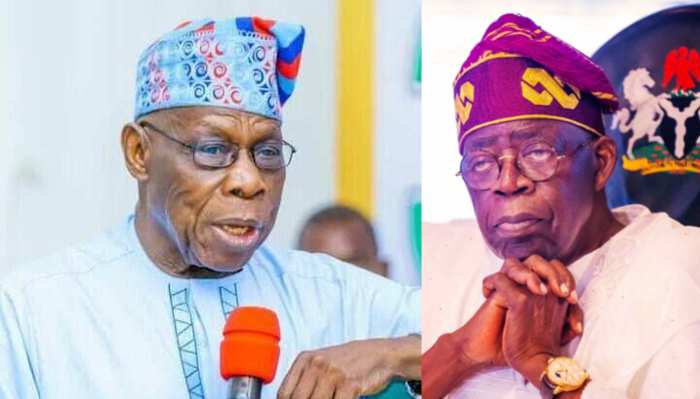
This critical analysis of Olusegun Obasanjo’s scathing critique of Bola Tinubu’s administration paints a stark picture of Nigeria’s systemic challenges. Obasanjo’s assertion that leadership failure—not cultural or environmental factors—is at the root of Nigeria’s woes reinforces the urgency for transformational governance. He links the nation’s insecurity, corruption, and underdevelopment directly to mediocrity and a lack of accountability, emphasizing the corrosive effects of state capture on the country’s progress.
In his address, Obasanjo profoundly described state capture, stating:
*”Public institutions such as the legislature, the executive, the judiciary, and regulatory agencies both at the federal and local levels are subject to capture. As such, state capture can broadly be understood as the disproportionate and unregulated influence of interest groups or decision-making processes, where special interest groups manage to bend state laws, policies, and regulations.
“They do so through practices such as illicit contributions paid by private interests to political parties, and for election campaigns, vote-buying, buying of presidential decrees or court decisions, as well as through illegitimate lobbying and revolving door appointments.
“The main risk of state capture is that decisions no longer take into consideration the public interest, but instead favor a specific special interest group or individual. Laws, policies, and regulations are designed to benefit a specific interest group, oftentimes to the detriment of smaller firms and groups and society in general. State capture can seriously affect economic development, regulatory quality, the provision of public services, quality of education and health services, infrastructure decisions, and even the environment and public health.”
Obasanjo’s pointed criticism of state capture and the undervaluation of national assets underscores how entrenched interests manipulate the system for personal gain. His description of corruption as fueling chaos and disunity reflects a broader sentiment of disillusionment among Nigerians yearning for effective leadership. This critique hits at the heart of the Tinubu presidency, where widespread allegations of sluggish governance and compromised institutions have defined the administration’s early tenure.
Yes, the Tinubu presidency is not happy that Obasanjo chose an international platform to expose these failings. The anger from Tinubu’s advisers was even more open as Obasanjo bluntly told the world about “Baba Go Slow,” referring to Tinubu’s perceived lackadaisical, slow, and sluggish approach to reform. While biting, this critique comes with the territory of being a public figure, especially for Tinubu, who boldly declared during his presidential campaign, “It is my turn,” famously known as Emilokan. Now that Obasanjo has told Americans and the global world about Tinubu’s leadership as “Baba Go Slow,” perhaps he will physically try to be more energetic and work toward fulfilling his campaign declaration that “It is my turn.” If he fails, this narrative may overshadow his presidency as a monumental betrayal of public trust.
No matter the anger from Tinubu and his government, it is suggested that in their various staff and ministerial meetings, Obasanjo’s words at Yale University should serve as focal points for discussion and reflection. These remarks could be used as corrective tips to guide the administration in addressing systemic issues, improving governance, and enhancing the lives of Nigerians. Ignoring these criticisms only entrenches the perception of weak leadership and further alienates a populace grappling with pervasive suffering and insecurity.
Tinubu, as a leader, has been notably silent on addressing the deep pains and sufferings of the populace, particularly in areas like open leadership, judicial reform, political corruption, police brutality, and impunity. The silence on these critical issues has deepened public frustration and magnified the suffering of ordinary Nigerians. Obasanjo’s decision to highlight Nigeria’s “dirty laundry” on the global stage may push the administration to confront these realities more urgently. It is time for Tinubu to break his silence and match his presidency’s rhetoric with decisive action.
The presidency’s defensive response, though understandable, invites introspection. While Bayo Onanuga highlighted past flaws in Obasanjo’s administration, the focus should shift from counteraccusations to actionable solutions. It is pure inanity and counterproductive for Tinubu’s advisers to label Obasanjo a hypocrite or morally empty. Such tactics contribute nothing to solving Nigeria’s challenges. Instead of resorting to deflections, the government must recognize that Obasanjo’s critique holds valuable insights that can be used to reorient the administration’s policies and practices.
Obasanjo’s keynote address at the Chinua Achebe Leadership Forum serves as a rallying call. It challenges Nigeria’s leadership to rise above deflection and engage in transparent, practical governance practices. This is a direct challenge to Tinubu to not only address the global perception of his administration but also to redefine his leadership legacy in the eyes of Nigerians. To address the nation’s deep-seated challenges, Tinubu’s administration must prioritize accountability and inclusivity while fostering economic and political stability. Perhaps this outside exposure of Nigeria’s shortcomings is the wake-up call necessary to spur genuine progress and transform the “failing state” narrative into one of hope and renewal.
If Tinubu’s government continues to brush off such criticisms and refuses to engage in meaningful reform, it will solidify its place in history not as the administration that turned Nigeria around, but as one that failed to seize its opportunity to lead with purpose and vision. This moment demands decisive action, not deflection. The ball is in Tinubu’s court. Will he step up to the challenge, or will he continue to move at a pace that has already earned him the scornful label of “Baba Go Slow”? The world is watching, and more importantly, Nigerians are waiting.

Professor John Egbeazien Oshodi, born in Uromi, Edo State, Nigeria, is an American-based police and prison scientist, forensic/clinical psychologist, public policy psychologist, and legal psychologist. He’s a government advisor on forensic-clinical psychological services in the USA and the founder of the Dr. John Egbeazien Oshodi Foundation for Psychological Health. With a significant role in introducing forensic psychology to Nigeria through N.U.C. and Nasarawa State University, he’s also a former Secretary-General of the Nigeria Psychological Association. He’s taught at esteemed institutions like Florida Memorial University, Florida International University, Nova Southeastern University, and more, and is currently an online faculty member at ISCOM University, Weldios University and Walden University.