Politics
‘Ojoro Politics’ In The Screening Of Fubara’s Nominees And Nigeria’s Do-Me-I-Do-You Syndrome -By Isaac Asabor
Democracy demands maturity, restraint, and a willingness to place public interest above personal rivalries. Until political actors embrace those principles, episodes resembling “Ojoro politics” in institutional processes will continue to dominate the political environment.

Nigeria’s political landscape has long been shaped by rivalry, personal grudges, and a persistent culture of retaliation. In everyday parlance, the phrase “do-me-I-do-you” captures this reality with brutal clarity: if you frustrate my interests today, I will frustrate yours tomorrow. It is a mindset that has defined political behaviour across the country for decades. Recent developments surrounding the screening of political nominees presented by Rivers State Governor Siminalayi Fubara once again highlight how deeply entrenched this culture has become.
What should ordinarily be a constitutional exercise designed to ensure competence, accountability, and transparency has increasingly taken on the appearance of something else. The screening of nominees, whether for commissioner positions, advisory roles, or other political appointments, is meant to serve as a democratic safeguard. Legislators are expected to interrogate credentials, assess experience, and determine whether nominees possess the capacity to serve the public effectively. However, when the process begins to resemble a stage for settling political scores, the essence of legislative oversight is compromised.
In the unfolding drama surrounding Governor Fubara’s nominees, the exercise appears, in the eyes of many observers, less like a professional assessment of competence and more like a display of political manoeuvring. Rather than focusing primarily on policy direction, administrative capability, or governance priorities, the atmosphere surrounding the screening has reportedly been dominated by suspicion, hostility, and political undertones.
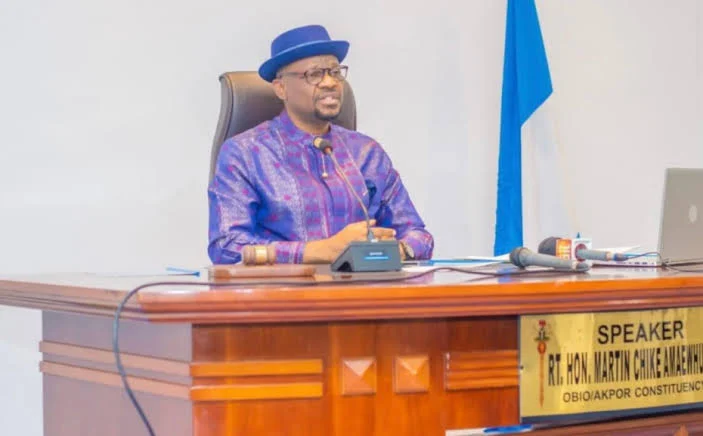
During one of the screening sessions, a nominee reportedly faced probing questions regarding his perceived loyalty to the governor. Lawmakers demanded an explanation for why he had shared a particular legal opinion on social media during the height of the political standoff between the governor and the Rivers State House of Assembly. The consequence was that the post suggested he had taken sides in the conflict. Confronted with the situation, the nominee appeared visibly unsettled. In a measured attempt to avoid confrontation, he reportedly told the lawmakers that he was not in a position to challenge or disagree with their views.
The foregoing episode reflects a pattern that extends far beyond Rivers State. Across Nigeria’s political system, from federal institutions down to local councils, the same tendency often emerges. Institutions that should function as neutral instruments of governance are frequently treated as tools for advancing factional interests or punishing political adversaries. Instead of regrouping after losing influence, political actors often deploy every available institutional mechanism to obstruct or weaken rivals. The consequence is a cycle of institutional friction that frequently stalls governance.
In such circumstances, nominee screening risks becoming an arena for political warfare. Individuals seeking to serve in government positions may face hostility, delays, or rejection not necessarily because they lack merit, but because their approval might strengthen a political opponent. In more extreme situations, the underlying objective may be to weaken the executive arm of government by denying it the personnel required to function efficiently.
Without a doubt, this trend carries serious implications. First, it undermines the credibility of democratic institutions. Legislative oversight is a vital pillar of democracy, but when it is perceived as a tool for vendetta rather than accountability, public confidence in the system erodes. Citizens begin to view the process as political theatre rather than genuine scrutiny.
Second, a hostile screening environment discourages capable individuals from accepting public appointments. Many professionals who might otherwise contribute meaningfully to governance hesitate to step into public service when they anticipate public embarrassment, political intimidation, or reputational attacks during confirmation processes. When politics becomes a battlefield where personal dignity is expendable, participation naturally declines.
Third, such conduct sends an unfortunate signal about the priorities of political leaders. At a time when Nigerians are grappling with economic hardship, insecurity, unemployment, and infrastructural decay, the expectation is that leaders will concentrate on policy solutions. Instead, what the public often witnesses are prolonged political disputes, ego clashes, and institutional confrontation.
In the specific case of Governor Fubara’s nominees, the broader political backdrop cannot be ignored. Rivers State has long been known for intense political rivalry, and the transition of power from former governor Nyesom Wike to his successor has not been entirely free of tension. The aftershocks of that political relationship continue to influence the dynamics within the state’s political institutions.
When political disagreements spill over into legislative procedures, governance inevitably becomes secondary to power struggles. Every action is interpreted through the prism of loyalty or betrayal.
Yet the most important question remains: who ultimately bears the consequences of this style of politics? The answer is straightforward to the ordinary citizen. When nominees are delayed or rejected for political reasons, ministries and government departments may remain without leadership. Policy implementation slows down. Development projects are delayed. Administrative decisions that require coordination become trapped in bureaucratic uncertainty. In short, governance suffers.
Unfortunately, the culture of retaliation has become normalized within Nigeria’s political system. Political actors seldom forget perceived slights. Today’s ally may become tomorrow’s rival, and once that shift occurs, opportunities for retaliation are rarely ignored.
The “do-me-I-do-you” mentality thrives in this environment. What makes the situation even more troubling is that many political players openly defend such behaviour, arguing that politics is inherently ruthless and that retaliation is simply part of the game. In their calculation, failing to strike back is interpreted as weakness. But democracy cannot thrive under such a philosophy.
Healthy political competition is essential in any democracy, yet institutional sabotage is not. Legislatures exist to provide oversight, not to function as platforms for revenge. Screening processes should examine competence, experience, and integrity, not loyalty to political patrons.
The danger of vindictive politics lies in the damage it inflicts on democracy itself. When legislative processes are turned into instruments of political warfare, public trust in governance institutions begins to fade. When oversight is driven by revenge, genuine accountability disappears. When institutions are weaponized, democracy, becomes fragile.
Nigeria’s political history offers numerous reminders of the dangers posed by weakened institutions. While contemporary political conflicts may not appear as dramatic as past crises, they contribute gradually to the erosion of democratic norms.
If Nigeria intends to strengthen its democracy, political actors must begin to draw a clear line between personal rivalries and institutional responsibilities. Legislators certainly have a duty to scrutinize nominees thoroughly, but such scrutiny must be fair, transparent, and grounded in merit rather than factional hostility.
At the same time, the executive arm of government must acknowledge that legislative oversight is both legitimate and necessary. Yet oversight loses credibility when it becomes a vehicle for vengeance rather than governance.
Ultimately, the challenge is not only institutional but cultural. Nigeria’s political culture has historically rewarded loyalty over competence and confrontation over cooperation. Changing that culture will not happen overnight, but it must begin somewhere.
Political leaders must demonstrate that governance is more important than grudges. Institutions must be shielded from the corrosive effects of personal vendettas. And the public must continue to demand accountability from those entrusted with power.
The controversy surrounding the screening of Governor Fubara’s nominees offers an important moment for reflection. It exposes the enduring problem of retaliatory politics and the damage it can inflict on democratic governance.
Nigeria cannot continue to operate under the unwritten rule of “do-me-I-do-you” politics if it hopes to build strong and credible institutions.
Democracy demands maturity, restraint, and a willingness to place public interest above personal rivalries. Until political actors embrace those principles, episodes resembling “Ojoro politics” in institutional processes will continue to dominate the political environment.
And regrettably, the ultimate losers will remain the citizens who expect responsible governance but are instead left watching an endless cycle of political drama.