Africa
Peace Deal Or Power Grab? Questioning The People’s Mandate In Tinubu-Wike-Fubara Pact -By Isaac Asabor
Until Fubara is allowed to govern without strings, until the defected lawmakers are made to face the constitution, and until the people’s will is fully restored, the mandate remains stolen. And so the question remains, and will continue to echo until justice is done: At this juncture, it is expedient to ask, where is the people’s mandate?

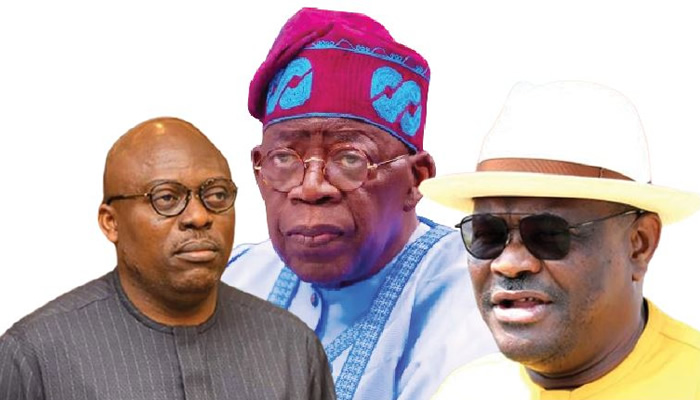
In the aftermath of Nigeria’s 2023 general elections, the people of Rivers State, like citizens elsewhere in the country, exercised their franchise with hope and conviction. They believed in the democratic promise, that through the ballot, power would reside with the people. In Rivers, that mandate materialized in the election of Siminalayi Fubara as governor on the platform of the Peoples Democratic Party (PDP).
But barely a year into his administration, that hard-won mandate has been traded away in a so-called peace deal orchestrated not by the people, nor the judiciary, but by President Bola Ahmed Tinubu and Nyesom Wike, Fubara’s predecessor and current Minister of the Federal Capital Territory. This deal is not a triumph of diplomacy, it is the sabotage of democracy.
Let us call this what it truly is: a power grab dressed in political theater. Tinubu’s intervention, resulting in a backroom “peace accord” between Wike and Fubara, was not about restoring peace to Rivers State. It was about reasserting control, ensuring that Abuja’s influence and Wike’s shadow loom large over Rivers’ governance.
The narrative being peddled is that reconciliation has been achieved. But at what cost? At the cost of subverting the people’s will. Fubara was elected by Rivers voters, not handpicked by Tinubu, and certainly not appointed by Wike. Yet, the so-called peace deal has effectively reduced the governor to a pawn in a political chess game dominated by the same forces the people thought they voted against.
The question that needs to be asked, and asked again, is this: Where is the people’s mandate in this deal? The foregoing question becomes more salient and logical when seen from the prism of the fact that Fubara’s election was a constitutional act; it was the voice of the people made manifest. But it is now being reshaped, rewritten, and renegotiated in the backrooms of Abuja.
No Nigerian voted for President Tinubu to install peace deals that override the constitution. No Rivers voter endorsed a scenario where Fubara would need to answer to his political godfather rather than govern with independence.
This betrayal of the people’s will did not end with the governor’s humiliation. Twenty-seven lawmakers, elected under the PDP banner, defected to the APC in clear violation of Section 109(1) (g) of the Nigerian Constitution, which states that such a defection should result in their seats being vacated unless there is a division in the party. There was no such division in the PDP. These lawmakers did not defect over ideology or policy, they defected out of loyalty to Wike. And yet, instead of facing the legal consequences of their defection, they have been rewarded, rehabilitated into power under the guise of peace.
As bad as the questionable peace deal is, INEC kept mute. The judiciary stood still. And the Tinubu-led Presidency? It legitimized the charade.
What Tinubu calls peace is, in reality, a smothering of democratic legitimacy. A governor operating under coercion, beholden to interests outside the state, is not governing, he is surviving. The state is not at peace, it is in political captivity.
Governor Fubara today is governing with clipped wings. His every move is second-guessed. His policies, appointments, and political posture are measured against Wike’s expectations and Tinubu’s balancing act. Governance in Rivers has become a hostage situation, the people’s governor is now the elite’s pawn.
This deal sends a dangerous message to voters across the country: Your vote does not count. Decisions about your future will be made by a select political few, not in polling units, but in private villas and federal offices.
If this precedent is allowed to stand, voter apathy will deepen. What incentive is there to participate in democracy when the outcome can be reversed by handshakes in Abuja?
Democracy is not just about voting, it is about honoring the result. And that result in Rivers has been discarded like a used bargaining chip.
What is happening in Rivers State is not isolated. It is a national red flag. If a sitting governor, elected by the people, can have his powers watered down by a political “settlement,” what stops this from becoming the norm?
Today it is Fubara. Tomorrow it could be another governor. Next, a state assembly. Eventually, the entire notion of democracy may be nothing more than a performance, with the real scripts written elsewhere.
This is not about personalities. It is about protecting the sanctity of the ballot and respecting the sovereignty of the people.
Civil society must not be complicit through silence. The media must not normalize this travesty. Nigeria is teetering toward authoritarianism disguised as consensus. The time to speak out is now.
The courts must interpret the Constitution and uphold it. INEC must act, or forever be seen as toothless. And Governor Fubara must decide whether he is the people’s governor, or the product of a power-sharing formula.
The peace deal brokered by Tinubu may have calmed the political storm temporarily, but it sold out the very foundation of democracy in Rivers State. Siminalayi Fubara was elected, not selected. And no amount of elite negotiation should override the people’s decision.
Until Fubara is allowed to govern without strings, until the defected lawmakers are made to face the constitution, and until the people’s will is fully restored, the mandate remains stolen. And so the question remains, and will continue to echo until justice is done: At this juncture, it is expedient to ask, where is the people’s mandate?