Africa
Russia and Burkina Faso Sign Strategic Partnership Agreements -By Kestér Kenn Klomegâh
Analysts say Russia’s courtship of the AES is part of a larger push to project influence across Africa, leveraging anti-Western sentiment to build political alliances at the United Nations and access strategic resources. Moscow presents itself as the friend for ensuring Africa’s political and economic sovereignty.

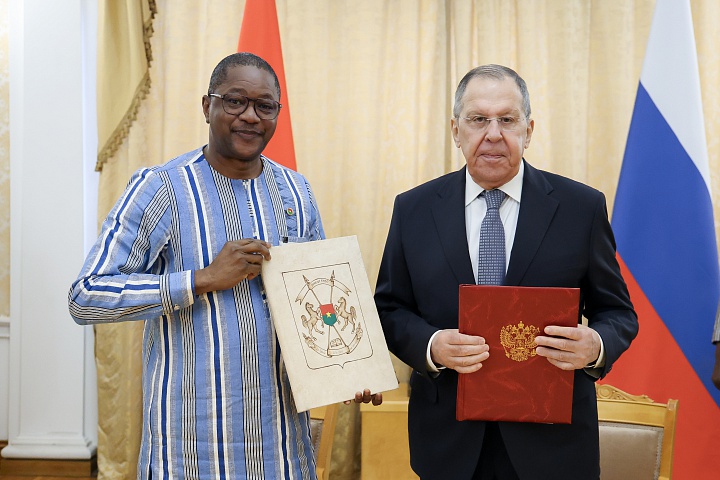
Russia and Burkina Faso have moved quickly to finalise a number of key documents that forms the bedrock of their future strategic partnership. The agreements signed cut across several other agencies, indicating concrete, practical progress in delivering on the understandings reached by both leaders, including those during President Ibrahim Traoré’s visit to Russia in May 2025 for the 80th anniversary of Victory in the Great Patriotic War.
According to media reports, beyond the foundational agreement on Russia-Burkina Faso bilateral relations, there were signing of a number of other significant instruments. One issue of particular importance for turning the presidents’ economic vision into reality is ensuring the Intergovernmental Commission on Trade and Economic Cooperation becomes operational without delay.
President Vladimir Putin has appointed Russia’s Minister of Energy, Sergey Tsivilev, as co-Chairman of the Intergovernmental Commission on Trade and Economic Cooperation.
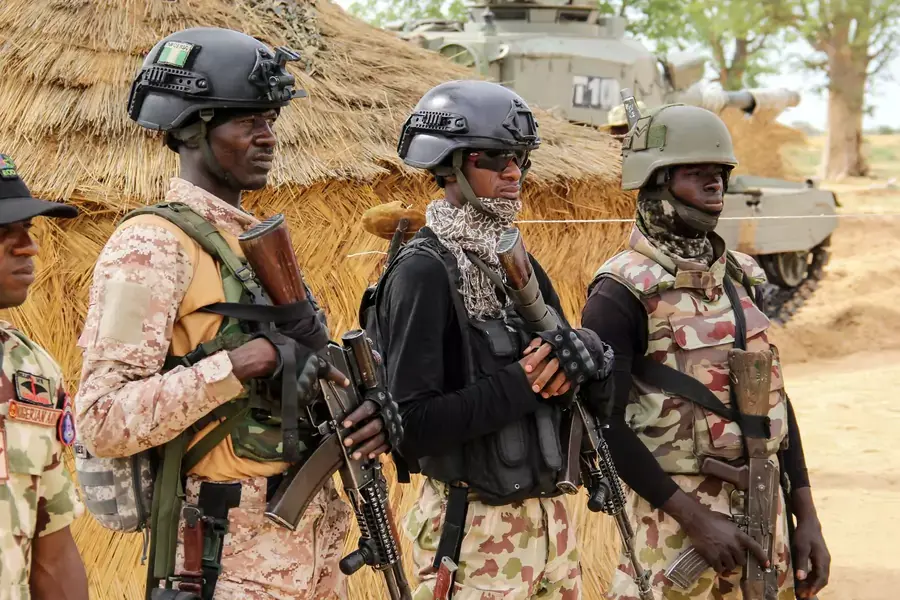
In addition, cooperation in defence and military-technical affairs, as well as counter-terrorism and responses to other persistent threats in this part of Africa, remains a major priority. The way armed forces work together sets a genuinely positive example for others.
The most important joint endeavour is the ‘Russia-Sahel Alliance’ format, created on the initiative of Russia and the three Sahel States (AES). Two ministerial meetings have taken place, and also on the sidelines of the UN General Assembly in September 2025.
The AES, created in September 2023 and formalised as a confederation in 2024, emerged after a string of coups in Mali, Burkina Faso, and Niger. Currently, Burkina Faso holds the Alliance’s presidency in 2026. Lavrov launched what he called “AES-Russia consultations.” That regular annual dialogue focuses on counterterrorism, political coordination, and investment.
Analysts say Russia’s courtship of the AES is part of a larger push to project influence across Africa, leveraging anti-Western sentiment to build political alliances at the United Nations and access strategic resources. Moscow presents itself as the friend for ensuring Africa’s political and economic sovereignty.
In the context of the information war waged by the West against any state pursuing an independent and sovereign foreign policy, it is vital that to deepen coordination in the information space. The official reports indicated that several Russian outlets are already active and widely followed in Burkina Faso and its neighbours.
Foreign Minister Sergey Lavrov, at a meeting with Burkina Faso Foreign Minister, Karamoko Traoré, held in Moscow, February 12, 2026, pledged to take further practical steps in scaling up the full spectrum of long-term bilateral cooperation in a greater depth.