Africa
Russia’s Strategic Path: Corporate Business Integration and Development -By Kestér Kenn Klomegâh
Technological advancement is impossible without a stable value system and strong cultural identity. That’s why the third pillar, “The Living Environment”, will address information sovereignty, cultural identity, social cohesion, and international humanitarian cooperation. Participants will explore how meaning is shaped and communicated in the media landscape, the mechanisms of trust in the digital age, and the role of tradition and historical memory.

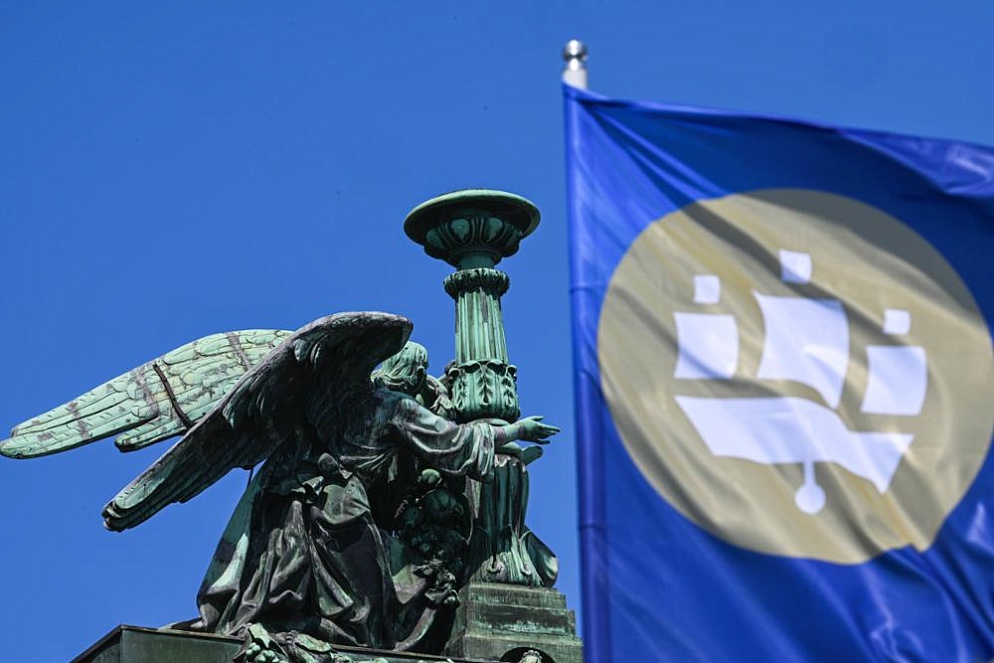
Popularly referred to as Roscongress Foundation, St. Petersburg International Forum (SPIEF) has been its main cornerstone. The SPIEF has, all these years, focused on charting dignified internal economic integration utilizing available resources, both natural and human capital and combined with financial capability, and the possibility of increasing exportable goods to make a better world. Since its establishment by a decree of Russian President Vladimir Putin, it has marked chronological achievements in boosting and strengthening corporate investor networking and entrepreneurship. It has also taken several key initiatives to foster potential entrepreneurship, leveraging the vast opportunities and supporting the growth of small and medium enterprises (SMEs) in the Russian Federation.
According to reports, designing business brands, expand their objective reach to internal Russia’s landscape, and developing markets in neighboring Soviet republics and farther down in Africa, Asia, Europe, United States and Latin America. Ultimately, the SPIEF is unreservedly committed to providing the necessary support to enable both the state-to-state and the private sector to thrive. Building on the previous unerasable achievements, SPIEF’s mid-June 2025 edition will continue to serve as a solid platform, particularly for corporate networking, brainstorming and collaborating on strategies for potential business developments and their subsequent growth.
The architecture of the entire business programme on 18–21 June, has been fixed, and the theme designed as “Shared Values: The Foundation of Growth in a Multipolar World”, reflecting major shifts in international cooperation and the role of universal values in enabling sustainable economic development. During the discussions, SPIEF participants will assess and review the effectiveness of measures taken, in the past years, to achieve Russia’s economic stability and progress, and concretely to determine further economic development trajectories in the Russian Federation and its footprints in different regions in the world amidst the current geopolitical challenges.
“We are witnessing tectonic shifts in the world. Not only is the economic map changing, but so too, in some sense, are the systems of economic activity and social relations in a number of countries and even intergovernmental blocs. The St. Petersburg International Economic Forum is becoming more than just a space for dialogue and the generation of ideas and solutions. It is turning into a platform where new meanings and even new practices emerge that can shape the contours of the future. It’s important not only to observe these changes, but to drive them and set their direction. And all of this must happen through a format of meaningful, trust-based and collaborative dialogue,” said Anton Kobyakov, Adviser to the President of the Russian Federation and Executive Secretary of the SPIEF Organizing Committee.
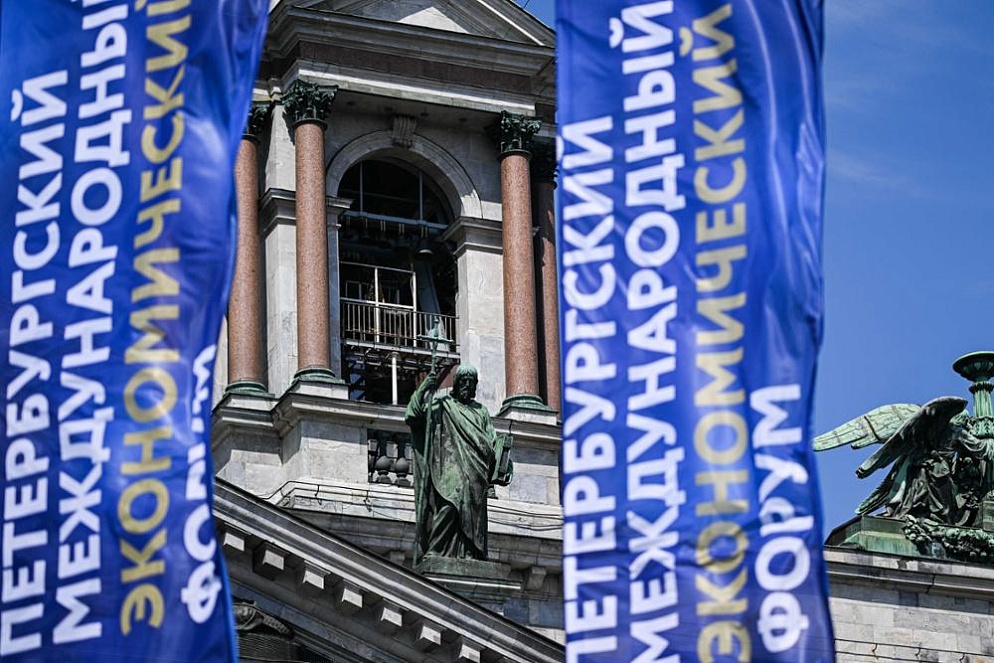
The business programme has been structured around four key thematic pillars, each revealing a different dimension of global and national transformation. The central pillar, “Development Economics: Ensuring Growth”, reflects the logic of new economic thinking. It covers two major areas. “The Global Economy: A New Platform for Global Growth” focuses on the resilience of macroeconomic models, investment strategies, the expansion of logistics routes, and the development of new markets. Discussions will address the future of international trade and supply chain transformation, the role of small and medium-sized businesses, and the regional and sector-specific dimensions of economic policy. Another major area is “The Russian Economy: A New Level of Growth”, which explores the opportunities and challenges facing the Russian economy amid global shifts. Topics will include building an effective new-cycle economic model, strengthening the resilience of domestic industries, and developing priority sectors such as manufacturing, agriculture, and high technology. This track will also cover Russia’s innovation potential, its integration into global economic processes, investment attraction strategies, and the strengthening of the domestic market.
These themes are directly linked to technological sovereignty and innovation. The “Technology: Pursuing Leadership” pillar will focus on key directions in technological development from AI and automation to independence in microelectronics, new materials, energy, and cybersecurity. At the core is the formation of a sustainable and competitive technological base capable of ensuring the long-term development of the economy and society.
Technological advancement is impossible without a stable value system and strong cultural identity. That’s why the third pillar, “The Living Environment”, will address information sovereignty, cultural identity, social cohesion, and international humanitarian cooperation. Participants will explore how meaning is shaped and communicated in the media landscape, the mechanisms of trust in the digital age, and the role of tradition and historical memory.
This naturally leads into the fourth pillar, “The Individual in a New World”, which will focus on quality of life, health, education, family well-being, urban development, and personal fulfilment. Special attention will be paid to youth and women’s participation in the economy, new employment formats, and managing human capital as a key resource for the future.
The programme will also include sector-specific and international events that have already proven to be essential gathering points for the professional community. Among them are the SCO and BRICS Business Forums, the B20 Forum, the SME Forum, the Creative Industries Forum, and the ‘Ensuring Drug Security’ Russian Pharmaceutical Forum.
The traditional format of business dialogues with representatives from China, India, Africa, Latin America, the Middle East, ASEAN, the CIS, and the EAEU will support the expansion of bilateral and multilateral ties, showcase investment projects, and explore industrial and scientific cooperation opportunities. Additional events will include business breakfasts with leaders of major companies, project presentations, public interviews, agreement signings, and an exhibition programme.
This year’s SPIEF will also host the General Assembly of the Organization of Asia-Pacific News Agencies (OANA), as well as the Day of the Future International Youth Economic Forum. The latter is supported by Friends for Leadership, an organization accredited by the UN Economic and Social Council (ECOSOC), which brings together young leaders, entrepreneurs and experts from over 100 countries. It was created by the Roscongress Foundation following the 19th World Festival of Youth and Students in 2017.
From the above discussion, reiterating that the theme, “Shared Values: The Foundation of Growth in a Multipolar World”, reflects profound shifts in the framework of international cooperation. Rapidly evolving economic and political processes are transforming the global landscape. The current changes demand broad expert discussion, and SPIEF, as one of the largest business forums, provides a platform for an open dialogue. In addition, it aims to become a space where new ideas are born, shaped into strategy, and transformed into real-world processes that can help shape the future.
The Roscongress Foundation was established in 2007 with the aim of facilitating the development of Russia’s economic potential, promoting its national interests, and strengthening the country’s image. One of the roles of the Foundation is to comprehensively evaluate, analyse, and cover issues on the Russian and global economic agendas. It also offers administrative services, provides promotional support for business projects and attracting investment, helps foster social entrepreneurship and charitable initiatives. The Roscongress Foundation was established in pursuance of a decision by the President of the Russian Federation.