Africa
Sowore in the Streets, Igbo Governors Silent: The Irony of Our Times -By Vitus Ozoke, PhD
It will record that while a Yoruba man raised his voice for justice, many Igbo politicians, who should have stood tall, chose instead to bow low. And when the dust of today’s politics settles, the people will remember who stood for truth – and who sold it for a seat at the table. When the story of Nnamdi Kanu’s struggle is told, the shame of the Igbo political class will be written not in ink but in the quiet contempt of a people betrayed by their own.

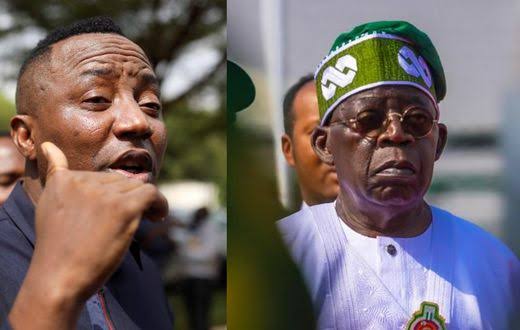
There are moments in history that expose the true character of a people’s leadership. History has a cruel way of exposing hypocrisy, and today, it is holding up a mirror to the political elite of Igboland. As Omoyele Sowore – a Yoruba man, activist, and unrepentant rebel against injustice – leads a mega protest in Abuja demanding the release of Mazi Nnamdi Kanu, one cannot help but feel both admiration and shame: admiration for the courage of an outsider, and shame for the deafening silence of those who should have been at the forefront of this cause.
There comes a point when silence is not golden but betrayal. That moment has long passed for the Igbo political elite, yet many of them remain comfortably mute while Mazi Nnamdi Kanu, the leader of the Indigenous People of Biafra (IPOB), languishes in detention under conditions that violate both law and logic.
The piercing irony is almost too bitter to swallow. While some Igbo governors and politicians have turned cowardice into a political strategy, bending over backward to curry favor with the powers that be in Abuja, defecting, crossing party lines, cozying up to the very establishment that holds Kanu hostage, trading principles for power, and branding subservience as “strategic alignment,” a Yoruba man, Omoyele Sowore, is risking police batons, tear gas, and intimidation, leading a national protest in Abuja demanding Kanu’s freedom.
Where are the self-proclaimed defenders of Igbo interests – those who campaigned on rhetoric of equity, freedom, and justice? Where are the so-called custodians of the Igbo conscience, from the governors’ mansions to the hallowed halls of Ọhaneze Ndigbo? Think about this: the same political class that claims to defend Igbo interests has been overshadowed by an outsider who refuses to stand by while injustice festers.
What a paradoxical portrait of modern Nigerian politics. A Yoruba activist is on the streets fighting for an Igbo man’s liberty, while Igbo governors are busy courting the ruling party that has turned Kanu’s detention into a symbol of political intimidation. It is a damning commentary on the moral collapse of Igbo leadership. It’s a betrayal that stings deeply – not just because of Kanu’s ongoing ordeal, but because it shows how far the Igbo political elites have strayed from the people they claim to serve.
Let’s call things by their real names: many Igbo politicians have turned Nnamdi Kanu’s ordeal into a political tool, a bargaining chip to secure their own access to the corridors of power. Their press statements are written not from core and conviction but from convenience and cowardice. Their silence isn’t diplomacy; it’s complicity. And their posturing about “political solutions” has long been a smokescreen for cowardice and self-preservation. For years, the name Nnamdi Kanu has served as a political tool in the Southeast – a convenient slogan for campaigns, a talking point for rallies, and a bargaining chip for politicians seeking federal favors. But when real action is needed – when the cameras are off and the stakes are high – the same leaders retreat into silence, their courage dissolving in the fog of political calculation.
Even Ọhaneze Ndigbo, the once-revered socio-cultural organization and the moral compass of the Igbo nation, now sounds more like a press office for cautious appeasement than the voice of a proud people – a whispering choir of conquered appeasers. Ọhaneze’s leadership has been long on platitudes for political relevance and short on principles. Instead of mobilizing the moral weight of Igbo society to demand justice, they have settled for tepid statements and “behind-the-scenes engagements” that yield nothing. Governors who should be rallying their people in solidarity with a fellow Igbo son instead parade themselves at federal banquets, eager to prove loyalty to those who hold the whip.
But history is not fooled. It keeps receipts.
The irony is stark: Sowore’s intervention has highlighted the contradictions in Igbo politics. Sowore, an outsider to the Southeast, has become a louder voice for Igbo dignity than many who claim to represent it. He has nothing to gain – no political patronage, no ethnic capital, no electoral advantage – yet driven by a demonstrable sense of justice, he stands up and takes to the streets because injustice anywhere is a threat to justice everywhere. Meanwhile, Igbo politicians who once rose on the back of Igbo suffering, but now fear offending Abuja, dine with those who continue to perpetuate that suffering, remaining silent – showing how comfort can numb the conscience.
This moment should haunt every conscience in Igboland. The moral test of leadership is not found in the comfort of offices or the elegance of speeches but in the courage to stand up when it costs something. On that score, most Igbo politicians have failed miserably. This is not just about Kanu. It is about dignity, justice, and moral consistency. It is about whether a people will continue to allow their destiny to be defined by fear and opportunism. Because if an outsider now has to lead the call for justice for an Igbo son, then what does that say about the moral spine of those who claim to speak for the Igbo nation?
History will not forget this moment. It will remember who spoke and who stayed silent. It will recall who stood for justice and who traded it for political crumbs. It will record that while a Yoruba man raised his voice for justice, many Igbo politicians, who should have stood tall, chose instead to bow low. And when the dust of today’s politics settles, the people will remember who stood for truth – and who sold it for a seat at the table. When the story of Nnamdi Kanu’s struggle is told, the shame of the Igbo political class will be written not in ink but in the quiet contempt of a people betrayed by their own.
Dr. Vitus Ozoke is a lawyer, human rights activist, and public commentator based in the United States.