Forgotten Dairies
Sowore’s Reckless Allegations And The Integrity Of The Nigeria Police Force -By Kelvin Adegbenga
The Nigeria Police Force remains an institution committed to professionalism, the rule of law, and due process. No amount of sensationalism can erase that reality. And no individual, regardless of how loud his voice, can substitute outrage for proof.

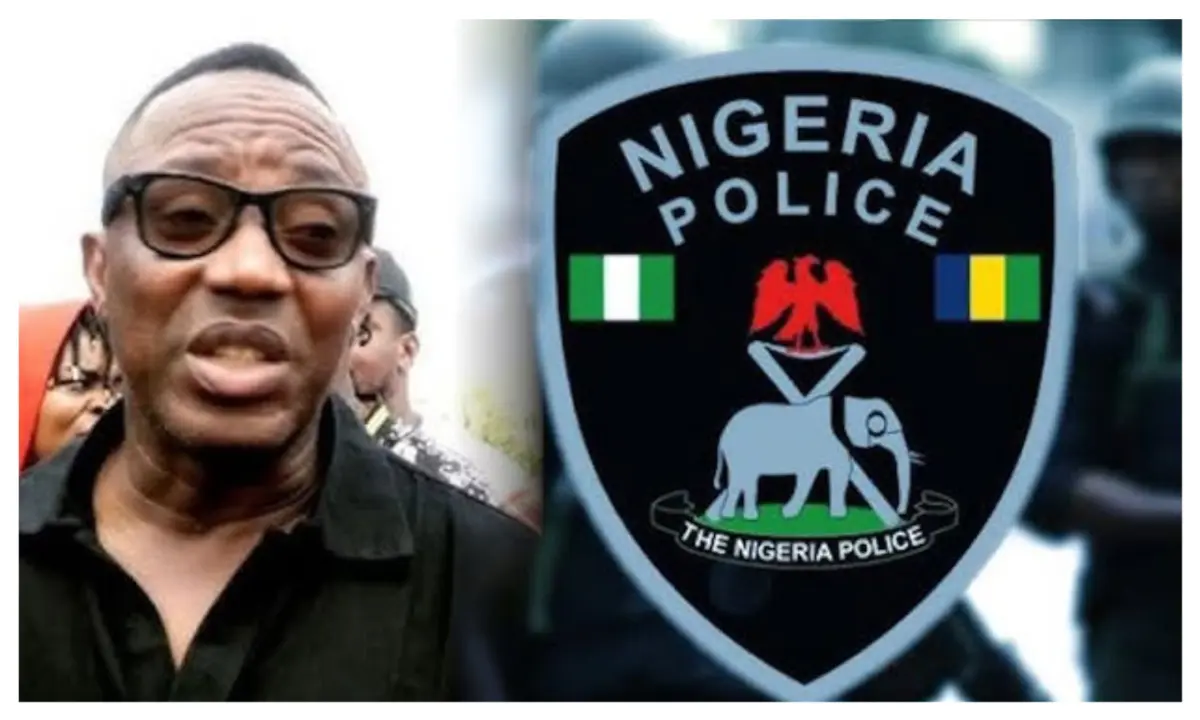
In recent days, serial agitator and self-styled activist Omoyele Sowore has once again taken to social media with his now-familiar cocktail of outrage, conspiracy theories, and unsubstantiated accusations, this time targeting the Nigeria Police Force over the detention of UK-based blogger Maureen Badejo.
As is typical of his pattern, Sowore did not present evidence; he presented drama. He did not advance facts; he advanced insinuations. And he certainly did not demonstrate responsibility; he displayed recklessness.
Let us be clear: the Nigeria Police Force is a professional law enforcement institution established by law and guided strictly by constitutional provisions and statutory regulations. It does not collude with any individual, no matter how highly placed in society.
The suggestion that the Force would compromise its institutional integrity to serve the interests of a private citizen is not only false, but it is also an affront to the thousands of disciplined officers who risk their lives daily to maintain public order.
Sowore’s claim that the police colluded with the General Overseer of Mountain of Fire and Miracles Ministries, Daniel Olukoya, “to unlawfully detain UK-based blogger Maureen Badejo” is a grave allegation made without proof. In a constitutional democracy, allegations are tested in courtrooms, not in the echo chambers of social media outrage merchants.
Police activities in Nigeria operate within the public glare. Arrests, investigations, and detentions are carried out pursuant to lawful complaints and judicial oversight.
The insinuation that the police seek “secret warrants” to unlawfully keep individuals in custody is a fabrication that only thrives in the imagination of those determined to undermine public confidence in national institutions.
Specifically, Sowore’s attempt to drag the name of SP Abubakar Smart, Acting Assistant Director at the Nigeria Police Force National Cybercrime Centre in Lagos, into his narrative is particularly irresponsible.
As a professional police officer, SP Smart Abubakar has never and will never work in concert with any private individual to ensure that a citizen remains unlawfully detained.
The Cybercrime Centre operates under defined legal frameworks, and its officers are accountable to established chains of command and judicial processes, not to religious leaders, bloggers, or activists.
Furthermore, Sowore should be reminded that he is not a law court. He does not possess the authority to determine whether an offence is “not triable at the magistrate’s court level.” Questions of jurisdiction and competence are legal matters to be addressed by qualified judicial officers, not by a rabble-rouser seeking attention through inflammatory commentary.
Equally laughable is the claim that the Nigeria Police engage in a “notorious and illegal” strategy of holding charges. Such sweeping statements demand evidence. Where is it?
If Sowore alleges that police told Badejo’s lawyers that “SaharaReporters’ publications were worsening her situation,” he must present verifiable proof. If he claims that police personnel were “simultaneously recording videos of Maureen Badejo in detention and making them available to Olukoya” while spreading claims that she lacked evidence against the cleric, he must come forward with credible, admissible evidence, not Facebook theatrics.
Publishing private exchanges with a police officer and hurling accusations of a “wicked, desperate, and shameful” abuse of power does not transform conjecture into fact.
In fact, his assertion of a grand conspiracy involving police officers, judges, prosecutors, and prison officials reads less like investigative journalism and more like a screenplay crafted for maximum outrage.
When SP Smart Abubakar reminded him that the matter was before the judiciary, Sowore’s predictable reaction was to expand his conspiracy net, suggesting collusion across institutions.
This is his modus operandi: when confronted with due process, he attacks the process; when confronted with the judiciary, he questions its integrity; when challenged on facts, he manufactures new allegations.
His latest outburst that “the Nigeria Police hierarchy was in on it” and “not engaged in legitimate law enforcement” is yet another baseless generalisation.
Institutions are not dismantled by rhetoric, no matter how loud the megaphone. Nor does Sowore have the moral or legal standing to “warn” SP Smart Abubakar about “acting on the wrong side of history.”
Law enforcement officers are guided by statutes and internal codes of conduct—not by social media ultimatums.
Nigeria is a constitutional democracy. Disputes are resolved in court. Allegations are proven through evidence. And institutions function within defined legal boundaries. Those who believe otherwise are free to test their claims before competent courts rather than through inflammatory online campaigns.
Sowore’s style of activism, which thrives on blackmail, misinformation, and institutional distrust, can no longer go unchallenged. Nigerians are wiser today. They recognise the difference between genuine advocacy and performative agitation. They understand that accountability must be evidence-based, not emotion-driven.
The Nigeria Police Force remains an institution committed to professionalism, the rule of law, and due process. No amount of sensationalism can erase that reality. And no individual, regardless of how loud his voice, can substitute outrage for proof.
In the end, facts, not fury, will prevail.
Kelvin Adegbenga writes from Ikeja, Lagos. kelvinadegbenga@yahoo.com @kelvinadegbenga