
Education
Tearing Down the Classroom Walls: Why Indonesian Criminology Needs a Voice on the Global Stage -By M. Yanto, Filzah, and Galang
So, where does Indonesia stand within this dynamic? Are our classroom discussions still fixated on the classic debate between the due process and crime control models that has been ongoing since the 1980s? Or will we move forward to question how data bias in computer systems can undermine the principle of the presumption of innocence? As experts recently reminded us at a conference of the Asian Law Schools Association, rejecting technology means falling behind, but adopting it without ethical consideration is dangerous.

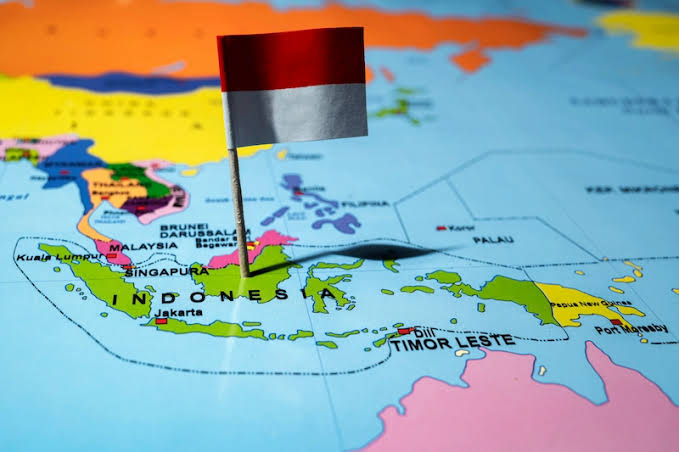
As a criminology lecturer, I am often confronted with fundamental questions from my students: “How relevant are these Western theories to our reality in Indonesia?” or “Why are the voices of Indonesian criminologists so rarely heard in global discussions?” These questions are not merely critical inquiries within the classroom; they are a reflection of a significant challenge faced by criminological studies in developing nations. Today, as crime has metamorphosed into a sophisticated transnational monster, it is time for us to tear down the classroom walls and bring the Indonesian perspective to the world stage.
The world is moving fast. At the University of Oslo, the ambitious project “Life-Course Trajectories to Crime Globally” (CRIMLIFE) is striving to map the life paths of offenders across six countries, stretching from Norway to Colombia. What is striking is that this project consciously attempts to avoid “academic colonialism” by involving local researchers in Global South countries. This is an implicit acknowledgment that, for too long, our understanding of “why people commit crimes” has been dominated by narratives from the Western world. Ironically, while other countries are racing to understand crime within their local contexts, we in Indonesia are often still preoccupied with the same old terminological debates.
We can no longer afford to be passive spectators in the international criminological arena. In the Asian region alone, the momentum for legal reform and approaches to crime is incredibly dynamic. Countries like India and Malaysia, for instance, have begun serious discussions about the role of algorithms and the ethical challenges of Artificial Intelligence (AI) in their criminal justice systems. From the use of predictive policing, which risks perpetuating discrimination, to the utilization of AI to assist judges in sentencing, they are actively re-examining the principles of due process in the digital age. Meanwhile, in 2025, the International Criminal Court (ICC) even issued a new policy on addressing environmental crimes and cybercrimes, demonstrating that the realm of criminal law continues to expand in response to the challenges of our time.
So, where does Indonesia stand within this dynamic? Are our classroom discussions still fixated on the classic debate between the due process and crime control models that has been ongoing since the 1980s? Or will we move forward to question how data bias in computer systems can undermine the principle of the presumption of innocence? As experts recently reminded us at a conference of the Asian Law Schools Association, rejecting technology means falling behind, but adopting it without ethical consideration is dangerous.
This is precisely where the urgency of global collaboration lies. When a group of cadets from the Indonesian Police Academy won an international award for their research on digital trafficking or online human trafficking in Myanmar, they proved that Indonesia’s younger generation is capable of capturing contemporary criminal phenomena with a sharp and globally relevant perspective. Issues like these—which are cross-border by nature and exploit technology—can no longer be understood simply by reading textbooks published 20 years ago. They require a deep understanding of global networks, local vulnerabilities, and the geopolitical dynamics of the region. To achieve this, collaboration with researchers from neighboring countries, or even involvement in research networks like CRIMLIFE, becomes an absolute necessity.
Furthermore, Indonesia’s contribution on the international stage must not stop at issues of street crime or terrorism. Topics such as environmental crimes, which have become a new focus for the ICC, or crimes related to the exploitation of natural resources (like critical minerals) in the Southeast Asian region, are fertile grounds awaiting analysis by Indonesian criminologists. How is large-scale deforestation in Kalimantan linked to agrarian conflicts and the criminalization of indigenous communities? How does the nickel supply chain for global electric vehicle batteries potentially create new forms of exploitation? These questions demand answers that are not only legal-formal but also criminological-sociological.
Therefore, as a lecturer, I invite students to no longer be satisfied with merely being consumers of theory. Become producers of knowledge. Utilize international programs, conferences, and global publications to voice the realities of Indonesia. Show that our criminology is not a pale imitation of Western criminology, but a living discipline, breathing in sync with the social, political, and cultural complexities of the Archipelago. It is time for us to write a new chapter in world criminology, with Indonesian ink and perspective.

























You must be logged in to post a comment Login