
Opinion
Systemic Racism by Design: The Structural Bias Embedded in Drug Law Enforcement -By Fransiscus Nanga Roka
Some governments in the world community are now coming to acknowledge these facts, but acknowledgement is not accountability. Reform efforts–decriminalization, harm reduction, policy review–are scattered and insufficient. They deal with symptoms, not structures. Without addressing the racial logic written into drug law enforcement, reform becomes superficial.

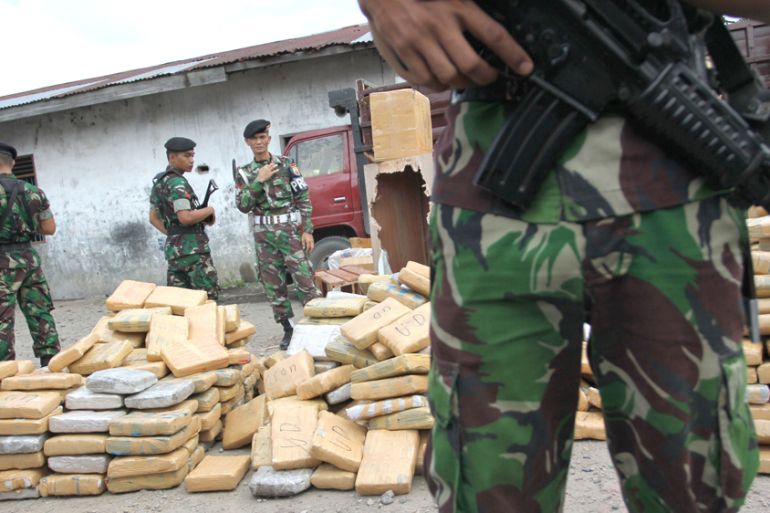
Observers place the global war on drugs within its existing frame as if it were simply a neutral campaign motivated by objective considerations of public health and social order. But it’s not. Underneath the officialdom and the legal conventions which cloak its mechanisms lies a racial system which is not only accidental in its effects but structured to produce racial inequality. The labels are all the same, but really what passes for law enforcement doesn’t function that way. In practice, drug legislation simply operates as a racial control device.
From street level patrolling to judicial sentencing, drug law enforcement does not have a free hand. It is imprinted with highly visible historical narratives, ones that come from the eras of colonialism and slavery; the racialization of deviance continues to dictate whom police can justifiably suspect whom the police actually arrest and whom the courts will punish. The end result is not just disproportionate impact; it is predictable, patterned discrimination.
Look at how the institutions themselves are designed to enforce this policy. Monitoring is not done on an equal basis across society. Stop and search practices, intelligence led raids, and forecasting techniques are all technologies for hunting out black and brown communities. That situation doesn’t just happen by accident but comes out of the system in which they were born in a sense it’s built into its very fabric. No longer is racism incidental; it’s encoded into the way policing works.
Nor is any kind of correction against these biases available in the courtroom. In fact, there they are played up. Mandatory minimum sentences, limited possibilities for retaining a good defense lawyer, and plea bargaining systems define the outcomes in ways that bear down hardest on marginalized communities. In this setting justice becomes a commodity, and inequality gets written sites.
This reality is obscured in the guise of neutrality. Drug laws are often expressed in abstract terms substances, thresholds, penalties but their enforcement is highly selective. The same offense can lead to vastly different outcomes depending on who has committed it and where. This is not a breakdown in implementation; it is how the system was intended to work from the beginning.
Even more worrying are the ways that these practices flout justice. A drug conviction is not something that leaves when you’re in jail; it follows you around for life. It puts limits on what kinds of employment, housing and schooling you can get and restricts your political involvement. Whole communities are out of bounds for opportunity; not just because of bad behavior by individuals alone but how laws are applied.
But the rest of the world still follows this pattern. In one country after another, people of African descent are over-policed, over-arrested, over-imprisoned and under- protected. Nevertheless, the institutions that hold this disparity in place remain legitimate under the banner of public safety. Public safety. Security for whom? Protection for whom?
This fact becomes even clearer when we look at the failure of punitive approaches despite overwhelming evidence against them. Aggressive drug law enforcement did not make illegal drug markets disappear. But it did establish racial pecking orders within the justice system. This is not a policy failure, it is a policy success.
With the arrival of militarized policing, the problem gets even worse. Armed raids, car chases and the routine use of force in drug law policing have a disproportionate impact on the Black community. The distinction between law enforcement and occupation becomes blurred. What starts out as control turns into downright domination.
Presented often as a solution, technology exacerbates the crisis. Predictive policing and surveillance promise efficiency but at scale deliver bias. Once discrimination is built into systems, it’s difficult to discern, hard to challenge and easier to dismiss. If drug law enforcement is left to develop along its present course, the future will not be less discriminatory–it will just be exacting in a different way.
Some governments in the world community are now coming to acknowledge these facts, but acknowledgement is not accountability. Reform efforts–decriminalization, harm reduction, policy review–are scattered and insufficient. They deal with symptoms, not structures. Without addressing the racial logic written into drug law enforcement, reform becomes superficial.
What we need is not an adjustment to the program, but an engineering overhaul. Drug policy has to be seen through a human rights perspective that values dignity, fairness, and justice more than punishment and control. This necessitates the abolition of discriminatory policing practices, doing away with policies that produce their own victims and creating means for effectively ensuring respect in policing areas such as befall those who are caught up within them too otherwise hurting adventurers. It demands a fundamental change in the way we think about drug use: not as a law and order problem, but instead from public health perspective. Criminalization has not only sometimes failed to reduce harm, it has also failed to protect rights. It means that you create a “hierarchy” for vulnerability to be punished whereas inequality is reproduced. The most uncomfortable truth of all is that: systemic racism in drug law enforcement does not happen by accident, linkage with a police instruction is necessary. It persists because it has a purpose – maintaining social order, promoting administrative control and legitimating authority. Until that function is uprooted, nobody should think for a moment that anything worthy of the name of justice will result. Where the enforcement of law ends up victimizing racial groups but not others, it is not just a failure–it’s also a fraud. Nor can any international order that harbours such phenomena claim to stand for human rights. As the ancient Chinese philosophers said: “When the system is stopped by inferiority, so is justice–not only blinkered but also accomplice.”
Fransiscus Nanga Roka
Faculty of Law University 17 August 1945 Surabaya Indonesia

























You must be logged in to post a comment Login