Africa
Stop the Disinformation: Nigeria Has Been on USCIRF’s Red List Since 2009 — Why Attempts to Bully America Into Silence Will Not Work, by James Ezema
The United States does not need Nigerian newspapers to determine reality. Washington has the data — and it has had that data for years. The only real solution is to heed the warnings, stop the killings, and dismantle the forces undermining religious freedom. The problem is not the reports. The problem is the violence. And Nigeria must stop attacking the mirror and finally confront the fire with political will and the might of her armed forces.

A perusal of more than a decade of reports by the United States Commission on International Religious Freedom (USCIRF) has revealed that it issued consistent annual recommendations that Nigeria be designated a Country of Particular Concern (CPC). This is the highest classification in the U.S. religious freedom sanctions architecture, applied only to countries where governments are directly involved, complicit in, or blatantly negligent toward severe and systemic violations of religious freedom.
From 2009 to 2025, this recommendation has remained unchanged and the USCIRF has repeatedly insisted that the scale, continuity, impunity, and brutality of killings and targeted religious persecutions in Nigeria meet the statutory test under the International Religious Freedom Act (IRFA).
The International Religious Freedom Act (IRFA) of 1998 is a landmark piece of U.S. legislation that fundamentally elevated the promotion of religious freedom into a core component of American foreign policy. At its heart, the IRFA is a comprehensive framework designed to monitor, publicly condemn, and respond to violations of religious liberty around the world. It officially recognizes that the freedom of thought, conscience, and religion is a universal human right and mandates the U.S. government to use its diplomatic and economic tools to protect it.
The Act established several key mechanisms to achieve this goal. Crucially, it created the position of the Ambassador-at-Large for International Religious Freedom and the U.S. Commission on International Religious Freedom (USCIRF), an independent, bipartisan body. Furthermore, the law requires the annual publication of an exhaustive report detailing the status of religious freedom in nearly every country.
Based on these reports, the President must annually designate countries that engage in or tolerate “systematic, ongoing, and egregious” violations of religious freedom as “Countries of Particular Concern” (CPCs), and non-state actors as “Entities of Particular Concern” (EPCs). Once a designation is made, the IRFA requires the consideration or imposition of specific Presidential Actions—which can range from diplomatic demarches to economic sanctions—against the violating government or entity.
In summary, the IRFA is the legal foundation for the U.S. government to act as a global advocate, ensuring that the right of all people to believe, not believe, change their beliefs, and practice their faith peacefully is defended.
It is clear that the consistent recommendation of the classification on Nigeria as a Country of Particular Concern since 2009 was not guesswork. It was not hearsay. It was not dependent on local gossip. It was based on layered evidence.
It is important for the Nigerian Government and Nigerians to understand that USCIRF is not a “newspaper monitor” and certainly not a WhatsApp-driven decision-maker. The Commission relies on U.S. national security archives, U.S. Embassy intelligence, deep incident mapping, satellite-confirmed casualty mapping, UN casualty metadata, International Crisis Group verified alerts, internal cables from USAID, classified findings from State Department analysts, and testimonies from international humanitarian organisations. All of these form part of the U.S. government’s internal religious freedom threat matrix.
In short, the United States does not require local reports as primary evidence. Secondary media sources are only confirmatory, not foundational. Therefore, the idea that any actor within Nigeria would think it was wise to waste resources procuring BBC Africa to “discredit” secondary reporting was both naïve and wasteful because America already had the primary data.
The CPC recommendation followed a very stable sequence. USCIRF recommended Nigeria as a CPC from 2009 to 2013. It repeated the same recommendation from 2014 to 2018. It repeated it again in 2019 and 2020.
In December 2020, the United States formally designated Nigeria a CPC. When Nigeria was later removed from the official CPC list, USCIRF publicly condemned the reversal and again demanded that CPC designation be restored.
The position has been firm, consistent, documented, and evidence-based. There has never been a pause in the Commission’s view. USCIRF has never shifted its position that Nigeria’s killings and religious persecution have met the global threshold for the worst category on earth.
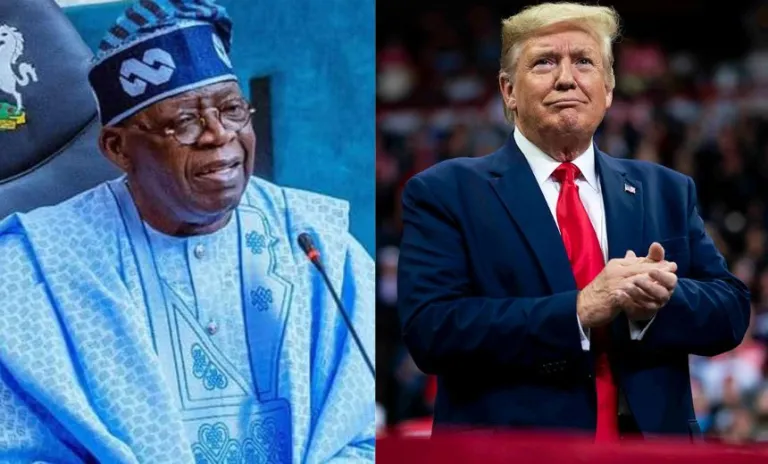
Because of that, the attempt by certain Nigerian interests to “reach Trump” through online influencers in an attempt to counter USCIRF’s position and the President’s decision was also a waste of time.
This finding only points to the fact that President Donald Trump was not speaking because of Facebook clips or International Society for Civil Liberties and Rule of Law (InterSociety’s) decade of documentaries or reports. He was speaking because he was looking at U.S. intelligence.
He was not responding to trending narratives as some government supporters and other Nigerians were made to believe; he was responding to the United States’ national security-grade data.
Therefore, his warning to Nigerian leadership was simple: stop the mass killings. We may have issues with the Christian massacre angle or the word genocide, no problems. What some political actors attempted to do was to stop the documentation of mass killings rather than stop the killings themselves. In their thinking, if media reports or human rights reports were discredited, then America might abandon its concern. That was a tragic miscalculation.
USCIRF, unlike press or social media, is plugged directly into classified U.S. data streams. No influencer from Nigeria can distort the findings that sit inside the National Security Council repository of the United States.
This is because findings have proven that even if all Nigerian media outlets went silent on killings in the country today, the United States would still have the same dataset. It would still maintain the same CPC conclusion and it would still insist that the killings are happening. And it would still insist that Nigerian government actions are either complicit or grossly negligent.
That is why money being spent trying to bully the narrative is useless. For a wise government, rather than spending resources suppressing journalists or funding disinformation or paying international PR firms or influencing content creators to “attack reports,” it would have been better to use the same funding to disarm militias, prosecute the perpetrators of mass abductions, neutralise terror financing networks, reform policing to engage in community policing, support victims, and rehabilitate traumatised communities.
Instead of fighting the evidence, the Nigerian state should have been fighting the crimes. Instead of hiring media to deny the killings, whether Christians or not, the state should have been decisively stopping the killers.
In conclusion, the USCIRF annual reports have been consistent, forensic, uninterrupted, and unchanging in their recommendations. They have established — over more than a decade — that Nigeria qualifies for the highest category of global concern.
It then implies that no media manipulation can undo that, not today and not tomorrow, unless the dataset changes. This is just as no BBC Africa counter-narrative can erase that. No social media influencer can change U.S. intelligence archives. And engaging Donald Trump through digital proxies or manipulating international perception will not alter the fundamentals.
The United States does not need Nigerian newspapers to determine reality. Washington has the data — and it has had that data for years. The only real solution is to heed the warnings, stop the killings, and dismantle the forces undermining religious freedom. The problem is not the reports. The problem is the violence. And Nigeria must stop attacking the mirror and finally confront the fire with political will and the might of her armed forces.
Comrade James Ezema is a journalist, political strategist, and a public affairs analyst. He is the National President of the Association of Bloggers and Journalists Against Fake News (ABJFN) and National Vice-President (Investigation), Nigerian Guild of Investigative Journalists (NGIJ) and can be reached via email: jamesezema@gmail.com or WhatsApp: +234 8035823617.