Forgotten Dairies
The BBC and the Crisis of Credibility -By Patrick Iwelunmor
With credibility now hanging by a thread and the ghosts of deceit stalking its once-pristine corridors, the BBC finds itself under blistering fire across social media, as many voices insist that even its much-trumpeted documentary on T. B. Joshua now stands exposed as yet another monument to its deep-seated biases against African Christianity.

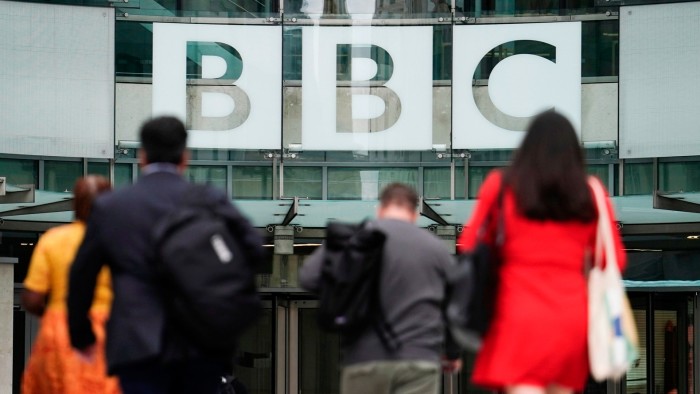
The British Broadcasting Corporation, long revered as the gold standard of global journalism, now finds itself in an unexpected moral quagmire. What began as a controversy over the editing of a Donald Trump speech has snowballed into an institutional earthquake, culminating in the resignation of its Director-General, Tim Davie, and the head of BBC News, Deborah Turness. The offence appears straightforward: in a Panorama broadcast, the BBC edited portions of Trump’s January 6, 2021, speech in such a way that his words were stitched together to create a meaning he did not expressly convey. The segment omitted the part where Trump told his supporters to “peacefully and patriotically make your voices heard” and instead presented an unbroken line suggesting a direct call to violence.
For a public broadcaster that prides itself on impartiality, the implications are damning. It is not merely a question of editorial error but of moral negligence. Once the foundation of trust between a news organisation and its audience cracks, every past and future work becomes subject to suspicion. It is within this context that many are beginning to revisit some of the BBC’s earlier controversial documentaries, particularly those involving African religious figures and cultural institutions.
When those documentaries first aired, they were received with predictable polarity. To some, they represented courageous acts of investigative journalism that exposed hidden abuses within powerful institutions. To others, particularly within Nigeria and the broader African Pentecostal world, they came across as colonial flavoured hit jobs, filled with Western media exercises steeped in moral superiority, selective framing, and an instinctive suspicion of charismatic African spirituality.
The present scandal surrounding the BBC’s handling of Trump’s speech now breathes new life into that second interpretation. If the corporation could manipulate footage of a former American president in a story scrutinised by global media professionals, what might it have done in portraying a controversial African preacher or religious community, far removed from Western institutional accountability?
Indeed, the BBC’s documentary on Prophet T. B. Joshua can now be viewed through this prism of bias and selective judgment. That production, already contested for its sweeping generalisations and one-sided testimonies, could very well have been the product of the same editorial arrogance and cultural prejudice that now define the Trump scandal. What many dismissed as mere “religious defensiveness” from Joshua’s followers may, in hindsight, appear as an intuitive recognition of manipulation. The BBC’s vanishing integrity and credibility, now exposed by its unethical handling of Trump’s words, validate long-standing suspicions that its documentary on Joshua lacked fairness and objectivity.
The truth is that media credibility is cumulative. It is earned slowly through consistency and lost abruptly through a single act of distortion. The BBC’s recent misstep suggests a culture of editorial convenience, a tendency to subordinate nuance to narrative. The Trump case reveals how easily the search for drama can eclipse the duty of balance. If such narrative zeal was applied to its earlier documentaries, then what audiences received may not have been truth in its purest form, but a collage of half-truths stitched together to fit a pre-decided thesis.
To be clear, this is not a blanket defence of any particular personality or institution previously featured by the BBC. Rather, it is an appeal for intellectual consistency. Even the most passionate admirer of investigative journalism must recognise that truth becomes compromised when storytelling replaces verification. For many Africans, these portrayals were never simply about journalism; they were about power, the power to define narratives, to impose moral hierarchies, and to delegitimise indigenous religious experiences that do not conform to Western rational expectations.
This is not the first time Western media outlets have exercised such editorial paternalism. From colonial travelogues to modern documentaries, Africa has often been reduced to a moral specimen, a space where poverty, corruption, or spiritual excess must always be foregrounded. The Western journalist, often subconsciously, enters the African landscape not as a neutral observer but as a civilising examiner, a bearer of moral correction. When the BBC’s cameras enter an African church, shrine, or political institution, they do so within an interpretive frame already loaded with suspicion.
Now that the BBC’s own internal morality stands impeached, it becomes legitimate and even necessary to re-evaluate those documentaries through the lens of institutional bias. Were their portrayals guided by the ethics of balance and corroboration? Or were they driven by an unspoken need to reaffirm existing stereotypes about African religiosity, suggesting that it is manipulative, secretive, and inherently prone to abuse? The case of the T. B. Joshua documentary now appears symptomatic of a deeper malaise, a journalism that cannot see beyond its own prejudice.
The Trump affair has exposed how the BBC, like many legacy media organisations, has increasingly blurred the line between journalism and advocacy. In the rush to appear morally righteous or politically correct, it sometimes sacrifices context on the altar of narrative neatness. In doing so, it betrays its own ethos. The BBC was never meant to echo the passions of the crowd; it was meant to inform them soberly. But in an age of virality and ideological warfare, the temptation to dramatise, even at the cost of precision, has become irresistible.
This erosion of discipline is what now fuels growing global scepticism. From Washington to Lagos, audiences are beginning to ask if the BBC could “doctor” Trump’s speech, could it also have “doctored” its interpretations of other controversial figures? Could its past documentaries on African religious leaders have been exercises in selective moral storytelling, designed less to enlighten and more to convict?
It is important to stress that mistrust in Western media is not born merely of nationalism or religious loyalty. It arises from a long history of representational imbalance. The African story, when told by foreign correspondents, is often shaped to fit a moral binary — the corrupt leader, the gullible followers, the miracle worker gone rogue. Such frameworks rarely allow space for complexity or cultural empathy. But to represent African realities adequately requires a kind of humility, a willingness to understand spiritual and social phenomena without cynicism. That humility is what appears missing in much of Western reportage on Africa.
The present crisis at the BBC, therefore, is not only a British story; it is a global parable about the fragility of trust. Institutions that claim moral authority must themselves be morally disciplined. Once the audience perceives manipulation, whether in editing a speech or crafting a documentary, every future broadcast becomes suspect. Credibility, once fractured, cannot be repaired by apologies alone; it requires a cultural reset.
For Africa, the lesson is deeper. It is time to invest in indigenous media structures capable of telling African stories with both integrity and empathy. The dependence on Western broadcasters to interpret our spiritual, political, or social realities is itself a vestige of mental colonisation. If we do not tell our own stories, others will tell them for us, and often against us.
To dismiss the BBC’s previous documentaries outright would be intellectually lazy. But to accept them uncritically, in light of the present scandal, would be equally naïve. The wiser path is critical re-examination: to revisit the evidence, scrutinise the editing choices, question the motives, and demand transparency. The BBC owes the global public not just an apology for misrepresenting Trump, but a renewed demonstration of ethical consistency across all its productions, especially those dealing with non-Western subjects.
The crisis now unfolding is therefore more than a reputational bruise; it is an epistemic reckoning. The BBC, once the world’s arbiter of truth, must confront its own capacity for distortion. For many who have long felt misrepresented by its narratives, this moment offers vindication, proof that moral posturing is not the same as moral integrity.
With credibility now hanging by a thread and the ghosts of deceit stalking its once-pristine corridors, the BBC finds itself under blistering fire across social media, as many voices insist that even its much-trumpeted documentary on T. B. Joshua now stands exposed as yet another monument to its deep-seated biases against African Christianity.