Africa
The Belly of the Beast –By Tony Osakpamwan Agbons
The belly of the beast is being in the middle of a dangerous, challenging, hostile or daunting situation. It signifies intense vulnerability and confrontation with a major threat. It mirrors the experience of the biblical character, Jonah, and implies navigating a high-risk environment with a difficult escape. For Nigeria, the whirlwind can be curtailed. It has to be pragmatic – a sensible, realistic, and practical approach to solving problems based on current, real-world conditions rather than on theory or dogma.

As the year 2026 gathers pace, it is instructive to note that several resolutions, set goals, and objectives are already being put to the litmus test at individual, organisational, national and international levels. The end of a calendar year and the start of a new one offer a fresh opportunity for introspection and reflection. A new year is a moment to pick a new brush and paint on hand to design a fresh canvas. It is incontrovertible. For many, the time-tested formula of what went well, what can be improved comes to the fore. Within my stratosphere as a writer and media analyst, one of the frequent and tough questions from readers, viewers, friends, and associates is: “When and how do you write articles and publications that churn out all year round. It is often with a quite humble mien that the response, “To God be the Glory for the gift of writing”, comes out. So many who have got that response are often bemused as it is probably not the answer expected.
In the last twelve months, some enthralling articles were published, which expectedly drew myriads of engagements from across the world. They include (and in no particular order) – Molecular Valency, Attention with Intention, The Tangent of Culture and Strategy, Moral Barometer, Full Chest, Shoulder and Clavicle, The Ordeal in the Abyss: Facing the Shadow of Self, The First Moment of Truth, The Currency of Moral Plexus, amongst others. Writing is a gift. It, however, has to be nurtured – reading of literature is key for any aspiring writer. Active listening to audio and visual resources is also a prerequisite.
Looking back, virtually the entire catalogue of the famed African Writers Series was devoured as a teenager. Things Fall Apart, No Longer at Ease, Arrow of God, Anthills of the Savannah, and A Man of the People, all by Chinua Achebe, went down. Nguigui Wa Thiong’o’s books – Weep not Child, A Grain of Wheat, Petals of Blood, and The River Between got digested. Others were The Burning Grass, People of the City, Jagua Nana by Cyprian Ekwensi was brushed. Abraham Peter’s Mine Boy was absorbed along with The Beautiful Ones Are Not Yet Born by Amah Ayi Kwei, while Kenneth Kaunda’s Zambia Shall Be Free followed. Also, Wole Soyinka’s – The Lion and the Jewel, The Trial of Brother Jero, and The Man Died, fell in line. Much later, as an adult, The Protestant Ethic and Spirit of Capitalism by Max Weber, Why Politics Needs Religion by Brendan Sweetman and God`s Name in Vain by Stephen Carter were read. The James Hadley Chase series all went down except those unable to pass around with schoolmates. Then came the Pacesetters series and, of course, the romantic fantasy series of Mills and Boon. Best sellers like George Orwell’s 1984, Jane Eyre by Charlotte Bronte, and King Solomon’s Mines by Rider Haggard also joined the queue. Weekly publications like Newswatch, TELL, and Insider Weekly were not spared. The list goes on. The impact of these and other literary works on my young, impressionable mind was huge.
Within the sphere of cognitive psychology, character development from childhood to adulthood is in the minute details. Several factors – home training, peer influence, and environmental impact determines outcomes. Like the human mind, societal development is also in little ‘atomic’ details. Nations develop over time based on certain principles anchored on responsible leadership, proactive followership, working systems, institutions and of course the rule of law. In climes where the aforementioned are present, the result is transformation, a sense of belonging, love for country, accountability, reward for good, punishment for wrongdoing, happiness for the majority (and not a few), fairness, equity and justice.
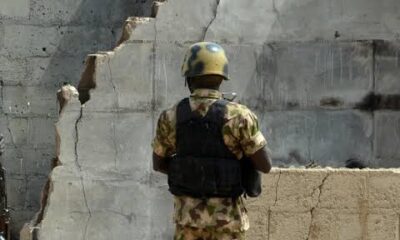
Towards the tail end of the year, 2025, Nigeria was in the global news. It was designated as a Country of Particular Concern by the United States of America. The debate over Christian Genocide in the North and Middle Belt of the country went a stretch. The bombing of the terrorists’ hideout in Sokoto state, Northwest Nigeria, by American forces followed on Christmas Day. Both protagonists and antagonists on the issue have been on each other’s throats following the proclamation by POTUS Donald Trump of Christian Genocide in Nigeria. Going back to how Nigeria arrived at this point in this article amounts to `preaching to the choir`. The overriding interest by well-meaning Nigerians is that the incessant killings in Nigeria MUST stop. Be it a Christian, Muslim, or African Traditional Religion practitioner, no Nigerian life should be snuffed out by another. How is human life no longer regarded and valued? A cursory analysis of the arguments for and against the debate on Christian Genocide in Nigeria shows a misplaced ‘subtle acceptance’ of wanton loss of human lives, be it by terrorists, unknown gunmen, bandits, kidnappers, Islamist groups or whatever they are. The moral fabric of society is/has broken down. People now want to benefit from the pains and trauma of fellow citizens. They do it without any conscience or feelings for fellow human beings. Sad! The gift of life is divine, and no other human has the right to take it away. There is no justification for any Nigerian to abduct or kidnap another for ransom or monetary gain. What happened to our humanity? Reasons may be legion, but none suffice.
In the animal kingdom, where diverse beasts of prey reign supreme in territories, there are boundaries set by nature. Animal scientists posit that there is a semblance of orderliness within the domains of the jungle. Animal species protect their own/type. It is therefore sickening to see the low level with which some human beings now take the life of fellow humans in Nigeria. The wealthy elites look after each other. They are less than 2% of the population and work together to maintain their interests. Wealth distribution remains lopsided, and, as in George Orwell’s ‘Animal Farm,’ it has become a case of the survival of the fittest. The high levels of desperation have reached astronomical heights. Many are quick to maim and kill for money. Things fall apart, and the centre cannot hold; mere anarchy is loosed upon the land. Classic words from the opening of W.B. Yeats’s 1919 poem “The Second Coming,” written in the aftermath of World War 1. The lines describe a state of societal collapse, profound chaos, and the loss of traditional order or “centre”. Yeats highlights a situation where stability has vanished, and anarchy is unleashed. It was from those evergreen words that the legendary Chinua Achebe penned the title of his globally acclaimed book, Things Fall Apart.
The belly of the beast is being in the middle of a dangerous, challenging, hostile or daunting situation. It signifies intense vulnerability and confrontation with a major threat. It mirrors the experience of the biblical character, Jonah, and implies navigating a high-risk environment with a difficult escape. For Nigeria, the whirlwind can be curtailed. It has to be pragmatic – a sensible, realistic, and practical approach to solving problems based on current, real-world conditions rather than on theory or dogma. It entails choosing a workable solution over a perfect, unachievable one. At all levels of governance, leaders must cut down on their unbridled display of opulence and grandeur. Flaunting of extravagant lifestyles by the political class sends a wrong message to other members of society, especially young people, more so when such wealth has been accumulated not from legitimate work or industry. The leaders must ensure that opportunities are created for all and not just for a select few. Policies and programs should be for the happiness of the majority and not for a few.
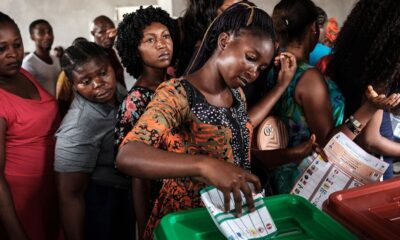
On the flip side, followers must understand that the country’s destiny lies in their hands and in their actionable moves. Yes, it is rational to complain, but that alone will not cut it. How many are interested and directly involved in political parties? Therein is the powerhouse. Good men and women for elective offices can only emerge from political parties. These are the candidates who are voted for on election day. Let`s not be under any illusion, politics holds the ace. The mantra is unassailable: Seek ye first the kingdom of politics and all other things shall be added, for a better nation. Let everyone be guided, just like the Biblical Jonah, who spent three days and nights in the belly of a fish, eventually got to Nineveh, and accomplished divine mission. Nigeria must achieve its purpose – become a society where all can thrive seamlessly ipso facto.
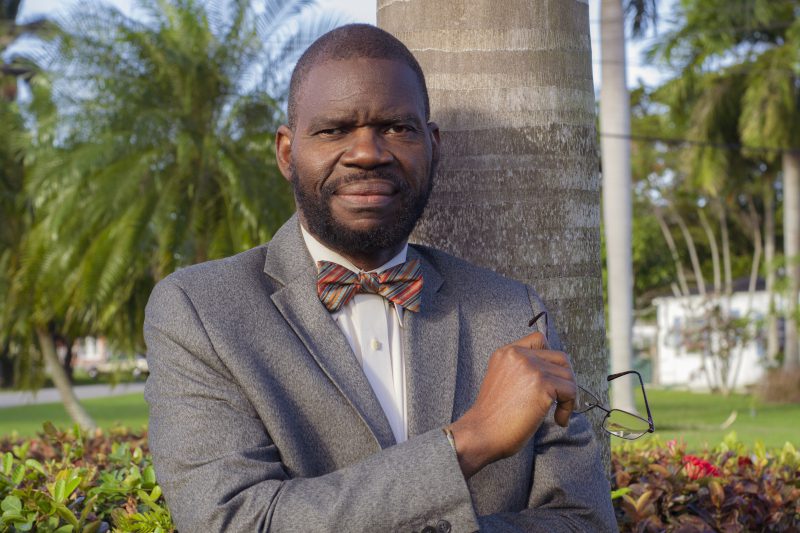
Tony Agbons, blogs @Twin2.org