Africa
The Giant and Its Shadow: Nigeria’s Crisis of Faith and the Gathering Storm -By Vitus Ozoke, PhD
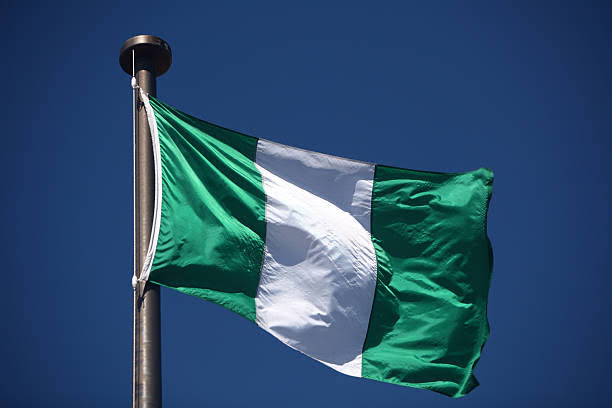
If Bola Tinubu fails to act now, the next flag raised in Abuja might not be green-white-green, but a foreign one – raised not in conquest, but in pity. And that, truly, would be the final humiliation of the so-called Giant of Africa.

Nigeria once again stands at the crossroads of history – proud in name, shaken in reality, and staring into the dark mirror of its own contradictions. The latest tremor comes not from within but from across the Atlantic. President Donald Trump’s threat to “prepare for possible action” in Nigeria has flung open the doors of a storm we thought long contained. But this isn’t just about America’s muscle or Trump’s bluster. It’s about us – about what we have become and how our political recklessness has turned the country into an open wound, inviting foreign interference and perhaps even control.
The tragedy did not start with Trump’s post or Tinubu’s silence. It began on the day Nigeria chose convenience over conscience – when a political class so drenched in arrogance and corruption decided that balance no longer mattered, that a Muslim-Muslim ticket was a risk worth taking. It was a decision that mocked the fragile compact that has held this country together since independence – the unwritten rule that power must not mock diversity, that governance must reflect inclusion, not triumphalism.
For decades, Nigeria managed to keep its combustible religious plurality from becoming a full inferno through a delicate balance of accommodation: Christian-Muslim, North-South, Yoruba-Hausa-Igbo. Imperfect, yes, but necessary. The 2023 election shattered that fragile consensus. Bola Ahmed Tinubu, calculated and defiant, paired himself with Kashim Shettima, another Muslim, and in doing so, signaled that Nigeria’s intricate peace architecture could be bent, broken, or ignored for selfish political gain.
That choice now haunts the corridors of power in Abuja like a ghost. When Trump accuses Nigeria of “mass slaughter” of Christians and threatens to deploy the Pentagon, he is not only weaponizing religion; he is exploiting the perception that Nigeria’s leadership has become sectarian, tone-deaf, and morally disconnected. Whether Trump acts or not is secondary – the fact that such a threat resonates worldwide proves Nigeria’s declining moral authority.
No one should be surprised. You cannot govern a house divided and expect the world not to smell the smoke and the stench. For too long, Nigeria’s ruling elite have played poker with identity, dealing the cards of religion and ethnicity when it suits them, only to call for “national unity” when the table turns against them. Today, the game has gone wrong. The same ticket that ignored balance is now being called to account by a foreign power whose leader has no love for Muslims and no patience for diplomatic niceties.
Let me be clear here: the violence in Nigeria’s north is real. Both Christians and Muslims have endured suffering. The tragedy in Kaduna, the tears in Plateau, and the endless burials in Borno—these are wounds that transcend religion. But the failure lies in how the government narrates, confronts, and addresses this horror. The appearance of indifference is deadly. When Bola Tinubu and Kashim Shettima share the same Muslim faith yet seem disconnected from the sufferings of Christians, perception becomes reality. And in geopolitics, perception can lead to war.
And let’s not forget Tinubu’s fragile legitimacy, which lingers in the background. Nigeria’s constitutional order, already strained by disputed elections and judicial controversies, would face a serious challenge if its credibility abroad were to collapse. Tinubu needs to be informed – assuming he isn’t already – that Donald Trump doesn’t follow any rules of politeness. He fights dirty. He could order the immediate release of Tinubu’s court and academic records in Chicago, which Bola Tinubu has fought hard to keep secret from Nigerians and the world. Any such disclosure or diplomatic embarrassment that questions the integrity, eligibility, or moral authority of a sitting “president” could trigger a legitimacy crisis at home. The Nigerian Constitution vests enormous symbolic authority in the presidency; once that authority is compromised, every institution that depends on it – the courts, the military, the civil service – feels the impact.
If Washington or any other foreign power publicly questioned Nigeria’s leadership, the political fallout would be explosive. Opposition parties would exploit it to call for impeachment; civil society would take to the streets; and the international press would amplify Nigeria’s governance woes. The outcome would be paralysis at the top and chaos at the base. Even the perception of such a scandal could weaken Nigeria’s leverage with allies and investors. Diplomats might view the presidency as illegitimate and unstable, markets would react negatively, and regional rivals could sense vulnerability. In a federation still dealing with secessionist tensions, such a vacuum could quickly become an existential crisis.
This is why the Tinubu administration must treat the current diplomatic tension as a national-security emergency. It must act decisively to restore confidence through transparency, consistent communication, and genuine engagement with both domestic and international audiences. No Nigerian government can afford to let external actors dictate the moral tone of the republic. The integrity of the state must be safeguarded by honesty at home, not silence abroad. This is why the stakes have never been higher. Nigeria’s sovereignty – already damaged by corruption, weakened institutions, and moral distortions in the judiciary – may now face its most serious test since the civil war. If Washington concludes that Abuja is unable or unwilling to protect its Christian and minority populations, intervention could occur under humanitarian pretenses but driven by strategic interests. Regime change might be whispered about today; tomorrow, it could be carried out by drones and diplomacy.
It doesn’t have to come to that. Nigeria’s salvation lies not in bravado but in humility. Bola Tinubu needs to step down from the marble stairs of Aso Rock and face reality. He must engage Christian leaders, not with platitudes, but with partnership. He should send envoys to Washington, not with defensiveness but with diplomacy. Most importantly, he must rebuild the moral foundation of governance – fairness, inclusion, and justice. Without these, no constitution, prayer, or security vote will hold the country together. And to the courtiers who drunkenly dance around power – the Nyesom Wikes and the jesters of political theater who mistake noise for relevance – this isn’t the time for your buffoonish brawls and beer-parlor wisdom. Nigeria is on the edge of an abyss. One careless word could push us over the edge.
Bola Tinubu must understand this: history does not remember excuses; it only remembers outcomes. The same America that once armed us could one day invade us in the name of peace. The same “giant of Africa” that once led ECOWAS may one day be led in chains of debt and dependency because its leaders mistook impunity for strength. This is the moment for sobriety, not swagger. The moment to rebuild trust, not to defend ego. The moment for a government that recognizes it rules over Muslims and Christians, the rich and the poor, the North and the South, not a sect, but a nation. Above all, Bola Tinubu must not mistake Donald J. Trump for Governors Siminalayi Fubara that he could play like a houseboy, or Peter Mbah that he could switch from light to dark like a candle in the wind. He must act with purpose and passion.
If Bola Tinubu fails to act now, the next flag raised in Abuja might not be green-white-green, but a foreign one – raised not in conquest, but in pity. And that, truly, would be the final humiliation of the so-called Giant of Africa.
Dr. Vitus Ozoke is a lawyer, human rights activist, and public affairs analyst based in the United States. He writes on politics, governance, and the moral costs of leadership failure in Africa.