Africa
The President’s Speech, by Pius Mordi


We rarely get to hear President Bola Ahmed Tinubu speak beyond formal ceremonies. And those occasions are few and far between. That luxury ended with President Goodluck Jonathan who routinely fielded questions with journalists and had unscheduled and scheduled media chats. Under President Muhammadu Buhari, Aso Rock was like a mountain occupied by the gods. Those that got round to meet the god of the Rock came back exultant with exuberant stories of what the president said. As governor of Lagos State, Bola Ahmed Tinubu was everywhere and spoke freely.
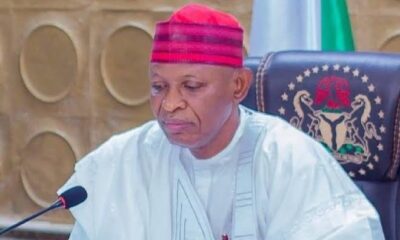
It took the 64th Independence anniversary for Nigerians to hear the president address them again after the uninspiring and colourless address he was coaxed into making in the heat of the #EndBadGovernance protests. Unfortunately, when a leader has not connected with his people for what is generally seen as unusually long time, he tends to see such occasion as an opportunity to justify his time in office. Invariably, it ends up sounding like a campaign speech. For the people, they already see it differently even before the address is made. That perception builds an air of skepticism and distrust. President Tinubu used the Independence address to unveil what he considered to be his landmark accomplishments recorded in his 16 months in office. Expectedly, it met a brick wall and was roundly savaged.
As a presidential aspirant, he never attended any debate or unveil any economic reform agenda. His promise to scrap the subsidy on petrol was not peculiar to him. Other presidential aspirants, including his main rivals equally promised to do away with the controversial regime. Where he differed was to infamously announce that subsidy had ceased right from the moment of his swearing in. It was not part of his inaugural address and the fact that he made the pronouncement without a road map on its implementation was not lost on Nigerians. The economic chaos that followed only reinforced the air of distrust.
Having acknowledged the “struggles many of you face in these challenging times”, Tinubu went for the esoteric in explaining how his reforms were addressing the challenges. “Thanks to the reforms, our country attracted foreign direct investments worth more than $30 billion in the last year”, he declared. Additionally, “we have cleared the Ways and Means debt of over N30 trillion”, he claimed. It was a claim that did not resonate with people knowledgeable with the dynamics of the economy. In the second quarter of 2024 (April to June), the Nigerian Bureau of Statistics (NBS) had reported that Foreign Direct Investment amounted to only $28.83 million. Just imagine if that stupendous $30 billion was truly ploughed into the economy. Or the wayward printing of the naira by Buhari under Ways and Means that was supposed to be cleared over a 40-year period was suddenly paid by Tinubu. When President Olusegun Obasanjo successfully negotiated the repayment Nigeria’s external debt owed the Paris Club and other foreign creditors, he did not have to wait for a national event to announce it. He did so promptly through a nationwide address. And it was momentous.
With nothing having been heard from the president for a considerable time, his October 1 claim attracted widespread incredulity. The claims were made campaign-style. What Nigerians looked forward to hear from their president was a clearly defined strategy on how their hardship could be alleviated beyond the token of distributing some kilogrammes of rice that got to only a few. In the absence of such news, the repeated call for more patience for the reforms to kick in were hollow. The address was devoid of the message of hope Nigerians have been waiting for. Even though he proclaimed empathy for their hardship, the choice of achievements to flaunt were academic. How does the payment of Ways and Means of N30 trillion impact their wellbeing? What is the wisdom in considering the conferment of awards on politicians at a time government had inflicted untold pain and hardship on the people to be a cheery news to the people in a national day address? The president’s failure to connect with the people through regular communication only for media aides to issue routine press statements has created a huge gap that watered an already inevitable fertile ground for distrust to deepen.