Africa
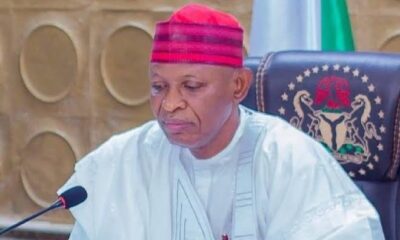
The Puppet and the Puppeteers: Sim Fubara’s Return to Servitude -By Oluwafemi Popoola
But who cares? Not Tinubu, who has secured another state for his ambition. Not Wike, who remains the emperor of Rivers. Not Fubara, who is just happy to still be called governor. Everybody wins except the Rivers people.


In January 1966, Nigeria’s First Republic was violently cut short. Prime Minister Tafawa Balewa, the soft-spoken schoolteacher who became the nation’s first leader, was abducted and murdered in a military coup. The soldiers, led by young officers, claimed they were “saving Nigeria” from corruption and chaos. Guns roared, blood flowed, and democracy was declared dead before it even had a chance to mature. Brutal, yes, but at least it was honest. Everyone knew a coup had happened, and nobody pretended otherwise.
What played out in Rivers State in 2025 wasn’t a coup d’état but a coup d’suit. No gunshots pierced the air, no tanks rolled down the streets. Instead, finely tailored men in Abuja waved decrees that silenced a governor, muzzled a deputy, and gagged an Assembly. Six months later, the same pen that erased democracy scribbled it back into existence, at midnight, no less. And we are asked to clap.
President Bola Ahmed Tinubu, in his infinite wisdom, decided Rivers State was too chaotic for democracy to thrive. His solution was to suspend the elected governor, deputy, and even the House of Assembly, then reinstate them as though they were errant schoolchildren sent out of class for noise-making. But unlike a classroom, this was an entire state of millions reduced to a presidential plaything. Six months later, he graciously returned their seats, as if democracy were his personal property to lend and retrieve at will. The APC’s Rivers experiment was nothing short of an audacious crime against the constitution and a cruel joke on the Nigerian people.
With effect from September 18 in the midnight, the suspension is lifted. Fubara is back in his seat, the deputy resumes her smiling duties, and the Assembly members can return to their endless bickering. All is well again, we are told. Democracy is restored. If by democracy we mean a governor kneeling before his political godfather and a president dangling states like bargaining chips in a casino.
We are also now blessed with the news that Nyesom Wike and Governor Siminalayi Fubara have “settled their rift.” Oh, what a glorious reconciliation! The Rivers people have been dancing in the streets. The godfather and his boy are friends again, and all sins are forgiven.
Fubara, who once posed as the lone defender of Rivers’ dignity, the governor who dared to challenge Wike’s suffocating grip, has now suddenly reconciled with his master. Should we clap? Should we throw a parade? Or should we, perhaps, ask a simple question: does this mean that Fubara has succumbed to the whims and caprices of both Wike and the President?
If yes, then let’s stop wasting time. Let Fubara officially declare his undying support for Tinubu ahead of 2027. Better still, when does he decamp to APC? Should we pencil it in for early 2026, or will he surprise us with a Christmas gift this December?
What’s the point of pretending anymore? Fubara can smile at ribbon-cuttings, commission boreholes, and wave at crowd, but he is no longer a governor in any real sense. He is a tenant in the house of Wike, a footnote in Tinubu’s 2027 diary, and a living proof that in Nigeria, resistance is always temporary until the right godfather snaps his fingers.
Unlike others who would rather fall on their sword than surrender their cause, Fubara chose no battlefield, no martyrdom. He merely endured the pause, nursed his pride in silence, and returned—bent, not broken—to play second fiddle at Wike’s orchestra. His anthem is submission. His survival is cloaked in servitude.
If this sounds harsh, I apologize to the Rivers people because it is you, not I, who are being mocked by this theater. While leaders pretend to quarrel, reconcile, and strike deals, the ordinary citizens are left with empty pockets, bad roads, and broken schools. And now Wike wins. His godson has crawled back. Tinubu wins. Rivers is secured for 2027. Fubara wins. He gets his sirens back, crowned again as “His Excellency.” Everybody wins except the very people they claim to serve.
I laugh when I hear Fubara described as a “fighter.” A fighter? Against whom? Against poverty? Against corruption? Against Wike’s iron hand? No. He was a fighter only until the master summoned him home. And like a loyal dog, he went.
Now he thinks he is governor again. He will smile in public, deliver flowery speeches, and the people will clap. He is a mascot, dressed in an expensive regalia, rehearsing lines written by Wike and choreographed by Tinubu. And he knows it.
What is tragic is that this whole affair is sold to us as “peace.” But peace without justice is nothing more than surrender. Ask Nelson Mandela, who wrote in Long Walk to Freedom that “to make peace with an enemy one must work with that enemy, and that enemy becomes one’s partner.” The tragedy in Rivers is that the enemy here is not a foreign oppressor, but the very leaders elected to serve the people.
President Tinubu, the master puppeteer, must be very pleased with himself. He has shown once again that the Nigerian constitution is nothing but paper, easily folded, torn, and re-written at will. He can suspend democracy and bring it back with the wave of a hand, and we must all clap. After all, is Rivers not now firmly in his pocket for 2027.
What is constitutionalism compared to political arithmetic? What are the rights of citizens compared to the desires of a ruling party? Tinubu knows the score that power is not about serving the people, but about capturing states like trophies. In this game, he is the grandmaster, and Rivers is just another pawn on his chess board
Where does all this leave the Rivers people? Nowhere. Absolutely nowhere. No new hospitals will sprout because Fubara and Wike shook hands. No potholes will be filled because Tinubu reinstated democracy at midnight. No hungry child will find food because the Assembly has resumed sitting.
The Rivers people are spectators in a play staged for the egos of politicians. They are the clapping audience, not the beneficiaries. They are told that peace has returned, but their daily lives remain the same, darkness, poverty, unemployment, and hopelessness.
But who cares? Not Tinubu, who has secured another state for his ambition. Not Wike, who remains the emperor of Rivers. Not Fubara, who is just happy to still be called governor. Everybody wins except the Rivers people.
Oluwafemi Popoola is a journalist, political analyst, and columnist with over a decade experience, providing in-depth commentary on governance, public policy, and democracy in Nigeria and beyond. He can be reached via bromeo2013@gmail.com.