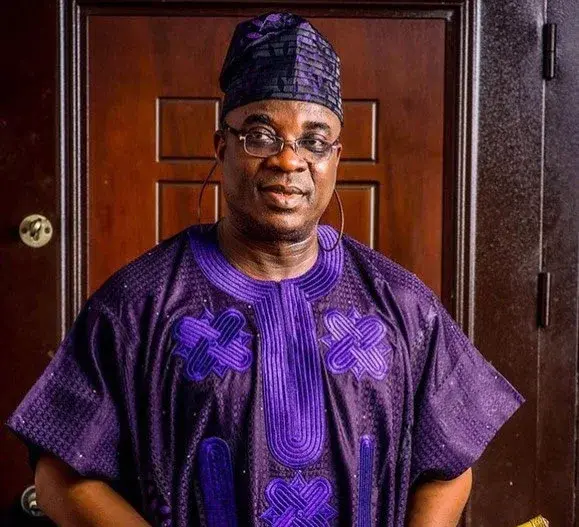
These reflections capture the attitude of the Nigerian ‘Big Man’ to the law. This is the member of the elite whose connections, status, wealth, and influence allow him impunity before the law. This penultimate week, a Nigerian ‘Big Man’ was seen in a viral video obstructing the take-off of ValueJet airline. Alhaji Wasiu Ayinde, the famous Fuji musician, an associate and stalwart of the presidency, was obstructive and defiant to passengers and airline officials for denying him access to the plane with a flask. He narrowly escaped being whisked to death by the plane as the pilot taxied off.
That evening, and until now, he came under vehement attacks from the media, thanks to citizen journalism that revealed the incident and mounted pressure on the Federal Airport Authority of Nigeria (FAAN) for his prosecution. A few days later, he was seen apologizing for his erroneous action in a viral video after being placed on a six-month ban from using public airplanes within Nigeria by FAAN. In this piece, I reflect on how we have continued to collectively contain and sustain the culture of impunity in Nigeria, as well as the consequence and implication for our development.
First, let us establish this: Wasiu is bigger than the law, ipso facto, he knew he could have his way. It was an attitudinal thing, not necessarily for him alone, but among some members of the elite. That explains his reactions in that footage we saw. He was seen attempting to make the authorities bend to his will. Many Nigerians have lost jobs for daring to enforce the rules before the Nigerian ‘Big Man,’ like those guys did. In fact, it’s unusual. We see this in banks, eateries, on roads, and in many public places where the ‘Big Man’ holds everyone hostage. Sadly, the ambassadorial position bestowed upon Alhaji Wasiu by FAAN is a rape of justice and an abuse of law.
Many examples abound. The other day, a former president was seen publicly showing his vote in a video, a practice prosecutable under our electoral law. He had his way—nothing happened afterward. We also saw bullion vans entering the compound of another ‘Big Man’ on the eve of an election in one of the southwestern states. To date, no apology has come from these two big men—Wasiu must be at his lowest for tendering an apology to us. The Nigerian ‘Big Man’ is above such.
This attitude of concerned authorities in handling Wasiu’s case and Comfort Emmanson’s, who was accused of unruly behaviour aboard Ibo Air, merely confirms the widely held opinion of a double standard in the Nigerian law and justice system.
Second, let us establish this fact: we struggle between modernity and tradition, as that experience showed. Typically, a modern institution is impersonal and driven by rationality. The individual is treated as subordinate to public institutions. Culturally, this is alien to our culture. In traditional societies, the elite class is privileged above public rules. Among the Yoruba, for instance, a saying is that “Oba ma n ba lori oun gbo gbo,” meaning that “the king is lord over everything.” That practice is atavistic before modern institutions. One would expect that Mr. Wasiu, with his level of exposure, would have such an understanding. I can bet that he did! He would not have tried that in any of the international airports outside Nigeria.
Almost a decade ago, Elder Olisa Metuh was defiant and unruly during the counting of the 2015 presidential election, preventing proceedings at the national collation centre. He literally made a mess of himself before the public and on live television broadcasts across the globe. He visibly called for the cancellation of results in a manner that suggests Nigerian big-manism. Yet, he was never prosecuted.
Third, the culture of impunity by the elite is sustained every time our institutions are challenged, and an influential man obstructs proper proceedings within public institutions. While an apology may be expected from them, the law should take its course. This helps society to grow collectively from our cultural tendencies that place the elite above the law. An example suffices here. During the COVID-19 lockdown, a popular Nollywood actress held a party in her house, inviting another popular musician among her guests in Lagos. The public went frenzied over this; she apologized in a manner similar to Alhaji Wasiu. But it didn’t end there; she was prosecuted and sanctioned by a local court. This is the way forward.
Moving forward, we must embrace the option of prosecuting persons who violate or test our institutions. The media, civil societies, and law enforcement agencies must rise up in this regard, while law enforcement agencies and the judiciary are strengthened.
Ariwoola Samuel Akinwale wrote this piece from Lagos.
08059120749