Opinion
Understanding the Triumph of Donald Trump, by Zayd Ibn Isah

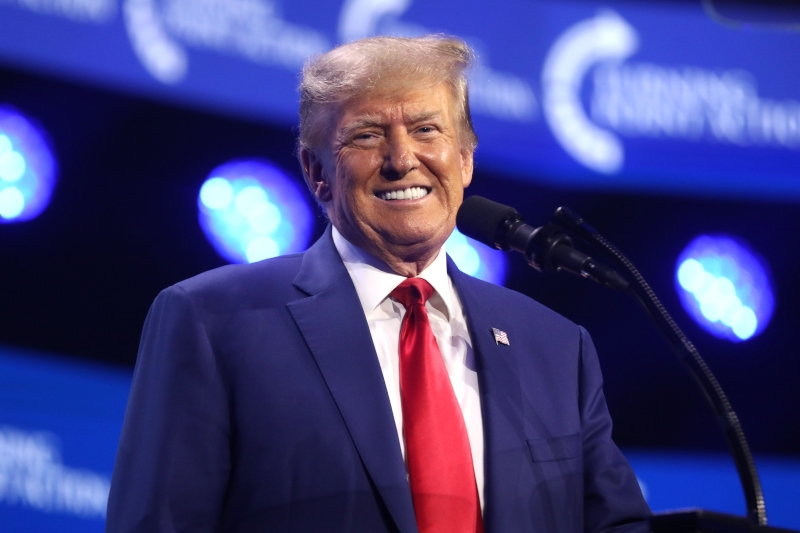
In the early hours of November 6, 2024, Donald J. Trump marched out onto a stage in Florida, encircled by his personal advisers, key Republican figures, members of his family, and his closest friends. Even though the presidential race had yet to be officially called, it was already clear to all that Trump had been swept back into power. Basking in the certainty of his momentous triumph, Trump declared, “We’ve achieved the most incredible political thing. America has given us an unprecedented and powerful mandate.”
“Unprecedented” was indeed the right word. It had been a fiercely contested race between Donald Trump and former Vice President Kamala Harris of the Democratic Party. Trump’s victory makes him only the second U.S. President to win re-election after previously losing to an opposition candidate. Moreover, he now has the distinction of being the first U.S. President to win two presidential elections against female opponents. In a sense, Trump has become the “stumbling block”—as we say in this part of the world—against the realization of a female-led presidency in the world’s greatest democracy.

Initially, it was expected to be a contest between the incumbent President Joe Biden and Donald Trump. However, Biden ultimately withdrew due to health concerns. He fully endorsed his Vice President, Kamala Harris, urging the Democratic Party to rally its resources and support behind her path to the White House.
Kamala entered the race bearing the weight of the Biden administration’s alleged shortcomings on her shoulders. Limited by Biden’s low approval ratings, she still had to position herself as a candidate who could offer the change voters were desperate for. Now, one might wonder if Biden himself would have stood a chance against Trump in his re-election bid.
Curiously, Harris’s campaign team did not frame her bid as an attempt to set the precedent of becoming the country’s first female president. Instead, they emphasized that Trump’s first four years in the Oval Office had been disastrous, arguing that he could not be allowed back into the White House. The campaign presented Kamala Harris as a safer choice for America and the world at large.
However, this strategy seems to have backfired. The Democrats’ swift replacement of an aging Biden with Harris may have deprived them of a more seasoned, battle-tested candidate capable of uniting broader support among working-class Americans.
It’s important to remember that after Trump left office in 2021, he was widely disgraced, having incited a mob of his supporters to violate the sanctity of the U.S. Capitol in an attempt to overturn his electoral defeat by former President Joe Biden. Trump also endured the trials of a 34-count felony conviction and other criminal indictments.
Yet just three years later, he has seemingly achieved the impossible with an unprecedented political comeback. Not only did Trump easily dispatch his GOP rivals, but he also forced President Joe Biden out of the race, survived an assassination attempt, and ultimately surged ahead of Vice President Kamala Harris in a resounding victory that exceeded all expectations.
This election felt less like an ordinary democratic process and more like a high-octane thriller. Trump emerged almost like a cat with nine lives in American politics. His landslide victory completes a political arc unlike any in 250 years of American history, prompting a reconsideration of the electorate’s judgment when he lost to Joe Biden in 2020. The same people who once told him, “Go away; you’re not good enough for America,” are now embracing him as a savior.

I don’t usually pay much attention to American politics, as I’m often preoccupied with issues in my own country. However, my interest was piqued after the assassination attempt on Donald Trump. What is so special—or controversial—about this man that would make someone want him dead? And why an assassination attempt on a U.S. presidential candidate in the 21st century, of all places?
If this had happened in Africa, it might seem more “understandable,” given that our continent is often painted as a place where absurdities occur. Europe and America, by contrast, are seen as models of civilization and equality. Even here in Africa, it’s rare to hear of assassination attempts on a presidential candidate. The last notable incident was a bombing attempt on Muhammadu Buhari years ago by suspected Boko Haram terrorists.
That Trump still won the election despite everything he faced seems almost miraculous. This election served as a referendum on the Biden administration, and many factors may have contributed to Trump’s return. For one, Trump is a proponent of “America First.” He has always emphasized a strict policy on immigration, advocating for an America dominated by native-born citizens rather than immigrants, reflected in his controversial proposal to build a border wall with Mexico.
Another factor is that America has increasingly interjected itself in the affairs of other countries, as seen in its involvement in the Ukraine-Russia war and the Israeli-Palestine conflict. While it’s understandable that America wants to retain its superpower status and protect democratic ideals globally, this sort of interventionism has cost the country substantial resources—something Trump appears unwilling to tolerate.
Even more fascinating, yet surprising, is the overwhelming love and support Trump has enjoyed among some Nigerians living in Nigeria. Someone posted a video of people holding a victory march for him, and there’s even a local musician who sang a song in his honor. One wonders what they stand to gain from a Trump presidency so far away. Perhaps these supporters don’t realize that some of their compatriots who have “japa-ed” to the USA are already on edge, as the future under another Trump presidency seems bleak for them. Trump’s America could usher in mass detention and deportation of migrants as part of a broader immigration policy aimed at retaining resources for Americans alone.
For Trump’s most faithful supporters, his victory is an emphatic statement that further solidifies his legacy in U.S. politics. For those who reluctantly voted for him, Trump’s promises aligned perfectly with the need to reform a government seen as out of touch with the economic and social needs of average Americans. Yet for other Americans and much of the world, still reeling in shock and disbelief, a second Trump term feels like the beginning of a horror film.
Ultimately, the most straightforward explanation for Trump’s victory, despite the odds against him, is that a significant number of American voters were willing to overlook concerns about Trump’s past misdeeds due to growing dissatisfaction with the Biden-Harris administration. Now that considerable power has been handed back to him, what Trump will do in the next four years is a question that will dominate American political discourse and shape the country’s global influence.
Is there a lesson to be learned in all of this? Trump’s return is a reminder that, even when the odds seem stacked against you, persistence and resilience can lead to success. President Donald Trump fought and emerged an undisputed winner, even when victory was dismissed by political pundits as a fever dream. For our politicians here, this serves as a reminder that incumbency is not a guarantee of approval for continued leadership.
By failing to listen to the average American voter, the Democratic Party created an opening for Donald Trump to position himself as a man in tune with the people’s frustrations. Trump, an anti-establishment figure, has long defied the rules and traditions of American politics. In this age of social media, he enlisted the support of billionaire icon Elon Musk to amplify his views on the economy and immigration on Twitter (X). Both Trump and Harris even used podcasts and video livestreams to stay in touch with younger voters.
Now more than ever, election outcomes are shaped by social media discourse. Politicians who listen to people’s grievances and echo their frustrations may end up positioning themselves as necessary messiahs or saviors with the solutions to set things right. And more often than not, when people tire of crying out without being heard, they wait to register their dissatisfaction at the polls.
Ultimately, we hope the Donald Trump presidency ushers in the peace we all yearn for in the world. For Africa, this is a time for our leaders to put on their thinking caps and work toward independence from world superpowers to avoid another “shithole countries” comment from Donald Trump.
Zayd Ibn Isah can be reached at lawcadet1@gmail.com