Africa
What Is Sovereignty Without Peace And Value For Human Lives? -By Isaac Asabor
Trump’s words may sting, but they should serve as a mirror, not an excuse. Nigeria’s image abroad will not be redeemed through angry press releases or diplomatic outrage. It will be redeemed when Nigerian lives stop being treated as expendable statistics.

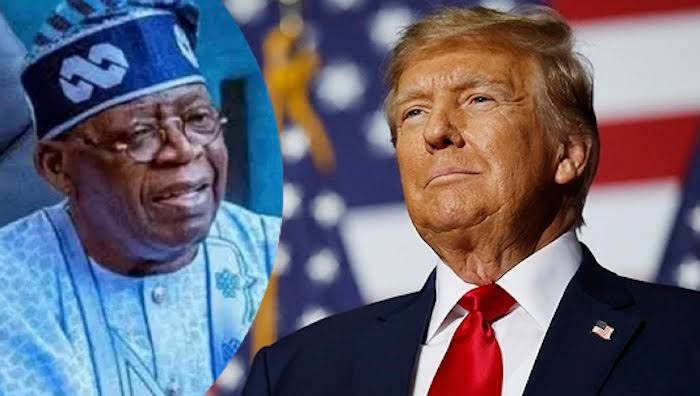
In the aftermath of Donald Trump’s recent verbal attack on Nigeria, where he issued a blunt warning that could be interpreted as a threat, the predictable reaction from Abuja has been one of outrage and defiance. Government officials and political loyalists have rushed to remind the world that Nigeria is a sovereign nation that will not be bullied or lectured by anyone, especially not by a U.S. president. But beyond the noise and the symbolism, one uncomfortable truth remains: What is the value of sovereignty when a nation cannot guarantee peace, justice, or protection for its own citizens? What does it mean to be independent if our people are not safe, not heard, and not valued?
For decades, Nigerian leaders have brandished “sovereignty” like a sacred shield against external criticism. Each time a foreign government, organization, or public figure calls out the country’s failures, whether over human rights, corruption, or insecurity, our officials quickly invoke national pride. The same line always follows: “Nigeria is a sovereign state and will not be dictated to.” But strip away the rhetoric, and a grim reality emerges: a nation cannot claim true sovereignty when its people are trapped in fear, poverty, and despair.
If sovereignty means the right to govern one’s affairs, then it must also mean the responsibility to protect one’s people. Yet, in Nigeria today, peace is a luxury. From the blood-soaked fields of Plateau, Benue and Southern Kaduna to the kidnapping corridors of Zamfara, and even down to the uneasy calm in the South-East, the state has surrendered large swaths of its authority to terror. Citizens no longer look to Abuja for protection; they look to God, community vigilantes, or sheer luck.
So, when Trump, no stranger to his own brand of provocation, takes aim at Nigeria, the instinctive response from our leaders is to roar about independence and insult. But patriotism is not about noise; it’s about accountability. Sovereignty should not be a smokescreen for incompetence. What moral right do we have to invoke it when thousands die needlessly every year and their killers roam free?
Let us be clear: foreign threats, however offensive, do not absolve a government of its internal failures. The true threat to Nigeria’s sovereignty is not an American politician’s rhetoric, it is the collapse of law and order within our borders. It is a leadership culture that prizes image over substance, control over compassion, and denial over reform.
A sovereign nation is not defined by how loudly it shouts at outsiders but by how well it upholds justice within. What good is national pride when mothers mourn their children daily, when young people flee the country in droves, and when insecurity has become a second skin? Sovereignty should not be a weapon to silence criticism, it should be a promise that every Nigerian life counts.
If President Bola Ahmed Tinubu truly wishes to assert Nigeria’s sovereignty and restore its dignity before the world, he must begin at home, by guaranteeing the sanctity of life and the rule of law. Sovereignty without peace is hollow. Power without compassion is tyranny. No nation earns global respect by presiding over chaos.
Tinubu’s government must put human life, every human life, at the center of national policy. Whether Christian or Muslim, Igbo or Hausa, Yoruba or Tiv, every Nigerian has the same right to live in safety and dignity. Religion, region, or ethnicity must never be an excuse for selective justice or silence in the face of murder. The Nigerian Constitution does not assign greater worth to one faith or another, and Tinubu must demonstrate that all lives matter, not in words, but in action.
That begins with security. Nigeria cannot continue bleeding from within while pretending to stand tall before the world. Farmers cannot till their lands without fear. Students cannot travel safely. Businesses cannot thrive when insecurity has become part of the cost of doing business. The President must overhaul the nation’s security architecture, not through cosmetic changes or recycled speeches, but through a genuine reorientation that prioritizes intelligence, local policing, and swift prosecution of terrorists and their sponsors.
But beyond internal reform, Tinubu must also look outward with strategic clarity. Nigeria’s foreign relations must serve its people, not politicians’ egos. In this, deepening ties with the United States makes far more sense than leaning on the unreliable embrace of China. America, for all its flaws, remains a bastion of democratic ideals, technological advancement, and strategic partnership. China, on the other hand, has mastered the art of economic seduction without transparency, often leaving developing nations in debt traps disguised as development loans.
Interestingly, China has added its voice to the chorus of “sovereignty” defenders, urging Nigeria not to listen to America’s “threat.” On the surface, that may sound like support, but in truth it is a dangerous kind of encouragement. China’s advice, wrapped in the language of solidarity, is nothing more than fuel poured into an already smoldering fire. Beijing’s foreign policy playbook thrives on tension between the West and developing countries, and Nigeria must not become a pawn in that global rivalry.
Tinubu must remember an African proverb: “The enemy of my enemy is my friend.” But in diplomacy, that saying can be a trap. China may side with Nigeria today, not out of friendship, but out of strategy. It gains when Nigeria drifts further from Washington. It gains when African nations turn inward, isolate themselves, and become desperate for loans and infrastructure deals. Nigeria must be careful about whose counsel it takes, especially from countries that are not in the good books of America or the wider democratic world.
This is not to say Nigeria should be submissive to the United States, far from it. But wisdom demands that we align with nations whose partnerships strengthen, not weaken, our moral standing and governance systems. America’s expectations, rule of law, transparency, accountability, may be uncomfortable, but they push us toward progress. China’s silence on those same values keeps us comfortably stagnant.
Tinubu would do well to recalibrate Nigeria’s foreign policy in that direction, toward mutual respect, shared democratic values, and credible investment that strengthens local capacity rather than deepening dependency. The United States and its allies still see Nigeria as a strategic partner in Africa. But partnership must be earned, not demanded. It must be built on shared values, chief among them, respect for life and human rights.
A Nigeria that cannot secure its citizens cannot command international respect. The world measures nations not by how fiercely they defend their borders, but by how compassionately they treat their people. The outcry against Trump’s remarks would carry far greater moral weight if Nigeria were known for justice, equality, and peace. Right now, the world sees a country with potential but little progress, a nation that bristles at criticism but does little to fix what others criticize.
Tinubu stands at a crossroads. He can either continue the tired tradition of nationalist posturing while the country burns, or he can redefine sovereignty through the lens of humanity, by proving that Nigerian lives matter more than Nigerian slogans.
History is unkind to leaders who mistake silence for peace and control for governance. The real measure of sovereignty lies not in defying foreign voices, but in listening to the cries of your own people. Tinubu must listen, not to China’s opportunistic flattery, nor to domestic sycophancy, but to the groans of ordinary Nigerians who want safety, fairness, and hope.
Trump’s words may sting, but they should serve as a mirror, not an excuse. Nigeria’s image abroad will not be redeemed through angry press releases or diplomatic outrage. It will be redeemed when Nigerian lives stop being treated as expendable statistics.
So yes, sovereignty matters. But peace matters more. Human life matters most. Until Nigeria proves that it values both equally, all the talk about independence and pride will remain just that, talk.
Because in the end, sovereignty without peace, without justice, without the value of human life, is not power. It is emptiness wrapped in a flag.