Opinion
When Governments Defy Their Own Constitutions: The Global Crisis of Constitutional Supremacy -By Fransiscus Nanga Roka
A different, subtler threat arises with the weakening of judicial independence. The courts are the proper place to uphold constitutional supremacy. Today, however, in many jurisdictions government presses judges, influences appointments or just ignores court rulings altogether. When constitutional courts lose their freedom of action, the constitution itself loses its voice. A constitution without an independent judiciary is not the supreme law, it is a mere parchment with out real force behind it.

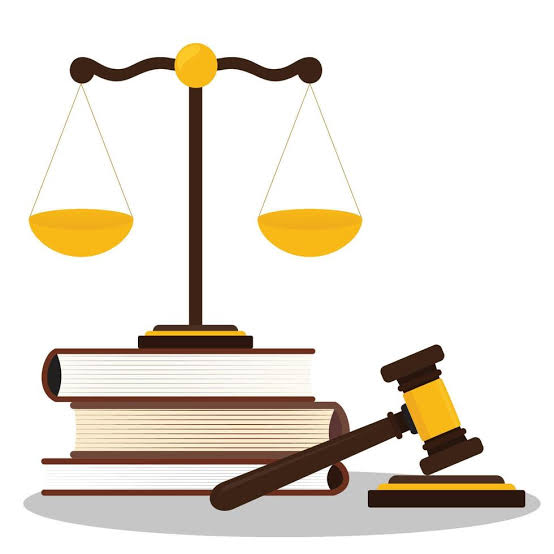
In theory, a Constitution is the supreme law of the land. In practice, however, it is increasingly not so much a command as an indication. Around the world today, governments that profess support for the rule of law are no longer bothering to hide their contempt for their own constitutions. What was once a series of local incidents has now become something much bigger. a global crisis for supreme law
Constitutions were written to limit power, define the bounds of government authority, protect basic rights, and to ensure no ruler stands above the law. But in many countries today those charged with defending the constitution instead take part in its erosion. This results in a perverse twist on functionalism, where instead of government being bound by the constitution, the constitution is worked around in order to meet political expedience.
One of the most grotesque manifestations of constitutional defiance is the manipulation of constitutional amendments. Leaders lift term limits and weaken checks and balances, change the structure of the judiciary, all under what they call lawful procedures. But urged by no other motive than to maintain and expand their power, these measures pervert, rather than further democracy. When what is done to the constitution is political survival rather than the public good, legality becomes merely an instrument of capture rather than a bulwark against oppression.
A different, subtler threat arises with the weakening of judicial independence. The courts are the proper place to uphold constitutional supremacy. Today, however, in many jurisdictions government presses judges, influences appointments or just ignores court rulings altogether. When constitutional courts lose their freedom of action, the constitution itself loses its voice. A constitution without an independent judiciary is not the supreme law, it is a mere parchment with out real force behind it.
However, high level powers are unconstitutional. At a little distance, the central government can delegate power to local governments. You hold an emergency state at any time that president is the dictator who decides what emergency it! In the name of national security, public health, or economic crisis, countries claim a need to take exceptional measures. Even in an emergency, constitutional supremacy should always be heeded. With international terrorist attacks, and especially 9 / 11, the world entered a new phase. On account of outright emergency pronouncements in recent years, mass limits on civil and political liberties being brought in no longer respects what’s said in constitution. Temporary measures can easily change into entrenched practice and special norms can become normal practice. It is a deepening tradition. Embarrassingly, constitutional violation is nothing new. In the past, a distinct political and moral price was paid for slipping through the net of constitution. But today, such behaviour is frequently cast as necessary, practical, or patriotic. Governments argue that reliance Papert adherence to constitutional limits would demanding tension: excuse us! Following this logic, const citations exist specifically to ratify power without restraint, especially for those moments in which leaders find it inconvenient. Consequences of this inclination are disastrous. If there is no constitutional supremacy, then rule by discretion naturally comes into operation wherever law fails. Rights aren’t rights if they’re up to government to grant or revoke them. In these circumstances, elections lose their meaning and where from weakens under the weight of constitutional restraints. Once the habit of ignoring the basic law settles in, it’s hard to break.
However, for any constitution to remain supreme the demands that must be met are even more demanding, with an independent judiciary, a strong civil society, free press to counterbalance mainstream media’s bias and erring government, as well as a political culture in which laws are respected even when following them ceases to be convenient International institutions can also do their part. Silence on the part of the international community world at large when constitutional violations occur signals an air of tolerance. Upholding constitutionalism should not be taken as outside interference in domestic affairs, but rather the universal principle that power is constrained by law.
The acid test of constitutionalism is this: when it would have been easier for the government to forget the constitution, does it stick by the constitution or does it not? The answer is ‘no’ in too many countries. And in cases where governments can violate their own constitutions with impunity, the prospect of constitutional democracy starts to look bleak.
Constitution is not simply a piece of paper. It represents the idea that nobody is above the law. When this idea is violated, the crisis is not just one of legality but also one in legitimacy itself.