Africa
Why Nigeria Should Adapt India’s Mission Indradhanush Model to Overcome Its Childhood Immunization Gaps -By Pitamber Kaushik
India’s Mission Indradhanush was not perfect, but it proved that low coverage can be turned around quickly with political will, community partnerships, and disciplined follow-through. Nigeria, facing a similar challenge but with the benefit of hindsight and experience, is well-positioned to do even better. The opportunity is real, the need is urgent, and the model is ready. What remains is the choice to act.

India’s Mission Indradhanush, launched in December 2014, has emerged as one of the most successful targeted immunization programmes globally. Faced with stagnating childhood immunization rates, estimated at around 61 percent in 2014 to 2016, India introduced a focused campaign approach that identified and vaccinated children who had missed routine immunizations. By November 2018, government data showed full immunization coverage had increased to 69% percent. Subsequent phases sustained this momentum, pushing it close to 90 percent in several regions. This success did not result from technological breakthroughs, but from improved execution through district-level micro-planning, community outreach, real-time tracking, and health worker mobilisation. Independent evaluations showed a roughly 25 percentage-point rise in full immunization and an 8 percentage-point improvement in timely vaccination. Mission Indradhanush became a model of how focused and data-driven strategies can lift health outcomes even in challenging settings.
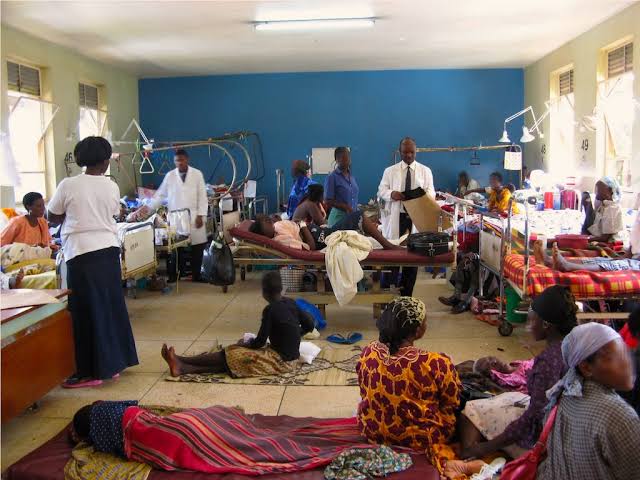
Nigeria is facing a similar crisis today. According to UNICEF and the National Bureau of Statistics, just 35.6% of Nigerian children aged 12 to 23 months are fully immunized (with all first-year antigens). World Health Organization data puts national DTP3 coverage at about 62 percent. Around 18 percent of Nigerian children receive no vaccines at all. These numbers reveal deep structural problems. The situation is especially poor in parts of northern Nigeria, where vaccine hesitancy, misinformation, security challenges, and weak health systems converge. In states like Zamfara and Sokoto, full immunization coverage has at times fallen below 10 percent. Nationwide, cold chain systems are under-resourced, trained health workers are overstretched, and data systems do not allow for quick identification of coverage gaps.
These challenges are similar to the ones India faced a decade ago. Both countries have large populations living in rural areas and urban informal settlements with very high fertility rates. Both contend with socio-religious barriers to vaccine uptake in certain regions. Both have historically underfunded health systems and depend heavily on external funding and donor-driven campaigns. At the same time, both countries have a network of community health workers who can be the backbone of immunization efforts. These similarities make Nigeria a strong candidate to adapt India’s approach, with some localised adjustments.
To make such a programme effective in Nigeria, the first step would be to identify high-burden districts using updated immunization and demographic data. India started by targeting 201 districts that accounted for nearly half of all under-immunized children. Nigeria could conduct a similar mapping exercise using the National Demographic and Health Survey and existing Health Management Information Systems. States like Yobe, Jigawa, and Kebbi would likely emerge as top priorities. Micro-planning at the local government area level would then allow outreach to be tailored to specific communities.
Next, Nigeria must place community engagement at the heart of the strategy. India relied on Accredited Social Health Activists and auxiliary nurse midwives to build trust, spread awareness, and follow up with defaulters. Nigeria can rely on Community Health Extension Workers and trusted community leaders, including imams, pastors, traditional rulers, and women’s groups. Engaging these figures to publicly endorse immunization and dispel rumours would be critical, particularly in regions where trust in government and health authorities is low. Materials and messaging must be tailored in Hausa, Yoruba, Igbo, and other local languages, and adapted for oral and visual communication formats where literacy is limited.
The immunization campaign itself should be organized into repeated, time-bound sessions. In India, each round of Mission Indradhanush ran for a week every month and targeted high-risk groups with multiple vaccines. Nigeria could organize similar monthly sessions, especially in the months before meningitis and measles peaks. These rounds should combine vaccines such as Pentavalent, Measles-Rubella, Pneumococcal, and Meningococcal, depending on local disease burdens.
Monitoring is another critical element. India’s model incorporated routine data collection, daily performance tracking, and district dashboards monitored at the highest levels. Nigeria already has experience using digital tools in polio and COVID-19 campaigns. These tools should now be adapted for routine immunization, enabling real-time tracking of doses given, defaulters identified, and vaccine stock levels. State ministries should be required to submit progress reports and conduct local reviews to ensure corrective actions.
Another adaptation Nigeria must make relates to its infrastructure. India invested heavily in vaccine carriers, cold boxes, and solar refrigerators during its immunization push. Nigeria’s cold chain is less developed, with many facilities lacking functioning refrigeration or consistent electricity. Partnering with donors and manufacturers to refurbish cold chain systems, especially in primary health centres, will be essential. Solar-powered equipment, properly maintained, can bridge this gap.
Health workforce support is equally important. In India, outreach workers received incentives and logistical backing for each round of Mission Indradhanush. Nigeria must do the same. Community health workers and local immunization officers need adequate training, travel support, and timely compensation to sustain morale and ensure consistency. Importantly, they should be seen not as temporary contractors, but as the core of a resilient public health system.
Accountability structures must also be strengthened. In India, the Prime Minister’s Office regularly monitored progress. Nigeria can replicate this at the level of state governors and the National Primary Health Care Development Agency. Regular progress reviews, transparent reporting, and community scorecards can help drive results. Civil society organisations and donor partners can be involved to ensure oversight remains credible and non-political.
If Nigeria adopts this model carefully, immunization rates can rise quickly. A pilot in a few states would allow testing of local adaptations. If successful, a national rollout could follow within two to three years. This would reduce vaccine-preventable child deaths, increase resilience to disease outbreaks, and improve public trust in government health services. Immunization also offers long-term dividends: better school readiness, healthier mothers, and lower economic burden on families and the health system.
India’s Mission Indradhanush was not perfect, but it proved that low coverage can be turned around quickly with political will, community partnerships, and disciplined follow-through. Nigeria, facing a similar challenge but with the benefit of hindsight and experience, is well-positioned to do even better. The opportunity is real, the need is urgent, and the model is ready. What remains is the choice to act.
Author Bio: Pitamber Kaushik is a freelance journalist, columnist, and writer based out of Mumbai, India. His writings have appeared in over 350 publications across 80+ nations. He has previously written for New Humanist, International Policy Digest, Austrian Economics Center, Rationalist Australia, Euroscientist and Mongabay, among numerous other publications.