Africa
Why President Tinubu Deserves a Second Term, By Jabir T. Usman
President Bola Tinubu’s vision for Nigeria cannot succeed without the prayers, support, and mandate of the Nigerian people. His administration has already delivered measurable achievements across key sectors, establishing a foundation for sustainable growth, stability, and human development. By addressing the core challenges of the nation and prioritizing long-term reforms, Tinubu is steering Nigeria away from short-term, reactive governance toward a future defined by resilience, equity, and progress.

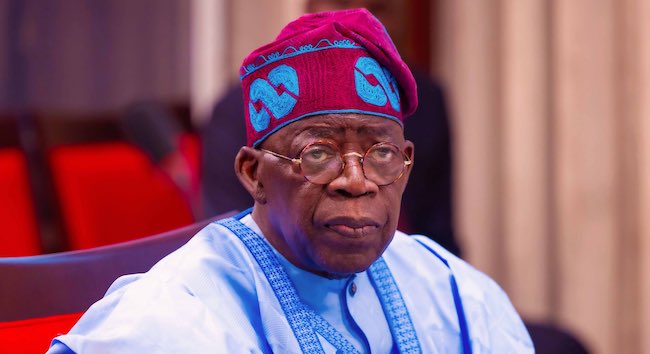
There are always self-appointed critics who constantly carp against every new policy introduced by the administration of President Bola Ahmed Tinubu. However, since we live in a democracy, we cannot deprive them of their right to express dissenting opinions. In the same vein, we have also appointed ourselves as the torchbearers of this government, out of patriotism and principle, to enlighten the good citizens of Nigeria about the policies of the Tinubu administration and to shield the public from falling prey to the misrepresentations of unpatriotic critics and reactionary elements.
As i often say, most of the policies of Tinubu’s administration have long-term impact, because he is working assiduously to change the status quo and move Nigeria away from the traditional “fire-brigade” approach to governance that has held the nation to ransom for many years. In this context, Dr. Ayo Lawani, in Ideas for Development, Chapter 6: “The Spiritual Dimension of Development,” stated: “Development is not something you do to a society, but a process by which a society is empowered to improve itself continuously.” This is precisely what Tinubu’s government is focused on.
Nigeria cannot continue to exist under hit-and-run management, which has historically led to the glaring misplacement of priorities by previous governments. Dr. Lawani further observed and i quote: “I became convinced many years ago that the way people have been attending to major problems facing human civilization, including the matter of development, may be likened to polishing and shining the armour of a dying knight while leaving the knight himself untreated. Obviously, the priority should be to heal the knight. Once he has regained his health, the knight can personally arrange to shine his armour.” Tinubu’s leadership, therefore, prioritizes fixing the core of Nigeria’s challenges rather than merely treating symptoms.
Indeed, having Tinubu as Nigeria’s president at this critical moment is a blessing. He is working tirelessly to optimize the broken system for the betterment of Nigerians across all sectors of development.
On the Economy:
Nigeria’s foreign reserves have appreciated to $42.8 billion, a five-year high, which is a major breakthrough under Tinibu’s administration. And the Naira has strengthened to N1455 per $1. The GDP is also growing at a rate of 4.23%.
The Financial Action Task Force (FATF) has removed Nigeria from its Grey List, eliminating obstacles to investor trust and reducing oversight on cross-border transactions. Consequently, Nigeria’s removal from the list stands as a testament to the significant progress achieved under the leadership of President Bola Ahmed Tinubu.
Nigeria has shed its status as Africa’s leading fuel importer and emerged as the top fuel exporter in West Africa.
Food prices have significantly decreased, leading to a drop in inflation to 20.12% from 21.88% in July. Also, Nigeria’s trade surplus rose 44.3% in Q2 to N7.46 trillion, up from N5.17 trillion in Q1.
The International Monetary Fund (IMF) projects GDP growth of 3.9% in 2025 and 4.2% in 2026.
The Federation Account Allocation Committee (FAAC) now disburses the highest distributable revenue ever to Nigeria’s 36 states, reflecting President Tinubu’s commitment to economic transformation.
Regional development commissions are being established across geopolitical zones to accelerate development in line with the aspirations of local communities.
On Education:
The federal government launched a 10 million Naira “interest-free” scheme for tertiary institution staff under the Tertiary Institution Staff Support Fund (TISSF), aimed at boosting motivation and productivity. This initiative underscores Tinubu’s prioritization of human capital development and educational excellence in the Nigeria’s tertiary institutions.
On Security:
The N50 billion “Pulako initiative” targets seven states, Katsina, Zamfara, Sokoto, Niger, Kaduna, Benue, and Kebbi, to address banditry, cattle rustling, farmer-herder conflicts, and community reconstruction.
Adoption of integrated security reforms to promote synergy among agencies, improved intelligence-sharing, and community policing.
Annual recruitment for the Nigeria Police Force increased from 10,000 to 30,000 personnel, alongside infrastructure upgrades, improved mobility, and modernized equipment. This significant expansion was made possible through the decisive leadership and commitment of President Bola Ahmed Tinubu, who has been instrumental in strengthening the nation’s internal security architecture.
Defence and internal-security allocations rose from N1.25 trillion in 2023 to N4.91 trillion in 2025, including procurement of new aircraft, attack helicopters, drones, and modern ground equipment.
On the Power Sector:
Within a month of assuming office, President Tinubu signed the Electricity Act 2023, a transformative law that breaks the federal monopoly and empowers states, private entities, and individuals to generate, transmit, and distribute electricity. The law also allows states to establish their own electricity markets, three states (Enugu, Ekiti, Ondo) have already begun the process, laying the foundation for private investment and decentralization of the sector.
On Health:
The health budget increased to N2.48 trillion in 2025 (5.2% of the total budget), with designated funds for the Basic Health Care Provision Fund (BHCPF) and critical infrastructure, reflecting Tinubu’s commitment to improving healthcare access and quality.
To wrap today’s piece:
President Bola Tinubu’s vision for Nigeria cannot succeed without the prayers, support, and mandate of the Nigerian people. His administration has already delivered measurable achievements across key sectors, establishing a foundation for sustainable growth, stability, and human development. By addressing the core challenges of the nation and prioritizing long-term reforms, Tinubu is steering Nigeria away from short-term, reactive governance toward a future defined by resilience, equity, and progress. Let us unite in supporting a renewed Nigeria, one that will inspire pride in both present and future generations.
Jabir T. Usman
Sabon Gari Tudun Wada, Kaduna
jabson.usman@gmail.com