Africa
A New Existential Threat -By Pius Mordi
It took the killing of 16 people described as hunters in Uromi, Edo State for the ACF to find its voice and condemn sectarian killings. Same applies to the Northern Governors Forum which had maintained complicit silence while whole communities in the middle belt were sacked and killed by marauding killer herders.
Although, some local elements and factors may have contributed to the security crisis in the southern part of the country, a common denominator in all the affected areas is not the decisive role of militant herders but the concerted effort to introduce a regime of terror.

He was unlike other royal fathers. A lawyer trained in the United Kingdom and ordained pastor in the Deeper Life Church, His Royal Majesty, Obi Edward Akaeze Ofulue III, Obi of Ubulu-Uku, led a very simple life. On the fateful day early on January 5, 2016, he was driving himself to Asaba as he usually did for his regular round of squash in the capital city of Delta State. But he was ambushed on the way and kidnapped. Later on January 22, 2016, his remains were found in the forest near the border with Edo State.
It was the first high profile kidnap and killing in the Anioma area of Delta State. His mobile phone was later traced and recovered in Bauchi State, leading to the arrest of his killers. Police Delta State Commissioner at the time, Baba Alkali Usman, subsequently paraded the suspects, including the three accused of carrying out the murder and the man alleged to have bought the late monarch’s cell phone.
All suspects were eventually convicted by a Delta State high court with three receiving death sentence and the man from whom the monarch’s cell phone was recovered getting 14 years. The conviction came in December 2024, nearly nine years after the crime and only after His Royal Majesty Obi Chukwuka Noah Akaeze, who ascended his father’s throne, raised concern over the prolonged prosecution.
The irony is that nearly 10 years later, the community is still under siege now with the president general of the Ubulu-Uku Development Council (UDC), Mr. Peter Udene Ugbaja and secretary general, Dr. Chinedu Osaji, appealing to the governor and the state commissioner of Police to effect a special security operation to sweep their forests and farmlands of killer herdsmen in their save our soul letter to the state governor, Sheriff Oborevwori to rescue the community.
Last Yuletide, there were series of unresolved killings of farmers culminating in the latest murders, including a family abducted from their farm in March. Their father was killed right before his wife and two children by Fulani militant herders who have occupied the farms and forests in the area.
And with the onset of a new farming season following the coming of rains, farmers, according to the town union, are reluctant to prepare their farmlands for cultivation.
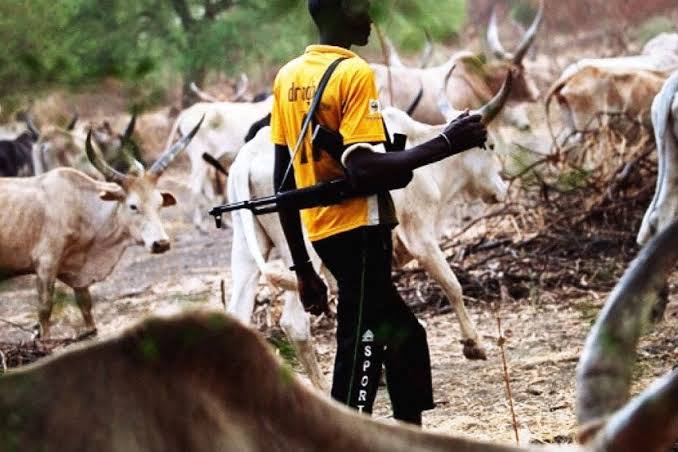
When victims of terrorist attacks finger Fulani militants for attacks, killings, kidnap and rape in the Nigeria, the default response from the northern elites is that Fulanis are being stigmatized. Yes, there is collaboration in such acts by sections of the local population. But the undeniable fact is that the Fulani militants are usually at the heart of it all.
The indictment of the cattle herders is not a happenstance. The northern elites had been laying the groundwork for their infiltration of militant elements into the south.
After Muhammadu Buhari became President, he did not disguise his prime agenda of promoting Fulani expansion to the whole country. He is in this league with some of his prominent kinsmen who at different times played different roles in creating the situation the country is in now. Nasir el Rufai, former governor of Kaduna State; Bala Mohammed, governor of Bauchi State; Senator Adamu Aliero, former governor of Zamfara State, the Northern Governors Forum and the Arewa Consultative Forum (ACF) among other principal actor are known to have openly opposed any move by southern governors to combat in the militant herders.
Buhari whose major occupation as president was the interest and protection of cattle herders decided that they should be dispersed across the country. Using a number of initiatives, the former president unilaterally gazetted what he called cattle routes across Nigeria using vague old colonial delineations. He set up the Ruga which envisaged that communal lands would be, again, unilaterally allocated by the federal government and set aside exclusively for herders.
Having set up the National Livestock Transformation Plan (NLTP), Vice President Yemi Osinbajo was put in charge of the project to resolve what was dubbed the farmers-herders crisis. However, Osinbajo’s game plan of spearheading the setting up of ranches rather than the Ruga which state governors were opposed to was thwarted. At the instance of the late Abba Kyari, chief of staff to Buhari, the NLTP was killed to preference for the Ruga and cattle route options for which N12 billion had been set aside without appropriation.
Sen. Adamu Aliero tabled a bill to equate cattle with humans and extend the constitutional provision that guarantees freedom of movement of people to animals. His response to the decision by governors in the south west to eject cattle herders from their forests is that herdsmen can take over forests in any part of the country. A shocked Godswill Akpabio had to use all the legislative manoeuvres in the rule book to shut down an insistent Aliero and his dubious bill.
Aliero had an ally in Bala Mohammed. The Bauchi State governor all but called Nigeria the heritage of Fulanis in any part of the continent. In his view, whatever programme the federal government may have for the support of herders should be extended to all Fulanis anywhere since they are citizens of all nations.
Perhaps inadvertently, Nasir el Rufai let slip the dispersal of pastoral Fulani as a deliberate plan.
Exasperated by the continued killing of indigenous people of southern Kaduna and forceful expropriation of their lands and farms, the then Kaduna governor was surprised that the killing had not stopped even after he had paid undisclosed amount to them as inducement to cease the massacre in southern Kaduna.
It took the killing of 16 people described as hunters in Uromi, Edo State for the ACF to find its voice and condemn sectarian killings. Same applies to the Northern Governors Forum which had maintained complicit silence while whole communities in the middle belt were sacked and killed by marauding killer herders.
Although, some local elements and factors may have contributed to the security crisis in the southern part of the country, a common denominator in all the affected areas is not the decisive role of militant herders but the concerted effort to introduce a regime of terror.
That effort, I am convinced, is driven by the northern elites. The fact that when areas in Kogi, Benue, Plateau, southern Kaduna and Niger are affected, there is no chorus of condemnation gives a lie to the concept of the north. Who and where, exactly, constitute the north and what is their interest.
It is ironic that the coming of President Bola Tinubu, a southwesterner, has rather seen the exacerbation of the security crisis. It is a case of choosing to be politically correct that jeopardize 2027. It was exactly what inspired the infamous “where are the cows” proclamation credited to Tinubu when 2023 was still in view. Now, 2027 is the big deal. That is enough reason to play the ostrich while the nation burns. As the director general of DSS said recently and Gen Theophilus Danjuma (rtd) warned earlier, citizens and states that fail to secure themselves will be overrun as the rigged federal security architecture is not designed to battle the herders. It is no longer a case of waiting for the Police or military.