Africa
A New Flame Of Hope: Nigerians Look To Olumode Adeyemi For Fire Service Rebirth -By Ibrahim Ismail
Perhaps what sets Adeyemi apart, in the eyes of many, is his quiet yet deliberate leadership style. He’s not seen as flashy or political—he’s seen as steady. And in a nation fatigued by bold promises and thin results, that steadiness is reassuring. As the countdown to his official assumption of duty on August 14 continues, Nigerians are watching, waiting, and—above all—hoping. They hope for a Fire Service that works. A service that arrives on time. A service that prevents tragedy before it strikes.

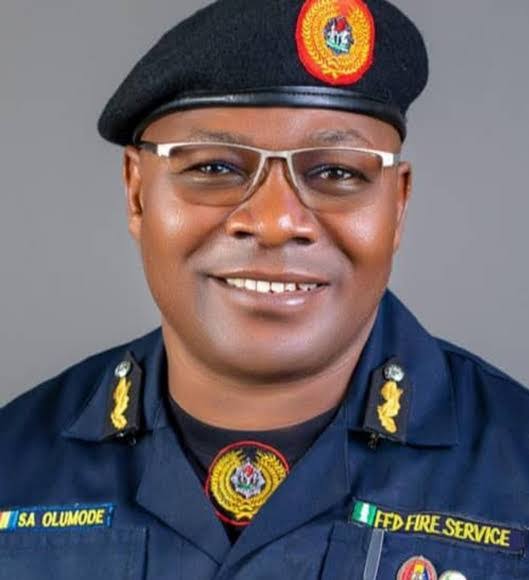
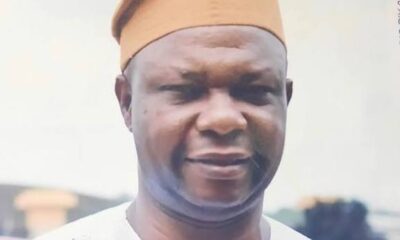
When news broke that President Bola Ahmed Tinubu had appointed Deputy Controller-General Olumode Samuel Adeyemi as the new head of the Federal Fire Service, many Nigerians greeted it with more than polite applause—they welcomed it with cautious hope.
In markets where stalls have been reduced to ashes, in crowded neighborhoods scarred by fire outbreaks, and in towns where emergency sirens are rarely heard until it’s too late, citizens are yearning for a change. For them, Adeyemi’s appointment is more than a leadership transition—it is a potential turning point.
Olumode Samuel Adeyemi is no stranger to the fire service. Having begun his career at the FCT Fire Service before transferring to the Federal Fire Service, he steadily climbed the ranks to become Deputy Controller-General in charge of Human Resources. Now, with his promotion to the top job, many believe his institutional knowledge and steady leadership style could reignite a struggling agency.
“We’re tired of watching our homes burn while waiting for help that never arrives,” says Ngozi Eze, a trader in Onitsha whose shop was gutted by fire last year. “We just want someone who understands what we go through—and who can change things.”
Indeed, for most Nigerians, fire service reform isn’t an abstract policy issue; it’s deeply personal. Over the years, countless families have suffered losses from fire outbreaks—often due to poor infrastructure, slow emergency response, and lack of fire prevention awareness. In many cases, fire trucks arrive late, ill-equipped, or not at all.
Adeyemi, however, brings with him a portfolio that inspires confidence. He has completed all mandatory in-service and command training courses, and has benefited from professional development programs both locally and internationally. His memberships in professional bodies—including the Association of National Accountants of Nigeria and the Institute of Public Administration—add depth to his credentials.
“He’s not just a fireman,” says Musa Ibrahim, a civil service analyst in Abuja. “He’s an administrator, a strategist, and someone who understands the system from within. That’s what the Service needs now.”
Still, the challenges before Adeyemi are vast. Despite efforts by the outgoing CG, Engr. Abdulganiyu Jaji Olola, to modernize equipment and expand zonal coverage, the Fire Service remains underfunded, understaffed, and often reactive instead of preventive. Nigerians are hopeful that the new CG will address these issues head-on.
“I want to see more fire stations in local communities, more trained personnel, and faster response times,” says Kelechi Nnaji, a safety officer in Port Harcourt. “We’re not asking for magic—we just want a working system.”
Public expectations are particularly high around community engagement. Many believe that fire education and prevention campaigns have been neglected for too long. Advocates are urging the new leadership to invest in grassroots awareness, especially in high-risk areas like markets, urban slums, and schools.
“There’s a lot we can prevent if people know what to do in case of fire,” says Amina Bello, who volunteers with a disaster-response NGO in Kaduna. “If the new CG focuses on public education, we’ll see fewer tragedies.”
Adeyemi’s background in human resource management may also prove critical in addressing internal morale and professionalism within the Fire Service. Officers often complain of poor welfare, irregular promotions, and inadequate training. Reforming this system, insiders say, is key to building a motivated and effective workforce.
Perhaps what sets Adeyemi apart, in the eyes of many, is his quiet yet deliberate leadership style. He’s not seen as flashy or political—he’s seen as steady. And in a nation fatigued by bold promises and thin results, that steadiness is reassuring. As the countdown to his official assumption of duty on August 14 continues, Nigerians are watching, waiting, and—above all—hoping. They hope for a Fire Service that works. A service that arrives on time. A service that prevents tragedy before it strikes. Because for too long, fire in Nigeria has meant more than flames—it has meant fear, loss, and helplessness. Now, with new leadership at the helm, Nigerians are daring to believe that the tide might finally turn.
And in that belief lies a flicker of hope—one they are counting on Olumode Adeyemi to keep alive.
IBRAHIM ISMAIL IS A 300 LEVEL STUDENT FROM MASS COMMUNICATION DEPARTMENT UNIVERSITY OF MAIDUGURI.