Forgotten Dairies
A World on Fire, A World Paying: War, Inflation, and the Systemic Betrayal of Global Justice -By Fransiscus Nanga Roka
The world is now on fire, but alas not everyone bears such a heavy cost. Some are setting the blaze while others have to pay for it. And until that imbalance changes as well. Inflation therefore will still represent more than an economic issue; but instead it will symbolize the operation of a system that claims to safeguard human dignity and quietly profits from constantly moving situations.

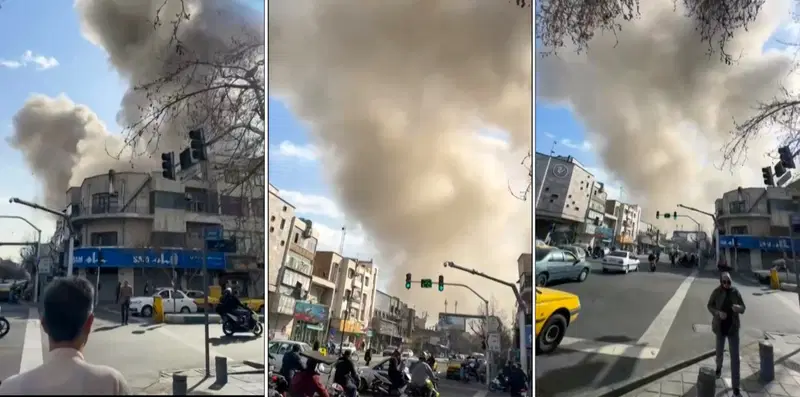
A world burning with war. A world in flames with inflation. A world that lets global fairness down in systematic, all encompassing fashion.
The world not only watches another geopolitical conflict, but also has to bear the economic fallout. While tensions between America,Israel and Iran grow, effects are no longer limited to trajectories of missiles or diplomatic notes. They are reflected in costs at the supermarket, the price of fuel, and falling purchasing power on every continent. This is no longer just warfare; it is economic violence at gunpoint.
Inflation, which used to be explained in terms of benign cycles in the economy, has become something quite different. It is now a wapeon borne along and buyt in turn feeds the confrontation du jour. Oil markets react instantly to disturbances in the Middle East, and when fuel prices soar they bring whole economies in their wake. Transport costs rise and the price of food goes through the roof. Fragile supply lines split apart at the seams. The end result is a snowballing crisis that punishes those least responsible for it–the world’s poor.
Let us be clear: This is not a “regrettable side effect.” It is a break in the structure of the global system that allows economic reality to be dictated by warfare. When strategic choke points, such as Hormez’ s Strait gates, are terrorist targets, markets panic. But markets are not the ones who suffer, it is people. In Jakarta, Lagos, Buenos Aires, and Cairo, families are having to make choices which are impossible to bear: fuel or food, medicine or rent. War d efines suffering, and exports it.
What is most worrying is not that this result can be predicted but that it has become normal. Institutions bleat warnings, central banks hike up interest rates, governments provide temporary relief. Nonetheless, none of these measures at all tackles the fundamental problem: a geopolitical order which impels men to war thereby jeopardizes economic stability.
This is the point where global justice, in its lack of balance and equal treatment, becomes self-defeating. The decision taken in a war room suffices to drive hunger into houses far removed from its source’, how can any system calling itself ‘just’ truly be such? How can International Law claim any measure of rightness if it allows not only violence but the economic consequences of that violence to continue without response? The present crisis shows that inflation is more than just an economic telltale. It is itself an indicator of who has power and uses it, even at the expense of all others. Just as the situation was before, so it remains now. Those with the least voice in global governance take upon themselves the largest burden. What This is a dangerous other illusion, that It is temporary and anomalous. It isn’t Each new conflict merely adds to a structure of vulnerabilities: on the one hand, debt dependencies in developing countries, other, over reliance on world energy markets, and then the absence of mechanisms that actually work to prevent an attack such as that which can ruin civilian markets from within. We are not just going through a interval of turmoil but living in a world where this sort crisis is chronic and that kind of inequality pervasive. Over the years, we must strive to create a solid international community. Otherwise, the poor will continue to bear a major weight of inflation; likewise, it will represent a kind of ‘money collection’ from those who actually suffer little else as consequence for their differences with more developed countries.If the world community is serious about finding stability, it must face an inconvenient fact: Peace is not only an objective of our safety measures but also necessary for human existence. Without it there will continue to be inflation as a hidden tax upon poorer people and a transfer machine moving the costs of war downward onto others. This requires more than empty words. It demands change at the systemic level. We have to do more than just add on energy sources and scale back energy use. Or else we may acknowledge that our children’s generation will be witness to destruction on an unprecedented scale. Global financial infrastructure can’t stay stuck in this mode of responding to problems when they flare up, without any kind plan beforehand going forward. There is above all a need for accountability. Not just for economic or military harm that may result from specific acts of warfare, but particularly when the foreseeable consequences alone are taken into account.
Today what is happening is not isolated to just one branch. Nor is it a malfunction of the machinery of diplomacy: imagination has stopped at nothing but to forbid us from picturing world in which one’s economic security need not be tied to political restraint. The world is now on fire, but alas not everyone bears such a heavy cost. Some are setting the blaze while others have to pay for it. And until that imbalance changes as well. Inflation therefore will still represent more than an economic issue; but instead it will symbolize the operation of a system that claims to safeguard human dignity and quietly profits from constantly moving situations.
Fransiscus Nanga Roka
Faculty of Law University 17 August 1945 Surabaya Indonesia