Africa
African Union Developing A Ten-Year Comprehensive Agriculture Programme (2026-2035), by Kestér Kenn Klomegâh

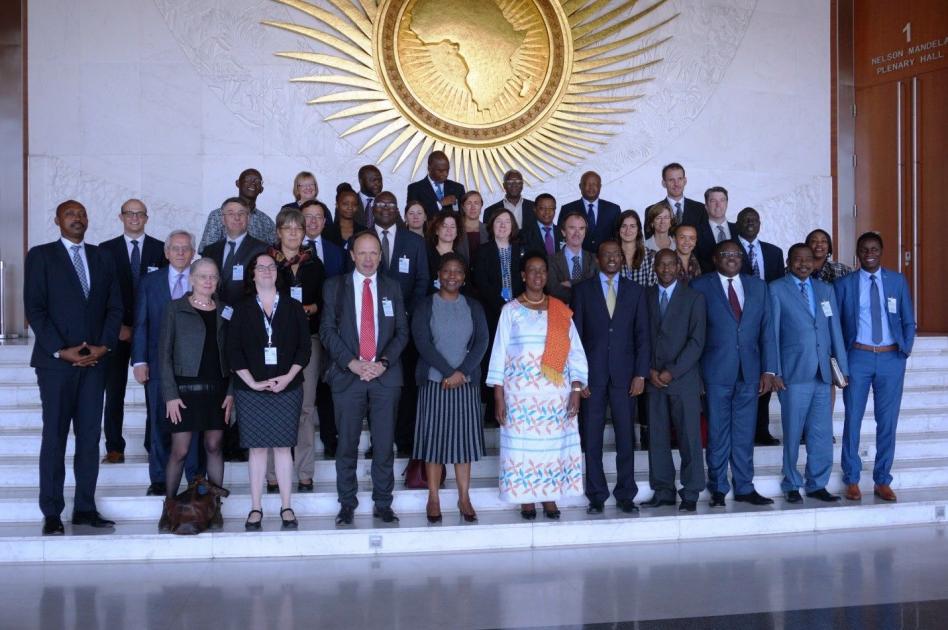
For three working days, 9th –11th January 2025, in the Speke Resort Conference Centre in Uganda’s capital, Kampala, the African Union Commission (AUC) will host the Extraordinary Summit on the Post-Malabo Comprehensive Africa Agriculture Development Programme (CAADP). This Summit is supported by the Government of Uganda.
The event is organized jointly by the African Union Commission, Department of Agriculture Rural Development Blue Economy and Sustainable Environment (DARBE) and African Union Development Agency- New Partnership African Development (AUDA-NEPAD).
Dignitaries will deliver statements on the consideration of the Kampala Declaration, the Comprehensive African Agriculture Development Programme (CAADP) Ten-Year Strategy and Action Plan (2026-2035); the draft Statute of Africa Food Safety Agency; and the report on selection of African Union Centres of Excellence for Research and Training in Fisheries, Aquaculture, Aquatic Biodiversity Conservation and Ecosystems Management.
The Objectives of the Summit:
The convening of the extraordinary session of the Assembly is specifically to:
Endorse the draft Kampala CAADP Declaration. The draft declaration provides a vision for transforming Africa’s Agrifood Systems for the period: 2026-2035.
Endorse Ten-Year CAADP Strategy and Action Plan: 2026-2035. This plan provides details on how to achieve the goals and targets in the draft Kampala CAADP Declaration.
Risk Management and Mitigation
The post-Malabo CAADP strategy will span ten years, from 2626 to 2035. Given the longtime horizon, many risks and uncertainties could affect the strategic positioning of the agri-food systems transformation agenda to deliver on its goals. There are external socioeconomic, environmental, and other shocks that might come up, which will demand that the strategy be agile enough to respond to such unforeseen developments. The strategy will therefore call for institutional adaptation to changes in a complex and rapidly changing context. Major risks and uncertainties will need to be identified and outlined together with their respective mitigation actions.
Key interventions to ensure better risk management include:
- Identify potential risks (e.g., political instability, climate change) and put in place mechanisms for dealing with or mitigating such risks
- Identify health crises, including pandemics or epidemics, early and develop mechanisms for minimizing negative impacts
- Identify and address gender inequalities or biases and restrictive social norms that may limit the access of women and youth to education, resources, and decision making processes thereby preventing them from fully participating in and benefiting from agricultural activities or initiatives
- Invest in durable peace because it is essential for building resilient agri-food systems (from the local to global levels) and affects agricultural production, food security, market access, investment, resilience, and social cohesion. Establishing and maintaining peace is critical for enabling long-lasting investment to unlock the full potential of Africa’s agri-food systems. The Kampala CAADP Declaration will need to emphasize establishing conflict-resolution mechanisms at the community level while strengthening local markets and value chains.
- Promote household insurance and other coping mechanisms that can help mitigate the impact of health shocks on livelihoods. These mechanisms will be key to enhancing the resilience of communities.
- Enhance public health surveillance systems to detect and respond to health threats, including of zoonotic origin. It will also be important to strengthen food safety measures to prevent health shocks related to foodborne diseases.
- Financial resources will be required to achieve the Kampala CAADP declaration’s resilience objectives. Specifically, households need access to credit, savings, and other financial instruments that help them weather economic shocks.
- Food price monitoring: It will be necessary to implement policies that stabilize food markets and prevent price volatility to ensure a steady supply of food and agricultural inputs.
- Capacities development of African governments to formulate resilience-focused policy measures is a critical step and a priority for the CAADP Strategy and Action Plan. Mainstreaming resilience-focused policies will trickle down to operational actions led by various stakeholders towards sustainable agri-food systems.
Background: The Comprehensive Africa Agriculture Development Programme (CAADP) has been crucial in driving agricultural transformation across Africa since its inception in 2003. The program is aimed at increasing food security and nutrition, reducing rural poverty, creating employment, and contributing to economic development while safeguarding the environment. CAADP aims for a 6% annual growth rate in the agricultural sector, with African Union member states allocating at least 10% of their budgets to agriculture.
Building on the Maputo Declaration (2003-2013), the 2014 Malabo CAADP Declaration renewed commitment to CAADP and established ambitious goals for 2025, including eradicating hunger, reducing malnutrition, tripling intra-African trade, and building resilience of livelihoods and production systems. The Malabo Declaration underscored the importance of mutual accountability through agricultural biennial reviews and recognized the essential role of related sectors like infrastructure and rural development. During the Thirty-Seventh Ordinary Session of the African Union Assembly in February 2024, the Heads of State and Government expressed concern that the continent is not on track to meet the Malabo CAADP goals and targets by 2025. This has spurred a call for the development of a post-Malabo CAADP agenda to build resilient agri-food systems.
It is in this context that the An Extraordinary Summit of The African Union Assembly of Heads of States and Governments is scheduled for January 9th to 11th 2025 in Kampala, Uganda, to deliberate on the post-Malabo CAADP agenda to consider the draft Ten-Year CAADP Strategy and Action Plan with its associated draft Kampala Declaration on Advancing Africa’s Inclusive Agrifood Systems Transformation for Sustainable Economic Growth and Shared Prosperity.
Format and Structure of the Summit: The Extraordinary Summit will start with a one-day meeting of the Ministers responsible for Agriculture, Rural Development Water and Environment on the 9th of January 2025, to be followed by Joint Session of the Ministers of Agriculture, Rural Development, Water and Environment together with the Ministers of Foreign Affairs on the 10th of January 2025.
The sessions will feature two presentations the: i) draft CAADP Ten-Year Strategy and Action Plan (2026-2035); ii) draft Kampala CAADP Declaration and both will be done in closed sessions. The Ministerial sessions will be structured to encourage inclusive and interactive conversations and dialogue among the Ministers, as well as between the Ministers and key strategic stakeholders. At the same time, it will enable the Ministers to review the strategic documents presented to them for their consideration and recommendations to the Assembly.
The Assembly of Heads of State and Government will convene on the 11th of January 2025 to endorse the: i) draft Ten-Year CAADP Strategy and Action Plan (2026-2035); ii) draft Kampala CAADP Declaration.
Participants: The Extraordinary Summit on the CAADP Agenda will be attended by Heads of States and Government of the African Union Member State, Ministers of Foreign Affairs, PRCs, Ministers and Experts in-Charge of Agriculture (forestry, fisheries, crops and livestock), Rural Development, Water and Environment, RECs, Youth, Women, Non-State Actors, Media, Academia and Development Partners
African Union: The AU is guided by its vision of “An Integrated, Prosperous and Peaceful Africa, driven by its own citizens and representing a dynamic force in the global arena.” The African Union (AU) is a continental body consisting of the 55 member states that make up the countries of the African Continent. To ensure the realisation of its objectives and the attainment of the Pan African Vision of an integrated, prosperous and peaceful Africa, Agenda 2063 was developed as a strategic framework for Africa’s long term socio-economic and integrative transformation. Agenda 2063 calls for greater collaboration and support for African led initiatives to ensure the achievement of the aspirations of African people.
—