Global Issues
African Union Looks Forward For A New Chairperson, by Kestér Kenn Klomegâh

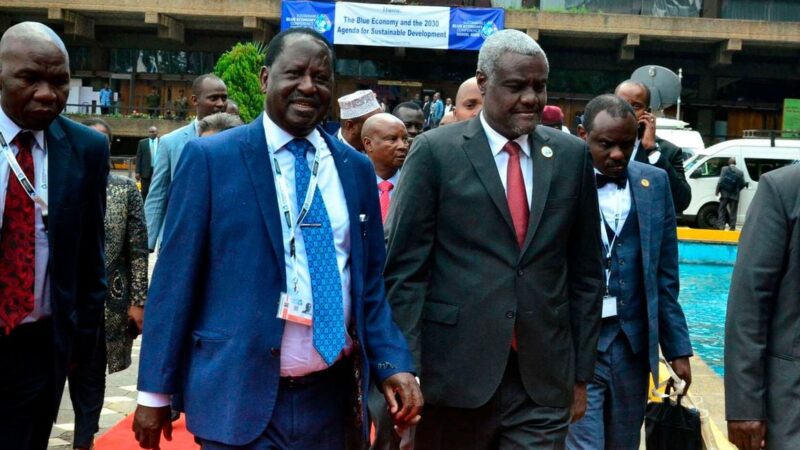
Kenya’s former Prime Minister Raila Odinga, on his campaign and strategic lobbying for the African Union chairperson’s position, the most preferable candidate among the four shortlisted after the deadline for nominations early August 2024, has outlined a comprehensive vision for the African Union, the continental organization established to integrate and coordinate the development of Africa.
After the deadline for nomination of candidates closed on August 6, at least four veteran African politicians — from Djibouti, Kenya, Madagascar and Mauritius — were finally selected and are currently vying to take over the African Union’s top post. The pan-continental body, which has 55 member states, will hold elections at its summit in February 2025 to choose a successor to Moussa Faki Mahamat who is the chairperson of the African Union Commission. This time the role is reserved for a representative from East Africa to replace Moussa Mahamat, a veteran politician from Chad who has served since 2017. He has joyfully served two terms at this reputable position.
The African Union Commission’s chair — effectively the continental body’s chief executive — serves a four-year term, renewable once. The election is conducted by secret ballot, and the winner must secure a majority of two thirds of the vote among eligible member states. The main responsibility here is an organized and coordinated commitment to advancing Africa’s economic integration and development.
Kenya’s Raila Odinga, a prominent figure in African politics, who also served previously as Prime Minister has been extremely vocal on multiple questions affecting the continent. He has frequently been urging African leaders to embrace supra-national authority and the long-term benefits of integration, aligning with the pan-African ideals of self-reliance, solidarity, development, peace, and unity. In addition, under his campaign title – The Blueprint for Africa’s Future – articulated two critical areas, among many others, that require immediate attention to propel Africa towards greater integration: enhancing intra-African trade and establishing a unified monetary system.
As the African Union Commission’s High Representative for Infrastructure Development from 2018-2023, with his accumulated experience, has been invited as a key speaker on Africa’s development, its strengths and weaknesses as well the future pathways in this changing geopolitical world. The most recent speaking participation sent him to to London, United Kingdom. To sustain this trajectory, Odinga urged a renewed focus on continental integration: “Africa must unite. Continental integration was the dream of Azikiwe, Nkrumah, Nyerere, and Sekou Toure. We must return it to the top of our priorities.”
In a powerful address at Oxford Africa on May 24th, 2024, Kenya’s former Prime Minister Raila Odinga unveiled a compelling and transformative vision for the continent’s future. His speech, titled “Africa’s Path Forward,” emphasized the urgency of unity and the potential for an African renaissance driven by innovation, democracy, and strategic engagement with the global community.
In sharing the innovative strategy, Odinga has unreservedly expressed his commitment to advancing Africa’s economic integration and development. As a prominent figure in African politics, he further underscored the urgent need for deeper integration across the continent to achieve the goals of Agenda 2063 and realize the full potential of the African Continental Free Trade Area (AfCFTA).
“There are studies that show the full implementation of the AfCFTA would increase intra-African trade by 52% or by $450 billion by 2035 according to a World Bank study. To achieve this will require implementation of coherent and efficient policies at all levels of national, regional and continental that are specifically focused towards promotion of intra-African trade,” added Odinga.
As the African Union Commission’s High Representative for Infrastructure Development from 2018-2023, Odinga also praised the efforts of the Afreximbank and AfCFTA in developing the Pan African Payment and Settlement System (PAPSS), which aims to reduce transaction costs and pave the way for an African Monetary Union.
In a move that could sparked debate and controversy, Odinga proceeded to explain economic potentials of the 55 individual African states, and with the huge population (human resource) to drive rapid growth. Like other African leaders, he stressed the fact that an integrated Africa, driven by its own intellectual citizens, can present a dynamic force in the global arena.
While fostering good relations, he pointed out that the regional alliances often face obstacles like inadequate infrastructure, political instability, and lack of institutional support. Odinga highlighted the historical context of colonialism shaping the continent’s regional blocs, such as the Southern Africa Development Community (SADC), the East African Community (EAC), the Economic Community of West African States (ECOWAS), the Community of Sahelian States (CENSAD) and the Arab Maghreb Union.
According to the official document obtained by this article author in Addis Ababa, Ethiopia, the chairperson of the African Union Commission shall have a high commitment to pan-African values and the guiding principles of the African Union. Still counting the time, we are just a few months away from the African Union Commission Elections 2025. The vision of the African Union is that of “An integrated, prosperous and peaceful Africa, driven by its own citizens and representing a dynamic force in the global arena”. The involvement of African Citizens calls for the African Union to strive and live up to its ambition of being a people-centred Union through the participation of Member states in defining and implementing the African Agenda towards meeting the continental development goals espoused in our continental developmental framework of Agenda 2063.