
Forgotten Dairies
Why African Leaders Must Fix Governance Before Crying Sovereignty -By Isaac Asabor
Until governance improves, sovereignty will remain weak. Until legitimacy replaces longevity as the measure of leadership, African states will continue to be treated as problems rather than partners. Until leaders stop confusing criticism with conquest, the continent will keep reacting to symptoms instead of curing the disease.

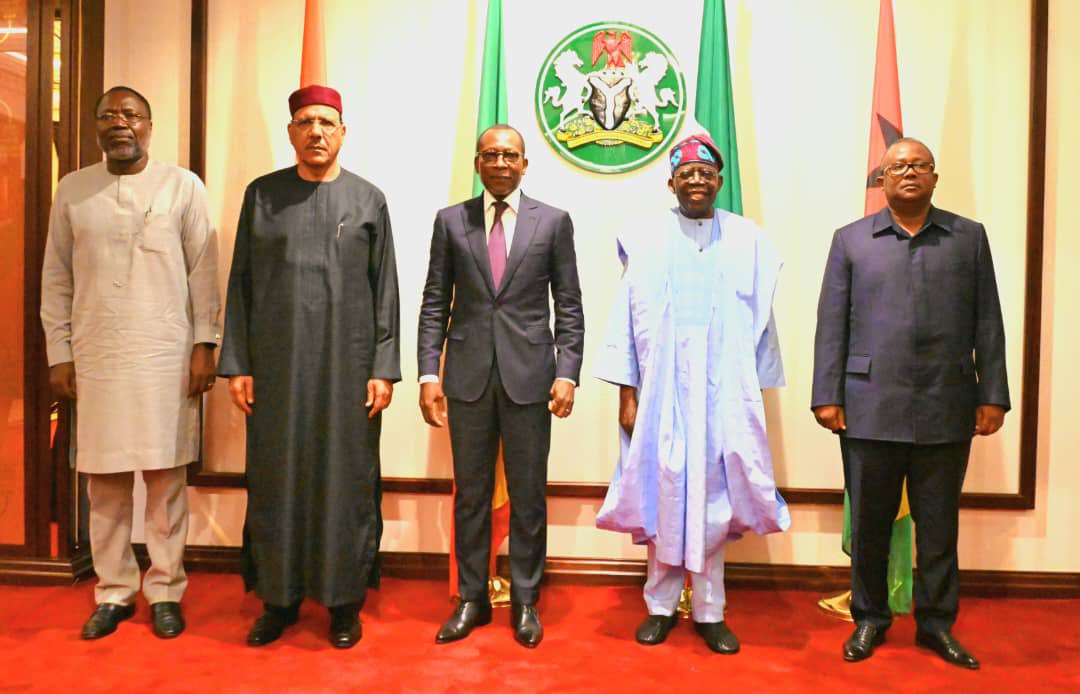
African leaders are fluent in the language of sovereignty. They deploy it with speed and confidence whenever a powerful Western country acts aggressively toward a weaker state. Press statements are issued. Emergency meetings are convened. Carefully worded condemnations are read into microphones. The refrain is familiar: “violation of sovereignty”, “breach of international law”, “unacceptable interference” are common phrases that are usually used to embellish their speeches or reactions.
All of this sounds principled. Much of it is historically understandable. Africa knows, perhaps better than any other continent, what foreign domination looks like. Colonialism was not a theory; it was lived reality. So suspicion of Western power is not paranoia, it is memory.
Yet there is an uncomfortable truth that African leaders consistently avoid: sovereignty that is not backed by good governance is fragile, performative, and easily violated. A state that fails internally will eventually be humiliated externally. This is not ideology. It is how power works.
The intense reactions to how the United States, especially under Donald Trump’s blunt, transactional worldview, recently treated Venezuela reveal this contradiction clearly.
To background the foregoing view, it is germane to recall that not a few African leaders and the elite, particularly in Nigeria has been condemning Donald Trump’s surprise attack on Venezuela as a potential violation of international law that portends instability across other parts of the world.
In as much as this writer would agree with the condemners of the American strike, which reportedly killed 40 people including civilians, and unarguably sets a concerning precedent that could make violent conflicts more likely, it is germane to cite an African proverb in this context which says, “He who fetches ant infested firewood should get ready for the reptilian groove”.
Again, the question some African leaders who are condemning Trump’s actions against Venezuela have failed to ask is: “Why was Venezuela so vulnerable to this level of external pressure in the first place?” The foregoing question matters, because Africa is far closer to Venezuela’s position than many leaders are willing to admit.
In fact, sovereignty is often treated as a birthright of states, something automatic once borders are recognized and flags are raised. In theory, international law supports this view. In practice, sovereignty is sustained by legitimacy, and legitimacy is produced by governance. This is as a state that governs well commands respect even from adversaries. A state that governs badly invites scrutiny, pressure, and interference. The international system may pretend otherwise, but history is brutally consistent on this point.
To set the record straight, Venezuela’s collapse did not begin with U.S. sanctions. It began years earlier with corruption hollowing out institutions, economic recklessness destroying productivity, and political repression eroding legitimacy. Oil revenues were treated as endless. Checks and balances were dismantled. Opposition voices were criminalized. Elections became rituals rather than choices, even as public trust literarily evaporated. So, by the time Washington escalated its pressure, Venezuela was already weakened from within. External aggression did not create the crisis; it exploited it.
Again, there is no denying the fact that Donald Trump’s approach to foreign policy has more often than not been undiplomatic. He views international relations through the lens of dominance and advantage, stripped of moral language. In fact, his administration does not bother much with diplomatic niceties or multilateral pretenses. That, no doubt, has been offending many governments, especially those used to symbolic respect. But the fact that he did not invent the logic that weak states are expendable should not be forgotten. He simply expressed it openly.
At this juncture, it can be recalled that powerful countries have always tested the limits of weaker ones. What restrains them is not goodwill but cost, which could be political, economic or reputational or all of them put together. In fact, leaders who are criticizing Trump over America’s strike against Venezuela few days ago should also not forget that when a state is already discredited, isolated, and internally broken, the cost of bullying it drops dramatically. So, this is where African outrage begins to lose credibility.
Many African leaders condemning Western interference preside over systems that are barely functional. They rule without consent. They manipulate constitutions. They criminalize dissent. They steal public wealth and stash it in the very countries they accuse of neo-colonialism. They depend on foreign aid to run basic services while preaching self-reliance.
Then, when external pressure comes, they shout sovereignty. I think in this context that power does not reward hypocrisy. It exploits it. An African proverb which I earlier cited in this context, and which is “He who carries insect-infested firewood is the one who invites the lizard”, explains this reality with clarity that no policy paper can improve upon: The lizard does not arrive by accident. It is drawn by decay.
Foreign interference works the same way. It thrives where institutions are weak, economies are distorted, leadership is illegitimate, and citizens are alienated from the state. It feeds on disorder and impunity. Therefore, condemning the lizard while continuing to carry ant-infested firewood is not resistance. It is self-deception.
Africa’s problem is not that external powers are predatory. Predation is a constant in global politics. Africa’s problem is that too many of its states make themselves easy prey.
One of the great contradictions of African leadership today is selective morality. Leaders speak passionately about international law while violating their own constitutions. They condemn sanctions while protecting looters. They demand media fairness while jailing journalists. They complain about foreign meddling while using security forces to intimidate citizens.
This contradiction weakens Africa’s moral standing globally. It turns legitimate complaints into noise. It allows external actors to dismiss African protests as self-serving. In fact, when a government has no credibility at home, it has little leverage abroad. When citizens do not trust the state, foreign powers feel no pressure to respect it.
Given the backdrop of the foregoing argument, it is enough to opine that Venezuela’s isolation did not happen in a vacuum. It happened because the state lost its moral authority long before it lost diplomatic battles.
To further buttress the foregoing view, it is germane to recall that Africa has, over decades normalized failure at the level of governance. Leaders who remain in power for 20, 30, even 40 years are praised for “experience.” Elections that lack competition are celebrated for being “peaceful.” Economic stagnation is blamed on colonial history alone, as if leadership choices play no role. Not only that, corruption scandals erupt weekly, then disappeared without consequences. Citizens adapt to dysfunction instead of demanding change. The international community adjusts its expectations downward.
In fact, it is not out of place to remind our African leaders and the elite that once dysfunction becomes routine, states lose the ability to shock, mobilize, or command respect. They become predictable, and predictably weak. In such an environment, sovereignty becomes symbolic, not substantive. Without any iota of exaggeration, Venezuela’s descent followed this exact pattern. Therefore, those criticizing Trump and America in this part of the world should recognize it, because it is already living it in many places.
In fact, it is expedient to remind Trump’s critics that good governance is not a western demand, and that African leaders should refrain from framing calls for good governance as Western impositions. This is dishonest. The reason for the foregoing reminder cannot be farfetched as good governance is not about pleasing Washington or Brussels. It is about building states that work. It is about protecting citizens from both domestic abuse and foreign exploitation. It is about making sovereignty real.
Countries with credible elections, independent courts, transparent finances, and accountable leadership are not immune to pressure, but they are resilient. They negotiate, they do not beg. They resist, they do not posture. In fact, no global power finds it easy to bully a state whose institutions function and whose citizens are invested in its survival. So, bad governance, by contrast, is an open invitation.
On a cautionary note, it is expedient to opine in this context that sovereignty begins at home. There is a hard lesson Africa must confront: sovereignty begins with how a state treats its own people. A government that terrorizes its citizens cannot convincingly demand respect abroad. A state that cannot account for its resources cannot complain when others seize leverage. A leadership that governs without legitimacy cannot expect international solidarity when challenged.
The international system is unjust, but it is also pragmatic. It responds to strength, coherence, and credibility. Truth be told, Africa’s repeated failure to internalize this truth is why it remains vulnerable to humiliation, sanctions, conditionalities, and intervention, both overt and subtle.
This is not an argument in defense of American hypocrisy or Western double standards. Those are real and well-documented. Powerful countries routinely violate the principles they preach. But Africa’s greatest obstacle is internal, not external.
African leaders want the protections of sovereignty without accepting the responsibilities that give sovereignty meaning. They want immunity from interference while governing in ways that practically invite it. They want respect without accountability, authority without legitimacy, and power without restraint. That bargain does not exist.
Until governance improves, sovereignty will remain weak. Until legitimacy replaces longevity as the measure of leadership, African states will continue to be treated as problems rather than partners. Until leaders stop confusing criticism with conquest, the continent will keep reacting to symptoms instead of curing the disease.
At this juncture, it is germane to note that Venezuela’s ordeal is not a story about Donald Trump. It is a warning about what happens when a state fails its own people, and then expects the world to pretend otherwise. Be that as it may, Africa must fix governance before crying sovereignty.
























You must be logged in to post a comment Login