Breaking News
Air Peace, UNA Reject NCAA Flight Disruption Figures, Cite External Factors
Air Peace and UNA fault the NCAA’s August flight delay figures, citing airport congestion, weather, technical issues, union action and other factors.

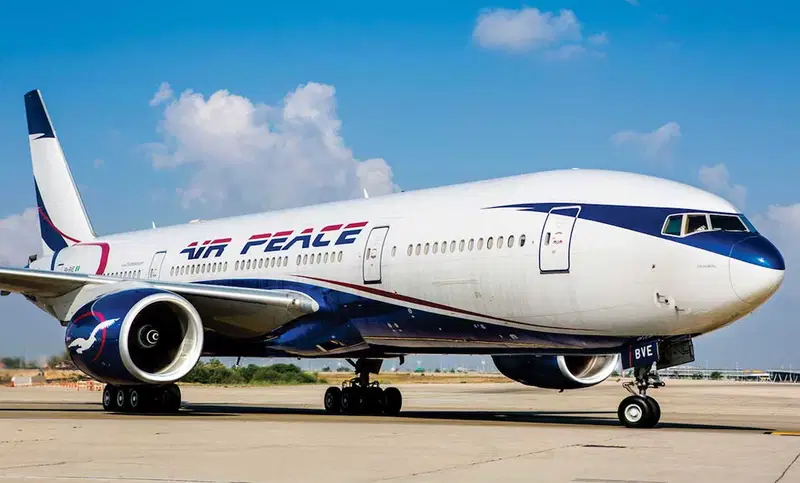
Nigeria’s largest carrier, Air Peace, and United Nigeria Airlines (UNA) have rejected the Nigeria Civil Aviation Authority’s figures on flight delays and cancellations for August 2026, describing the data as inaccurate and incomplete.
The airlines argued that the NCAA report did not properly capture their total flight operations or distinguish between disruptions caused by the carriers and those resulting from factors outside their control.
The NCAA, in its Summary of Domestic Airline Flight Disruptions Operations in August, reported 4,801 disruptions from 7,961 domestic flights operated during the month.
Air Peace was reported to have recorded 1,337 delays or cancellations from 1,864 flights, the highest number among the airlines listed.
UNA was said to have disrupted 951 of 1,231 flights, while Enugu Air recorded 586 disruptions out of 878 flights.
ValueJet recorded 438 disruptions from 767 flights, while Ibom Air disrupted 257 of 560 flights.
Arik, which operated 301 flights, recorded 188 delays and one cancellation.
But Air Peace COO, Oluwatoyin Olajide, said the figures did not accurately represent the airline’s performance.
According to her, Air Peace actually operated 2,564 flights during August, rather than the 1,864 contained in the NCAA report.
“First, the NCAA report vastly underreported our total flight volume. Air Peace operated a total of 2,564 flights in August 2026, as opposed to the 1,864 flights stated in the NCAA report. By omitting over 700 fully operational flights from the data pool, the NCAA’s calculations skew our actual performance metrics and artificially inflate the reported delay percentages,” she said.
Olajide also questioned the absence of a comparable July monthly report.
“Most worrisome is: Why did the NCAA start the monthly series with August rather than July, immediately following the publication of Q1 and Q2 on 31st of July?”
She added: “It is indeed worrisome that there is still no equivalent monthly data located for July, yet the NCAA published unusually granular August airline delay data only 13 days after month-end. Unbelievable!”
The Air Peace executive said the NCAA should have taken into account the industrial disruption that affected the aviation sector in August.
“It is reasonable to suggest that the early release of the August publication should have been accompanied by disclosure that the month contained an extraordinary aviation-sector industrial disruption which significantly affected the airline’s operations.”
According to Olajide, the union action that began on August 11 continued to affect Air Peace for more than 14 days, causing flight rescheduling, delays and cancellations.
She also questioned the decision to publish disruption figures without providing the causes behind the delays attributed to individual airlines.
“Why was this report published rapidly without identifying the causes of the delays attributed to individual airlines instead of publishing wrong figures that could tarnish the reputation of the airline despite prevailing operational challenges?”
Air Peace: Only 391 Delays Were Internal
Olajide said Air Peace’s internal analysis showed that just 391 flights, or 15 per cent of the airline’s August disruptions, were attributable to internal factors.
“Furthermore, the characterisation of these delays failed to differentiate between internal operational issues and severe systemic challenges that are completely outside the airline’s control,” she said.
She identified airport congestion, traffic, bird strikes, airport facilities, adverse weather, union picketing and ground-handling damage as some of the external factors.
“From the above, only 391 flights should be attributed to Air Peace, which represents 15 per cent of the delays in that month. The internal delay causal factors were largely as a result of technical issues resulting in unscheduled maintenance on our aircraft and fuel-related issues.”
UNA: Airlines Cannot Be Blamed for Every Delay
UNA’s Chief Commercial Officer, Adedayo Olawuyi, also challenged the NCAA’s presentation of the data.
Speaking at the Aviation Day of the 23rd Akwaaba African Travel Market in Lagos, Olawuyi said flight disruption figures should separate controllable delays from those caused by external factors.
The session was themed “Delayed and Cancelled Flights: The Rules and the Rights of Passengers — The Airline Perspective.”
“I will use an analogy. You go to school and 60 per cent of the students fail, is that the fault of the school? Yes or no? My point is very simple. The first problem we have with that data, personally speaking, is that the data was not presented in a way where we have removed controllable delays and uncontrollable delays,” he said.
Olawuyi said delays should be viewed as a responsibility involving the entire aviation system rather than airlines alone.
“When you remove the controllable delays and you have a high number of 60 per cent, then you can say the problem is the airlines. The question about the reason for the delays should not be directed to the airlines. The question should be directed to all stakeholders. Airports, regulators, everybody in the ecosystem shouldn’t ignore that 60 per cent.”
He pointed to congestion on airport ramps as one example of an external cause of delays.
“There are many reasons that lead to cancellations and delays of flights in Nigeria’s aviation sector. There is the infrastructure. If you get to the ramp early in the morning, there are times when the aircraft is blocked from moving simply because there are many operators operating today.”
According to him, an aircraft could push back at 6:59 a.m. but remain unable to take off until 7:38 a.m. because of such constraints.
“Now, we are not saying delays will continue or that we intentionally want to delay flights. Airlines don’t want to intentionally delay flights, but the challenges we face are what bring about these delays.”
Olawuyi also said technical problems could not simply be avoided because airlines operate complex machines.
“Have you ever woken up, and your car did not start? Sometimes we have technical challenges. When these technical challenges occur, we must maintain the safety of that flight and ensure that everything is properly done and that the aircraft is fixed before it is released into service.”
He identified weather as another major factor, particularly because many Nigerian airports operate only during daylight hours.
“In Nigeria today, the bulk of the airports we operate in are dusk-to-dawn operations, meaning they do not even have lighting and cannot operate at night. So, when you have delays from every other reason that extend into the night, sometimes we are forced to cancel.”
Africans Angle News