
Forgotten Dairies
War That Has Taken A Life Of Its Own -By Pius Mordi
The second-round effect is that business will increase prices to recover higher operating costs. Workers then demand higher wages, while consumers reduce spending because their incomes buy can only buy less.
Invariably, a prolonged oil-price shock could slow the improvement in Nigeria’s inflation situation.

This is an uncharted territory for Nigeria. On taking over the reins of power in May 2023, President Bola Tinubu promptly scrapped the petrol subsidy regime.
Although the unilateral manner it was done generated intense disruption of personal finances with the massive depreciation of the local currency, there was general endorsement of the decision. And when Dangote Refinery came on stream, the stage was set for a reset of the economy.
Until Donald Trump happened. Not to just to Nigeria but globally. President Tinubu had adopted the policy of selling crude oil to Dangote in naira, but at the equivalent of price in the international market.
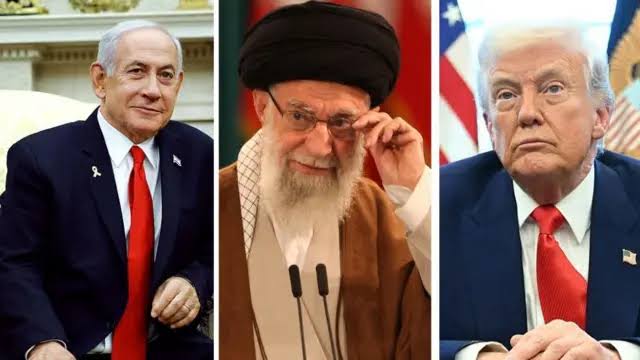
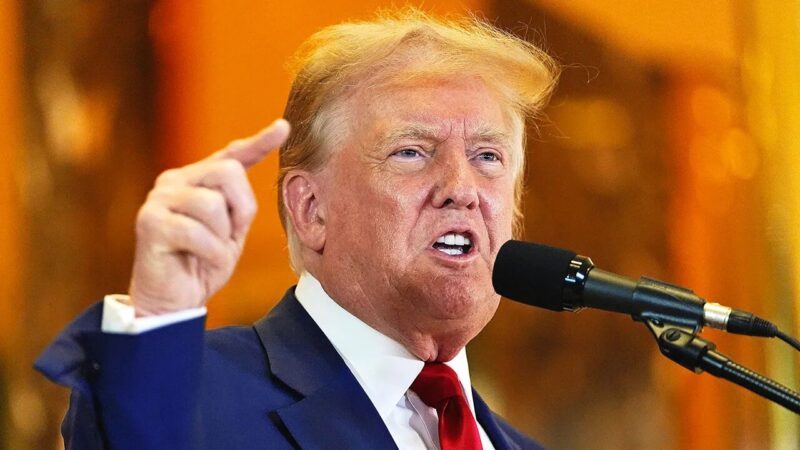
When US President Donald Trump on February 28, 2026 launched what he called Operation Epic Fury that decapitated the top leadership of the Islamic Republic of Iran, he told his countrymen the war would be over within five weeks.
His partner in the operation, Israeli Prime Minister, Benjamin Netanyahu exuberantly urged Iranians to take back their country. After numerous deadlines and ridiculous claims of “victory”, Trump now says the war continues up to the midterm election in November. Some Republicans have even predicted that the war might continue till his term ends in 2028.
Now, the war has taken a life of its own. From just bombing Iran while the Strait of Hormuz remains under the Islamic Republic’s chokehold, Houthis rebels in Yemen, one of Iran’s proxy militias, have made good its threat. The rebel group has invaded Saudi Arabia’s alternate gateway to exporting its enormous crude oil capacity.
The opening of a second choke point in crude oil supply with the Houthis’ control of the Red Sea route in Yemen has set off alarm bells with concerns that an additional 10 percent in global oil supply may be locked in as Saudi Arabia’s second export route is shut.
Saudi Arabia accounts for approximately 10% to 10.6% of global crude oil production and supply. It ranks as the world’s second-largest crude oil producer, after the United States. The country produces about 9.5 million barrels per day of crude oil.
For Nigeria and the economy, it is a nightmare scenario. Already, life had been excruciatingly tough for the people. But Trump’s war has changed the dynamics. Prices of petrol, diesel and aviation fuel are expected to continue an upward swing as Nigeria’s downstream market is now much more exposed to international crude and refined-product prices than under the old subsidy regime.
When crude becomes more expensive, the cost of producing petrol and diesel rises. This is already visible as Dangote Refinery has increased its petrol gantry price to ₦1,350 per litre, while its diesel price was raised to ₦1,850 per litre.
For manufacturers and the economy generally, the increase in diesel at a time the price is already over N2,000 portends grace repercussions. Diesel is particularly important because it powers trucks, factories, agricultural machinery, construction equipment and many businesses’ generators.
If diesel prices rise substantially, the effect spreads through the entire economy. A transporter pays more for fuel, the farmer pays more to move produce, the manufacturer pays more to operate machinery and the distributor pays more to move goods.
That eventually appears in the price of food, building materials, manufactured goods and services.
The present global situation is especially worrying because diesel supplies are already tight internationally. Higher fuel prices are effectively a tax on the Nigerian economy. The first-round effect is higher transport costs.
The second-round effect is that business will increase prices to recover higher operating costs. Workers then demand higher wages, while consumers reduce spending because their incomes buy can only buy less.
Invariably, a prolonged oil-price shock could slow the improvement in Nigeria’s inflation situation.
However, a major positive for Nigeria is that revenue for the various tiers of government could increase. When crude prices rise, the government earns more from oil exports, while production volumes remain reasonably strong.
This is the nightmare the federal government could not have imagined will crop up at this time.
Can we Nigerians carry on with the expectation that somehow at some point, Trump will sober up and call off his war? Nothing of such is predictable. His earlier repeated claims that Iran and its military capability have been degraded have unraveled.
But a return to subsidy is utterly implausible. Somehow, something has to be done to give succour to the people.












You must be logged in to post a comment Login