Politics
As 2027 Beckons, Where Are The Women In Nigerian Politics? -By Isaac Asabor
Where are the women seeking governorships? Where are the women seeking seats in the National Assembly? Where are the women preparing to contest State Houses of Assembly? Where are the political parties deliberately developing women who can compete for power? And where are the women themselves who are prepared to step forward, organize and demand their place in the political arena? The answer to these questions matters because Nigeria does not have a shortage of women.

As Nigeria inches towards the 2027 general election, one question deserves more than the usual rhetorical treatment: “where are the women?”
The question is not being asked because Nigerian women lack the numbers, education, competence, courage or capacity to lead. Neither is it being asked because women have suddenly discovered politics. Rather, it is being asked because, despite more than two decades of uninterrupted democratic rule since 1999, women remain conspicuously underrepresented in Nigeria’s political decision-making spaces.
Indeed, the closer the country gets to another general election, the more glaring this contradiction becomes. Nigeria is a democracy in which women constitute a substantial part of the electorate, yet they remain a small minority among those seeking and occupying elective offices.
The 2023 general election provided another uncomfortable illustration. According to UN Women, only four women were elected to the 109-member Senate and 17 to the 360-member House of Representatives, while 54 women secured seats in the 991-member State Houses of Assembly. No woman emerged as governor. That record should make Nigerians pause. It should also make political parties pause.
But perhaps most importantly, it should make Nigerian women pause and ask why a country in which women constitute nearly half of the population continues to operate political structures in which their voices are so disproportionately represented. This is not a new problem.
Nigeria’s National Gender Policy of 2006 set a target of at least 35 per cent representation of women in elective and appointive positions. Twenty years later, that ambition remains far from being achieved. INEC itself has acknowledged the importance of gender inclusion and adopted a Gender Policy aimed at mainstreaming gender considerations in electoral processes and promoting women’s representation in democratic governance. Yet the numbers continue to tell a different story.
The question, therefore, is no longer whether women should participate in politics. That argument should have been settled long ago. The more pertinent question is “what is keeping capable Nigerian women away from the political arena, particularly at a time when the country desperately needs a broader pool of people from which to choose its leaders?” There are several answers. Patriarchy is one. Money politics is another. Violence, intimidation, party structures, political godfatherism, nomination fees and the often-opaque manner in which political parties select candidates are others.
A 2026 audit of political party primaries reported that loopholes in the Electoral Act, expensive nomination forms, consensus arrangements and money politics were limiting women’s participation and their chances of emerging as candidates ahead of 2027.
This is significant because the argument that Nigerian women simply do not want political power does not adequately explain the situation.
If women are prevented from getting through the party gate, it becomes difficult to blame them for not appearing on the ballot paper.
And this is where the Nigerian political establishment needs to have an honest conversation with itself. For years, Nigerians have heard that women are not electable. The argument is usually presented as though the electorate has collectively decided that it does not want women in political office. But is that really the problem?
A recent 2026 survey by Invictus Africa complicates that assumption. The survey reported that 64.4 per cent of respondents said they would vote for a woman in 2027, while many respondents said they had never voted for women because they did not see them sufficiently represented on the ballot. That finding raises an important question: “are Nigerian voters actually rejecting women, or are political structures failing to give voters enough women to choose from?”
There is a difference. A woman who never gets a party ticket cannot be rejected by voters. A woman who cannot afford a nomination form cannot contest an election. A woman driven out of politics by violence cannot persuade an electorate. And a woman whose political ambition is dismissed simply because she is a woman may eventually decide that politics is not worth the price.
This brings us to another peculiar Nigerian obstacle: the politics of identity and belonging. For some women, marriage can become an unexpected political disadvantage. A woman who marries outside her state, ethnic group or local community may discover that she is regarded as an outsider in her husband’s political constituency. Yet when she returns to her place of origin, she may equally encounter questions about whether she still belongs there because she has married outside the community. In other words, she can find herself caught between two political identities. This peculiar problem deserves serious attention because marriage should not become a political disqualification. A woman does not cease to be a citizen because she marries a man from another state. Neither should marriage erase her legitimate connection to her community of origin.
If Nigerian politics is genuinely about citizenship, competence and service, then political participation should not be reduced to the narrow question of who a woman married.
Beyond the cultural obstacles, however, there is the more formidable challenge of political financing.
Nigeria’s electoral politics has become increasingly expensive. For many aspirants, the journey begins long before election day and requires considerable financial resources. The woman who must compete against a wealthy male aspirant, a political godfather or a party structure controlled by entrenched interests is already confronting a formidable barrier before voters even enter the equation.
The foregoing perspective is the reason why the debate about women in politics should not be reduced to a campaign for sympathy. Women do not need political charity. They need a political environment in which the rules do not systematically make their participation more difficult. They need political parties that allow credible women to compete. They need nomination processes that are transparent. They need protection from electoral violence. They need access to political financing. They need party structures that do not treat women primarily as mobilisers, campaign organizers and voters while reserving the actual tickets for men. And, yes, women themselves must also take responsibility.
There is no gainsaying the fact that political power is rarely handed over voluntarily. Those who want it must organize, build networks, raise resources, develop constituencies and compete for it. Nigerian women cannot permanently remain on the sidelines waiting for political parties or men to invite them to the table.
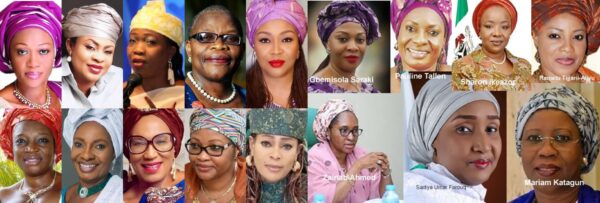
The encouraging part is that there are already Nigerian women demonstrating that political leadership is not beyond their reach. The challenge is how to move their individual successes from isolated examples into a broader political transformation. That transformation will not happen through speeches alone.
It will require political parties to examine their internal structures. It will require voters to judge candidates on competence and character rather than gender stereotypes. It will require women to organize beyond election periods. It will require civil society organizations and the media to continue scrutinizing the exclusion of women. And it will require the electoral system to provide stronger safeguards against violence and other barriers that disproportionately discourage participation.
The proposed reserved-seat reforms for women also show that the conversation has moved beyond mere rhetoric. UN Women reported that a proposal for additional reserved seats for women had progressed through legislative consideration, although the broader reform process remained unresolved.
Whatever one’s position on such reforms, the underlying question remains legitimate: “how long can Nigeria continue to describe itself as a representative democracy while a significant portion of its population remains severely underrepresented among elected decision-makers?”
As the 2027 election approaches, political parties will once again ask Nigerians to trust them with power. They will produce manifestos. They will organize rallies. They will make promises about economic transformation, security, education, healthcare and development.
But there is another test of the seriousness of Nigeria’s democracy. It is the extent to which the political process itself opens its doors to women. After all, democracy is not merely about allowing citizens to vote every four years. It is also about giving citizens a reasonable opportunity to seek the offices for which they vote. Nigeria cannot continue to tell women that they are equal citizens while maintaining political structures that make their journey to elective office exceptionally difficult.
The 2027 election should therefore provoke a national conversation that goes beyond the familiar question of which man will occupy which office. It should also ask: Where are the women? Where are the women seeking governorships? Where are the women seeking seats in the National Assembly? Where are the women preparing to contest State Houses of Assembly? Where are the political parties deliberately developing women who can compete for power? And where are the women themselves who are prepared to step forward, organize and demand their place in the political arena? The answer to these questions matters because Nigeria does not have a shortage of women.
What it has is a political system in which their numerical strength has not translated into comparable political power. That contradiction can no longer be treated as normal.
In fact, as 2027 beckons, Nigerian women should not merely be counted among the voters. They should also be visible on the ballot.
And when the votes are counted, the country should be able to look at its elected institutions and see a democracy that reflects more faithfully the people it claims to represent.